


A Historic Volcanic Milestone
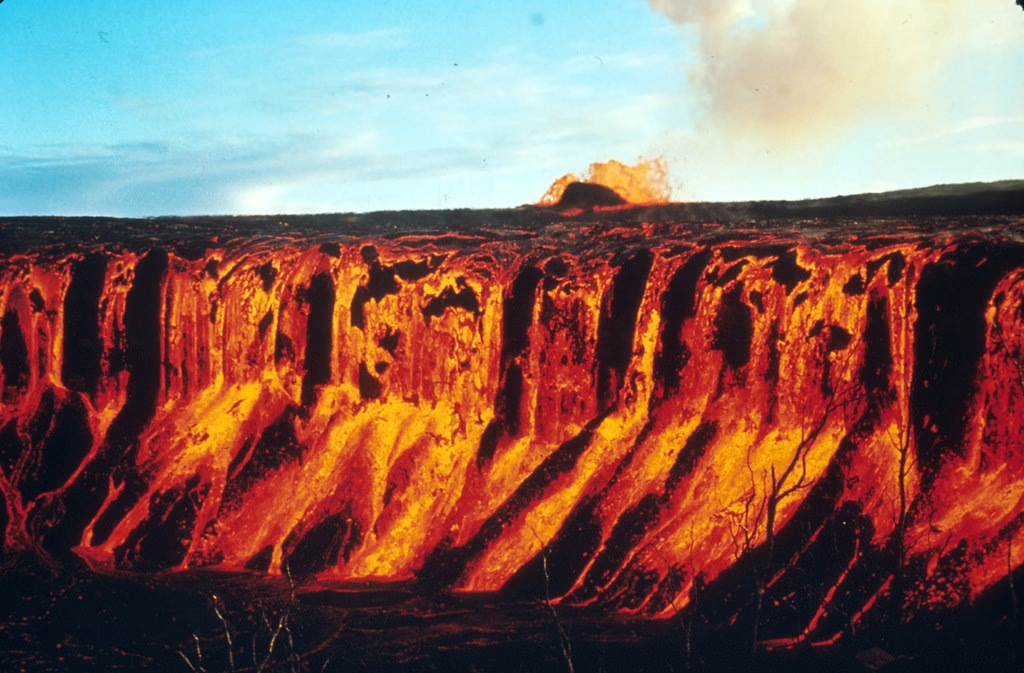
The Kilauea volcano on Hawaii’s Big Island has officially surpassed its historical record for the number of distinct lava fountaining episodes occurring within a single eruption cycle. Scientists at the U.S. Geological Survey (USGS) confirmed this week that the ongoing activity has pushed the volcano into unprecedented territory, marking a significant deviation from typical eruptive patterns observed over the last century.
This milestone reflects a period of sustained geological instability that has transformed the landscape of Hawaii Volcanoes National Park. By documenting these recurring fountains, vulcanologists are gaining critical new data regarding the plumbing systems that feed one of the world’s most active volcanoes.
Understanding the Eruptive Context
Kilauea has long been recognized as a shield volcano characterized by frequent, relatively non-explosive eruptions. Historically, its activity has been defined by long-term effusion of lava flows rather than the sustained, rhythmic fountaining seen in recent months.
Geologists note that the current cycle is unique due to the specific pressure dynamics within the shallow magma reservoir. Unlike previous eruptions that drained quickly, this sequence of events suggests a consistent supply of fresh magma from deep within the Earth’s mantle, sustaining the fountain activity over an extended duration.
Analyzing the Volcanic Dynamics
The mechanism behind these fountaining episodes involves the rapid expansion of volcanic gases trapped within the magma. As the molten rock rises toward the surface, the drop in pressure causes gases to exsolve, propelling the lava into the air in spectacular, high-energy displays.
According to data from the Hawaiian Volcano Observatory, the frequency of these events has accelerated since the start of the year. Researchers are utilizing satellite interferometry and ground-based tiltmeters to map the deformation of the ground surface, providing evidence that the magma chambers remain highly pressurized.
Expert analysis suggests that while the fountaining is visually dramatic, it serves as a pressure-relief valve for the system. By releasing gas in these concentrated bursts, the volcano manages internal stresses that might otherwise lead to more catastrophic, explosive events.
Industry and Environmental Implications
For the scientific community, this record-breaking activity offers a rare opportunity to study the transition between effusive and explosive volcanic behaviors. The data collected will likely refine existing predictive models, helping authorities improve hazard mitigation strategies for local communities.
For residents and the tourism industry, the situation demands constant vigilance. While the current activity remains largely contained within the summit caldera, the unpredictability of volcanic systems means that air quality and sulfur dioxide emissions—known as ‘vog’—remain primary concerns for public health and regional agriculture.
Looking Ahead
As the eruption continues, researchers are shifting their focus to the longevity of this fountaining trend. Observers will be monitoring the seismic signals preceding each event to determine if the pattern will stabilize or if the volcanic output will shift toward a new phase of activity.
The next few months will be crucial in determining whether the magma supply remains steady or begins to wane. Continued monitoring of gas emission rates and ground deformation will be the primary indicators for any potential changes in the volcano’s behavior as it approaches this uncertain new chapter of its geological history.




















Leave a Reply