


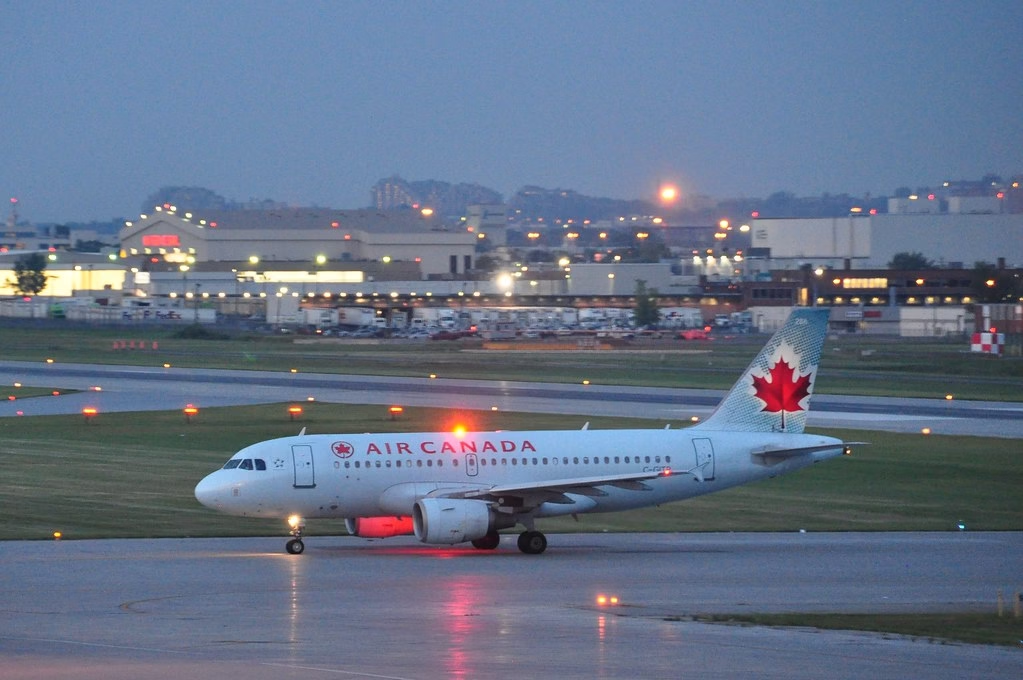
A United Airlines flight en route to Minneapolis-Saint Paul International Airport was forced to divert to Dane County Regional Airport in Madison, Wisconsin, late Friday night due to reports of an unruly passenger on board. Federal aviation authorities confirmed the diversion occurred shortly after takeoff, as flight crew members determined that the behavior of an individual passenger posed a potential safety risk to the flight’s operations.
The Context of In-Flight Disruptions
The aviation industry has seen a marked increase in reports of unruly passengers over the past four years. According to data from the Federal Aviation Administration (FAA), incidents peaked in 2021 with over 5,900 reports and have remained significantly higher than pre-pandemic levels.
Airlines have responded by implementing stricter internal policies and collaborating more closely with law enforcement. When a flight crew determines that a passenger is non-compliant or poses a threat, they follow established safety protocols that prioritize the security of the aircraft and those on board, which often includes an unscheduled landing.
Operational and Safety Protocols
In the case of Friday’s United Airlines flight, the diversion was initiated as a precautionary measure. Once the aircraft landed safely in Wisconsin, local law enforcement met the plane at the gate to address the situation.
Aviation safety experts note that flight crews are extensively trained to de-escalate conflicts before they reach the point of requiring a diversion. However, when verbal warnings and de-escalation tactics fail, pilots are authorized to land at the nearest suitable airport to remove the disruptive individual.
The impact of such diversions is significant. Beyond the immediate safety concerns, the airline must manage the logistics of rebooking passengers, coordinating with ground staff, and accounting for the financial costs associated with fuel, crew duty time, and airport fees.
Industry Perspectives and Data
The International Air Transport Association (IATA) has consistently advocated for stronger legal frameworks to prosecute disruptive passengers. Their research suggests that the majority of incidents involve a combination of alcohol consumption, frustration with travel delays, and non-compliance with crew instructions.
While the FAA maintains a zero-tolerance policy for interference with crew members, the challenge remains in enforcement across international jurisdictions. Industry analysts suggest that the frequency of these events continues to strain resources and disrupt the travel experience for the thousands of passengers who rely on efficient air transit.
Implications for Future Air Travel
The aviation industry is expected to continue focusing on enhanced crew training and the integration of better communication technology to handle in-flight disturbances. Passengers should expect continued vigilance from airlines regarding behavior that threatens safety.
Industry watchdogs are now monitoring whether current legal penalties are sufficient to deter future incidents. Observers suggest that the next phase of this trend will likely involve more widespread use of passenger blacklists shared across major carriers, a move that could permanently alter how airlines manage persistent offenders.




















Leave a Reply