


A Persistent Surplus of Space
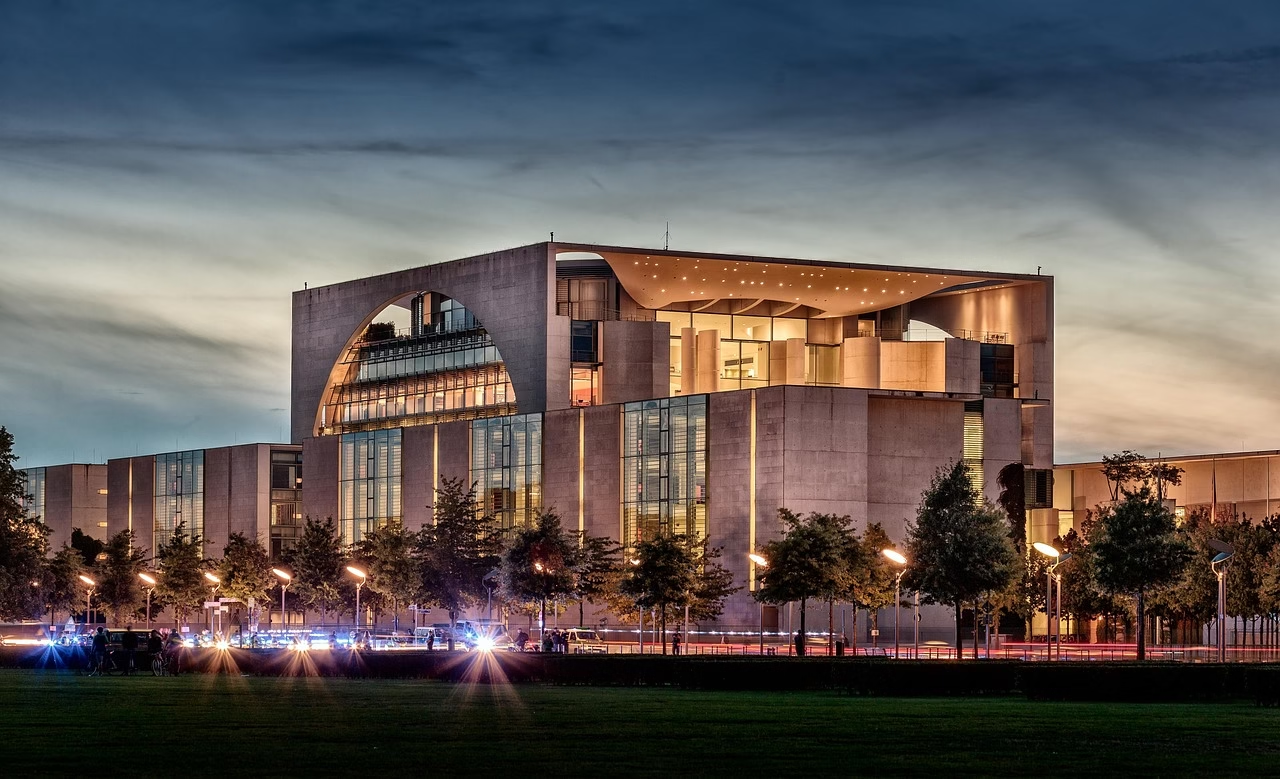
The United States federal government currently faces a profound real estate crisis as dozens of federally owned buildings sit largely vacant in major metropolitan areas across the country. According to recent reports from the Government Accountability Office (GAO), federal agencies are utilizing only a fraction of their office capacity, a trend accelerated by the widespread adoption of hybrid work models following the COVID-19 pandemic. This surplus of underused real estate has prompted bipartisan calls in Washington to liquidate these assets, offering a potential pathway to convert decaying government properties into much-needed housing, retail, or mixed-use developments.
The Weight of Bureaucratic Inertia
For decades, the federal government has struggled to manage its massive portfolio of properties, which includes thousands of buildings totaling hundreds of millions of square feet. The process for disposing of a federal building is notoriously complex, involving multiple layers of federal oversight, environmental impact assessments, and historical preservation mandates. These bureaucratic hurdles often result in properties remaining vacant for years, incurring millions of dollars in annual maintenance and security costs that taxpayers must absorb.
Economic and Social Implications
The initiative to repurpose these structures is viewed by urban planners as a critical opportunity to revitalize struggling downtown cores. By converting empty federal office space into residential units, cities could address the acute national housing shortage while simultaneously reinvigorating local economies that have suffered from reduced foot traffic. Data from the General Services Administration (GSA) suggests that while the divestment process is slow, the long-term economic gains from returning these properties to the private tax base could be significant.
Perspectives on Adaptive Reuse
Industry experts emphasize that not every federal building is a candidate for conversion. Structural limitations, such as deep floor plates that prevent natural light from reaching interior rooms, pose significant architectural challenges for converting office space into residential apartments. “Adaptive reuse is a powerful tool, but it requires substantial capital investment and creative zoning reforms,” noted a lead analyst at the Urban Land Institute. Despite these obstacles, pilot programs in cities like Washington D.C. and San Francisco are testing the feasibility of converting mid-century federal structures into high-density residential housing.
Legislative Hurdles and Future Outlook
Congressional lawmakers are currently exploring legislation to streamline the GSA’s disposal process, aiming to cut through the red tape that prevents timely property transfers. The proposed reforms seek to prioritize the sale of buildings that are deemed high-cost and low-utility, potentially creating a pipeline for developers to acquire these sites more efficiently. Observers suggest that the success of these initiatives will depend heavily on the federal government’s willingness to collaborate with local municipal authorities to align building codes with residential requirements.
What to Watch Next
Moving forward, the focus will shift toward the specific criteria the GSA establishes for prioritizing property sales. Stakeholders should monitor upcoming budget hearings for evidence of funding allocated for feasibility studies on large-scale conversions. If successful, this shift in federal real estate strategy could serve as a blueprint for other public institutions currently grappling with the realities of a post-pandemic workplace.




















Leave a Reply