



An Israeli airstrike struck a residential area in Gaza City on Tuesday, killing at least three people and injuring dozens of others, according to local medical officials and eyewitnesses on the ground. The strike, which targeted a densely populated neighborhood, comes amid ongoing military operations by the Israel Defense Forces (IDF) in the northern sector of the enclave.
Context and Escalation in Gaza City
To understand the significance of this latest strike, one must look at the protracted military campaign that has reshaped the Gaza Strip over the past several months. Gaza City, once the territory’s primary urban and economic hub, has become a central battleground, leaving much of its infrastructure severely damaged or destroyed.
The IDF has consistently maintained that its airstrikes target specific military objectives, including Hamas command centers, weapon storage facilities, and underground tunnel networks. However, international observers and local residents report that the high density of the urban environment means civilians frequently bear the brunt of the kinetic activity.
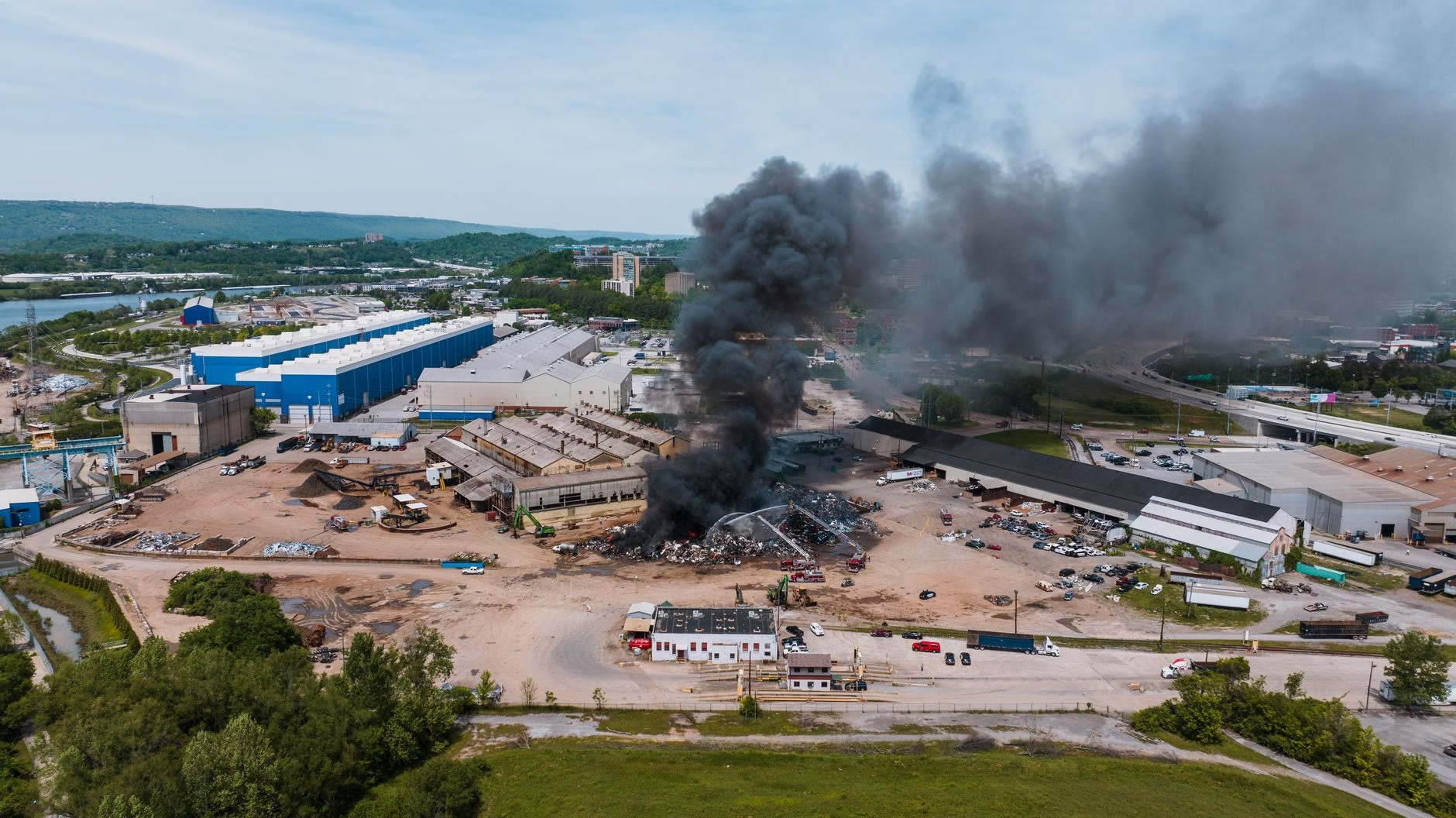
Tuesday’s strike occurred without warning, according to local residents, collapsing a multi-story residential building and damaging several adjacent structures. The immediate area was quickly engulfed in thick gray smoke as neighbors and rescue teams rushed to search for survivors.
Emergency Response and Casualty Reports
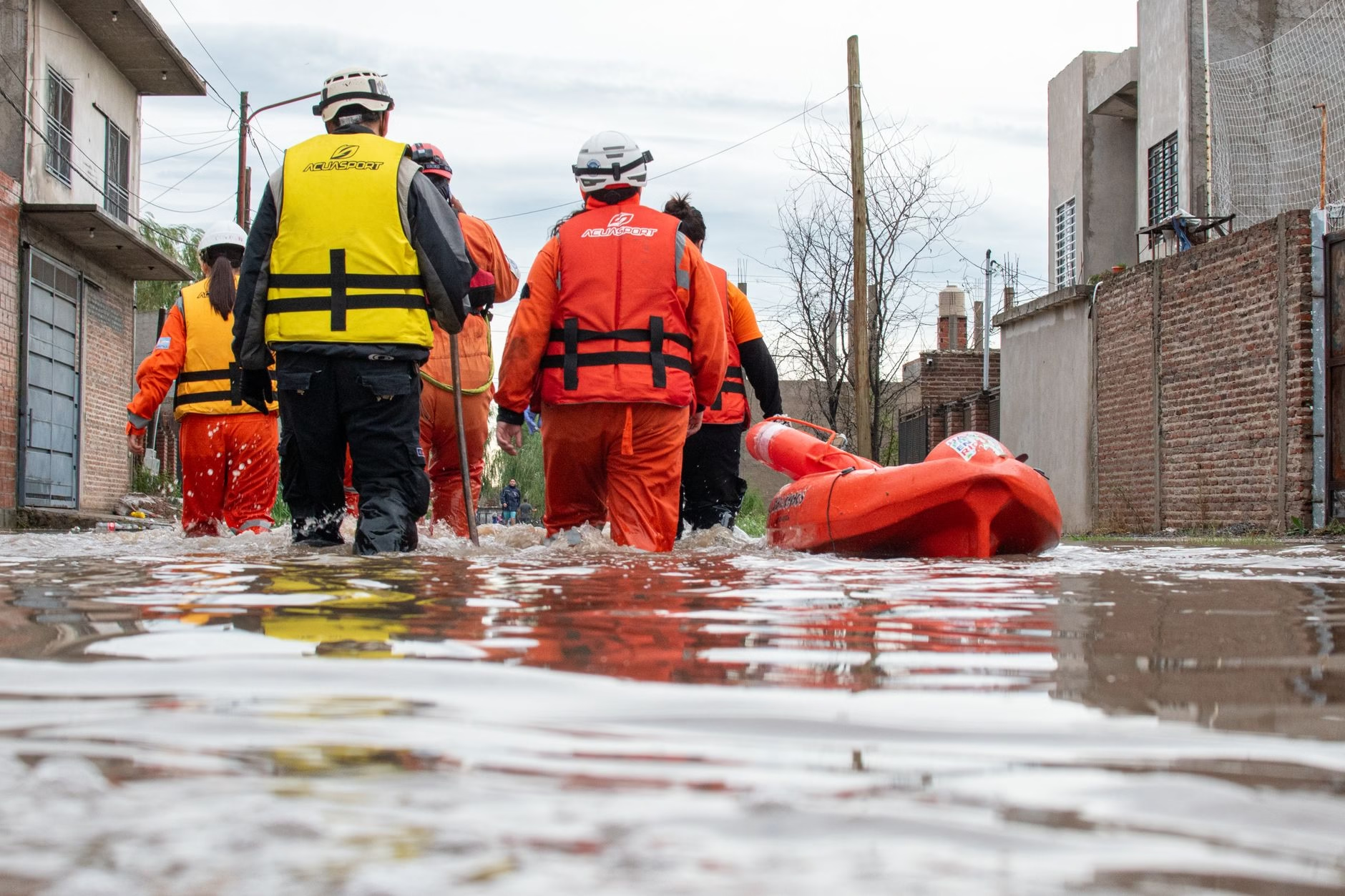
First responders from the Palestine Red Crescent Society (PRCS) faced significant obstacles reaching the scene due to debris-strewn roads and localized fuel shortages. Despite these challenges, emergency crews managed to transport dozens of wounded individuals, including women and children, to nearby medical facilities.
Medics at the Al-Ahli Arab Hospital, one of the last partially functioning medical centers in northern Gaza, confirmed the arrival of three deceased individuals and at least thirty others suffering from various injuries. Hospital administrators warned that their emergency rooms are operating far beyond capacity, lacking essential surgical supplies and anesthetic drugs.
“We are treating patients on the floor because there are simply not enough beds,” said a local physician who spoke on the condition of anonymity. “The severity of the blast injuries means many of the wounded will require long-term rehabilitative care that we currently cannot provide.”
Expert Perspectives on the Humanitarian Impact
Humanitarian organizations continue to warn of the compounding crises facing the civilian population in northern Gaza. According to data from the United Nations Office for the Coordination of Humanitarian Affairs (OCHA), access to clean water, food, and safe shelter has reached critically low levels across the territory.
Military analysts suggest that the persistence of these airstrikes indicates a protracted conflict with no immediate end in sight. “The tactical challenge in Gaza is that the military infrastructure is deeply integrated into civilian areas,” noted a regional security expert. “This reality makes avoiding collateral damage extremely difficult, even with precision-guided munitions.”
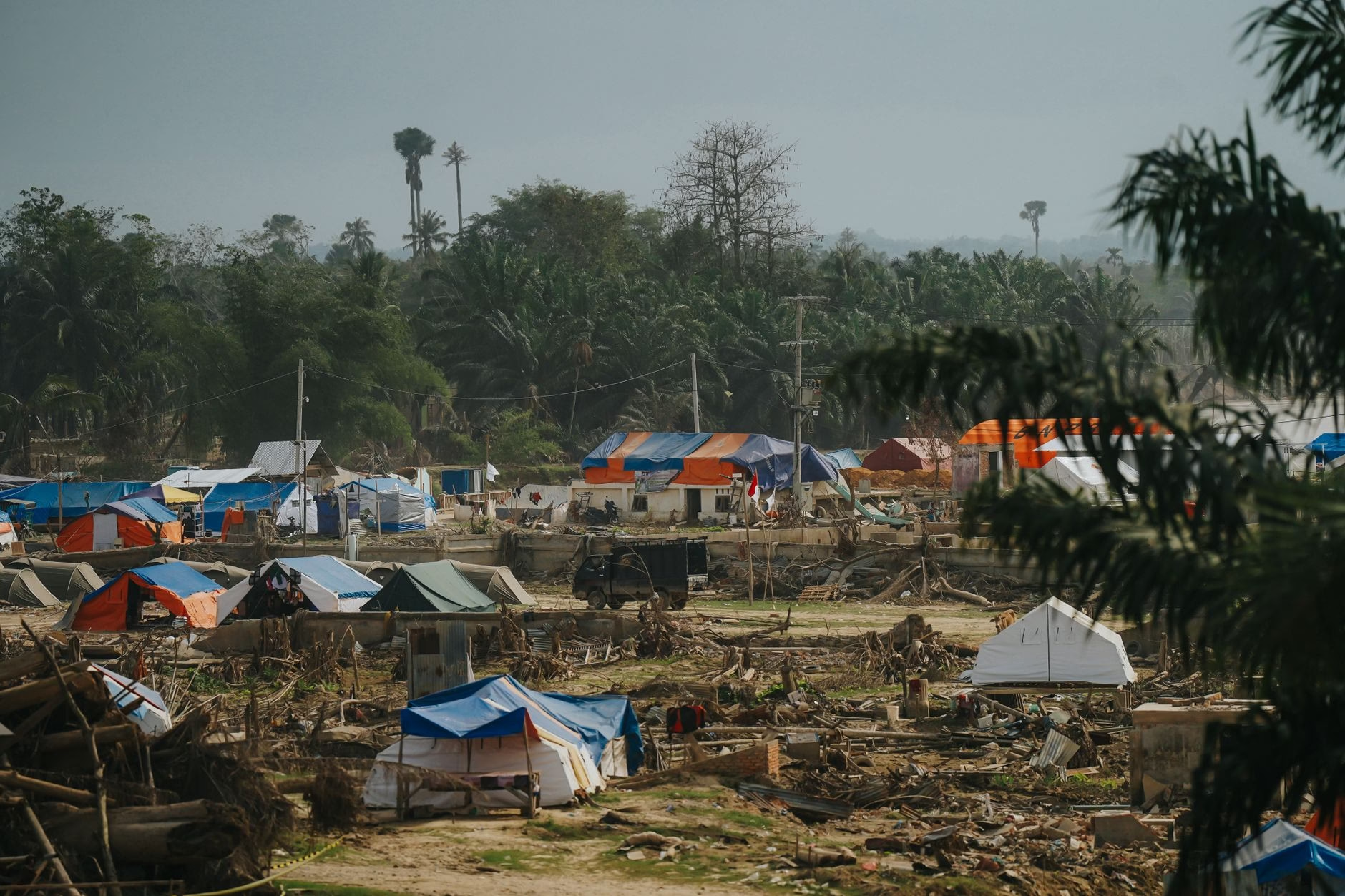
International human rights groups have repeatedly called for greater protection of civilians and civilian infrastructure, urging both sides of the conflict to adhere strictly to international humanitarian law. The continuous displacement of families has left hundreds of thousands of people living in makeshift shelters with minimal security.
Future Outlook and Diplomatic Efforts
Looking ahead, the international community will be closely watching the progress of mediated ceasefire negotiations, which have repeatedly stalled over terms regarding hostage releases and the permanent withdrawal of forces. Observers expect diplomatic pressure on both parties to intensify as the humanitarian toll continues to rise.
In the coming days, monitor whether international aid agencies can successfully negotiate safer, more reliable humanitarian corridors to evacuate critically injured civilians from northern Gaza. Additionally, watch for potential policy shifts from key international allies as they balance geopolitical alliances with growing domestic and international pressure to address the humanitarian emergency.
















Leave a Reply