


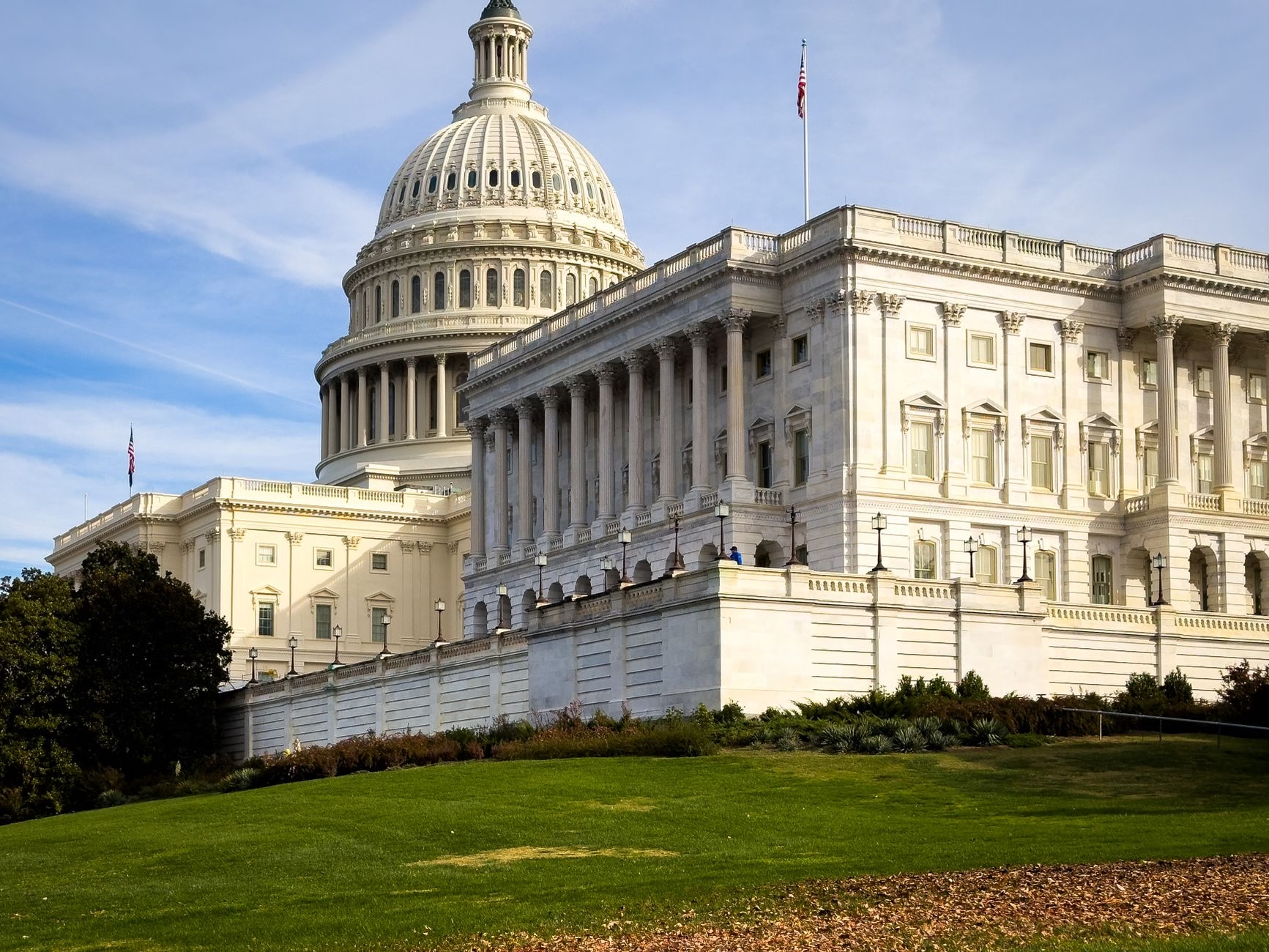
The American political landscape often reflects a distinct balance of experience and continuity, heavily influenced by longtime lawmakers who have held office for decades. However, upcoming legislative elections are poised to introduce a noticeable demographic transition in the halls of power. As established representatives step down or face primary defeats, a wave of younger successors is prepared to take their places.
The Aging Leadership of Federal Governance
For years, public discourse has frequently centered on the advanced age of many prominent federal legislators. The average age of senators and representatives has steadily risen over recent electoral cycles, prompting questions about how effectively legislative bodies represent a younger, more digitally connected population. Critics and observers alike have pointed to this longevity as a barrier to new ideas and contemporary policy approaches.
While seniority brings institutional knowledge and strategic depth, it can also create a disconnect between elected officials and the everyday realities faced by younger citizens. The desire for fresh perspectives has grown louder among voters who want leaders better attuned to modern economic and social challenges, ranging from technological regulation to environmental policy.
A Wave of Youthful Successors
The upcoming legislative contests are highlighting a tangible movement toward demographic renewal. More than two dozen seats across the country are expected to be filled by individuals who are significantly younger than the outgoing incumbents. This dynamic is unfolding in various districts as veteran politicians either retire voluntarily or lose competitive primary races to challengers advocating for change.
This generational handoff is not isolated to a single political party or region. Instead, it represents a broader structural evolution across the federal legislature. As fresh faces prepare to take the oath of office, the collective demographic profile of the lawmaking body is shifting subtly but unmistakably.
Implications for Legislative Priorities
When younger representatives enter office, their policy agendas often reflect the concerns of the communities and age brackets they belong to. Issues that disproportionately affect younger generations, such as affordable housing, student debt, climate action, and digital privacy, tend to gain more prominent traction when new voices join the debate.
At the same time, incoming lawmakers must still navigate the complex traditions and seniority systems that define institutional power in Washington. Balancing the energy and urgency of fresh leadership with the pragmatic realities of governance will be one of the defining challenges for this new cohort of political figures.
Looking Ahead to the Future of Politics
The transition currently underway in the federal legislature is likely only the beginning of a longer-term evolution. As demographic trends continue to shift and older generations of politicians eventually exit public service entirely, the pace of renewal may accelerate in future election cycles.
Ultimately, the upcoming midterms offer a clear glimpse into the future of American political representation. By replacing veteran incumbents with a younger generation of leaders, the legislature is taking a meaningful step toward bridging the gap between seasoned governance and contemporary public demands.






















Leave a Reply