


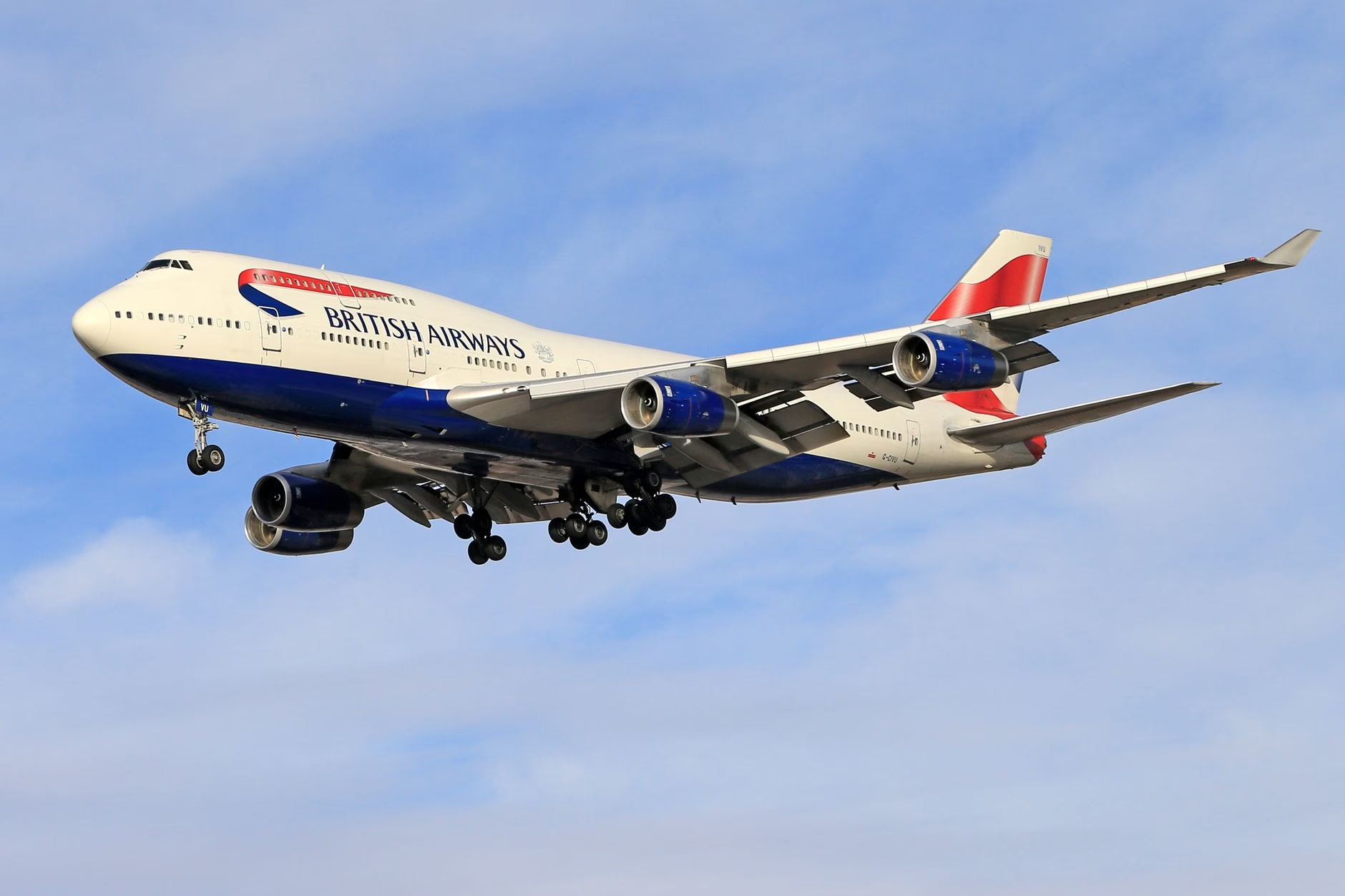
Understanding the Incident
A recent commercial aviation event has drawn significant attention after a British Airways aircraft was forced to make an emergency turnaround following a dramatic altitude drop. While mid-air emergencies are exceedingly rare, they understandably invoke concern among passengers and aviation enthusiasts alike.
Technical Malfunctions in Modern Aviation
Modern commercial airplanes are marvels of engineering equipped with numerous redundant systems designed to handle unexpected anomalies. According to a representative for British Airways, the aircraft encountered a specific technical issue while en route. Although the exact nature of the mechanical or electrical anomaly has not been publicly detailed, these systems are rigorously tested to ensure that the crew can maintain control under adverse conditions.
The Rapid Descent Explained
During the flight, the aircraft experienced a rapid loss of altitude, dropping approximately 27,000 feet. In aviation protocol, rapid descents are frequently initiated by flight crews to reach lower altitudes where atmospheric pressure and oxygen levels allow for normal breathing without reliance on emergency masks, should cabin pressurization be compromised. While a drop of this magnitude is undoubtedly alarming for those on board, it is often a controlled procedure executed by pilots to stabilize the aircraft.
Safe Return and Landing
Despite the intense situation high above the clouds, the situation was managed effectively by the flight deck crew. The plane reversed its course and headed back to its point of origin. Ground personnel were alerted, and emergency protocols were prepared to receive the incoming jet. Ultimately, the aircraft touched down safely without further incident, and all passengers and crew disembarked normally.
Evaluating Safety Protocols
Incidents of this nature underscore the importance of continuous pilot training and adherence to strict safety guidelines. Airline personnel undergo rigorous simulations to prepare for unexpected technical failures, ensuring that passenger safety remains the absolute highest priority. Authorities and airline engineers will undoubtedly conduct a thorough investigation into the root cause of the technical malfunction to prevent similar occurrences in the future.
Passenger Well-Being and Support
Following the unexpected journey, the airline arranged support for the affected travelers, helping them reschedule their trips and addressing immediate concerns. While the experience was undoubtedly frightening for everyone on board, the successful outcome is a testament to the reliability of modern aircraft design and the steady execution of emergency protocols by highly trained aviation professionals.



















Leave a Reply