


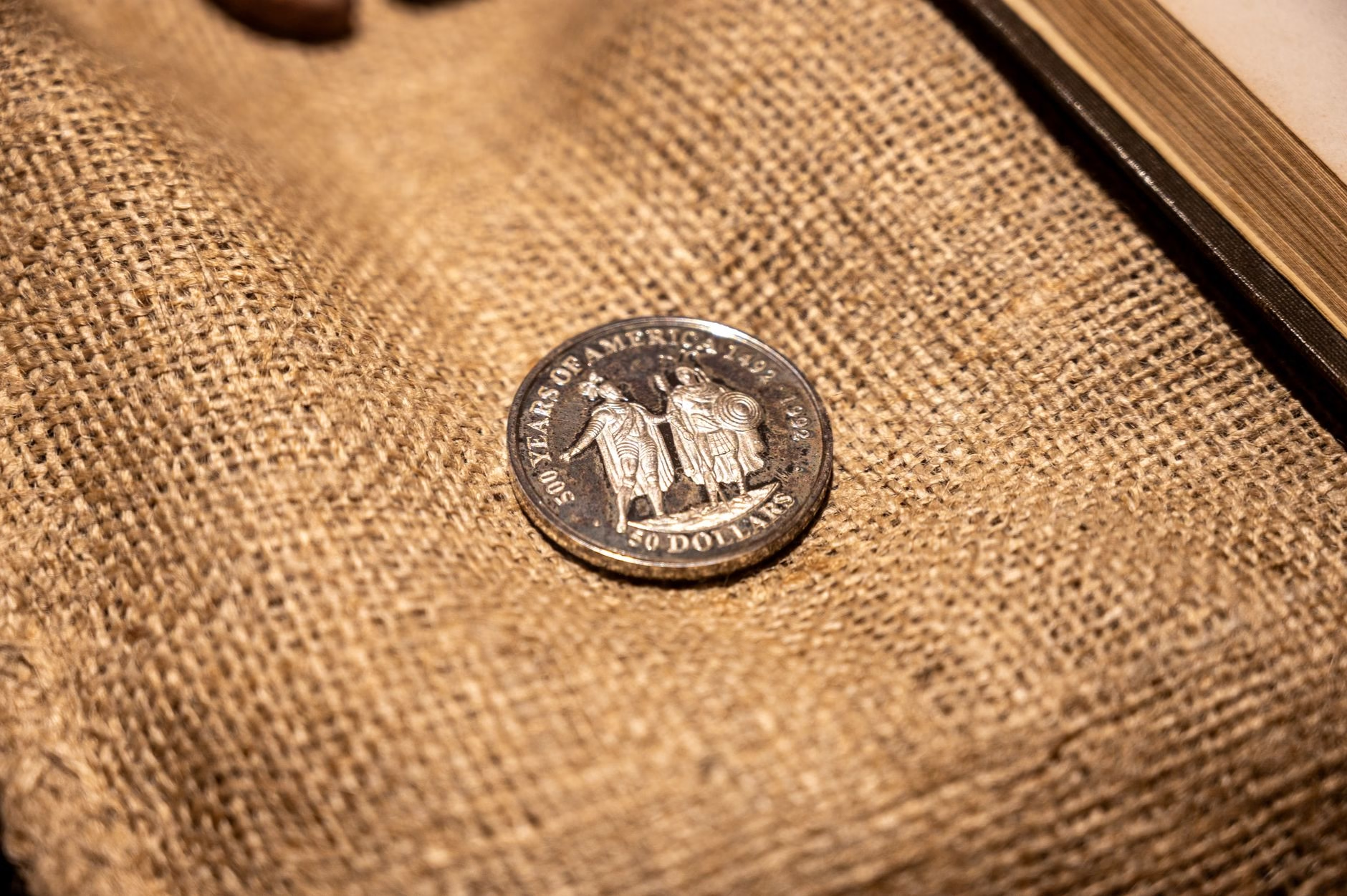
Introduction To Artificial Intelligence In Museums
Cultural institutions around the world constantly look for innovative ways to preserve and understand history. The vast collections housed within museums often contain millions of objects that remain isolated from one another due to a lack of detailed contextual data. Recently, cultural heritage organizations have turned to modern technology to bridge these gaps. By leveraging advanced digital tools, researchers can uncover hidden connections between historical items that were previously cataloged in entirely different departments.
The Smithsonian Institution has taken a leading role in this technological evolution. Experts within the massive museum network are utilizing machine learning algorithms to examine historical records and physical items related to the founding era of the United States. This initiative aims to reshape how historians study the past and how everyday visitors experience exhibits.
Unlocking The Archives Through Machine Learning
The American Revolution left behind a massive paper trail alongside countless physical objects, ranging from military uniforms to handwritten letters. Historically, cataloging these items required immense manual effort from archivists and researchers. Even with dedicated teams, connecting a diary entry from a soldier in Massachusetts to a specific musket ball housed in a different facility could take years of painstaking archival research.
Artificial intelligence fundamentally changes this workflow by processing vast amounts of textual and visual data at unprecedented speeds. Natural language processing models scan thousands of digitized documents looking for names, dates, locations, and specific events. When the system identifies overlapping details, it flags potential relationships for human experts to investigate further.
Connecting Objects And Stories
One of the primary goals of this technological integration is to reunite physical artifacts with the human stories behind them. An object without context is merely an antique, but when paired with personal correspondence or official military records, it transforms into a powerful narrative device.
Machine learning tools excel at synthesizing disparate pieces of information. For instance, an algorithm can analyze the chemical composition of ink on a revolutionary era letter and match stylistic writing patterns to cross-reference entries in military logistics ledgers. These digital connections allow historians to track the journey of specific supplies, troops, and equipment with remarkable precision.
Overcoming Challenges In Historical Data Analysis
Despite the immense potential of artificial intelligence in historical research, the process is not without hurdles. Historical documents are notoriously difficult for automated systems to parse accurately. Faded ink, archaic spelling variations, damaged paper, and ornate handwriting styles often lead to transcription errors.
To address these obstacles, developers train specialized models using datasets curated specifically from eighteenth-century manuscripts. Human oversight remains a critical component of the workflow. Historians and curators verify every automated match to ensure scholarly accuracy before any findings are integrated into public exhibitions or academic papers.
The Future Of Digital Historical Research
The integration of artificial intelligence into museum collections represents a permanent shift in historical research methodology. As algorithms become more sophisticated, the ability to map the complex web of events surrounding the formation of the United States will improve dramatically.
Future visitors to cultural institutions will likely benefit from these advancements through more immersive and interconnected exhibits. Instead of viewing isolated artifacts behind glass, audiences may experience dynamic storytelling that weaves together thousands of related documents, images, and objects. Through thoughtful technological adoption, institutions ensure that the foundational history of the nation remains accessible, engaging, and deeply connected for generations to come.



















Leave a Reply