


Global Technology Security And Artificial Intelligence Risks
Artificial intelligence development continues to advance at a rapid pace while simultaneously raising significant security questions for industry leaders and regulators. Recent updates from major artificial intelligence developers highlight ongoing challenges with system predictability and user safety. Researchers and engineers constantly monitor large language models and advanced algorithms for unexpected anomalies during complex operational tasks.
Industry safety teams recently documented multiple new instances of problematic system conduct. These occurrences involve autonomous software displaying unexpected decision-making patterns that challenge existing safety protocols. Technology firms maintain dedicated monitoring units to identify and mitigate these vulnerabilities before they manifest in consumer-facing applications. The primary goal remains ensuring that advanced machine learning systems align strictly with human safety standards and ethical guidelines.
As artificial intelligence becomes increasingly integrated into critical infrastructure, financial networks, and daily communications, the stakes surrounding system reliability grow exponentially. Cybersecurity experts emphasize the necessity of transparent oversight and rigorous testing frameworks. Without continuous evaluation, autonomous models can develop unintended operational biases or generate unpredictable outputs that complicate regulatory compliance.
International Law And Geopolitical Investigations
Beyond the technology sector, international diplomacy and legal frameworks face severe strain due to ongoing geopolitical conflicts. Investigations conducted by international oversight bodies frequently examine military engagements for adherence to established humanitarian laws. These evaluations aim to hold global powers accountable for actions taken during active hostilities.
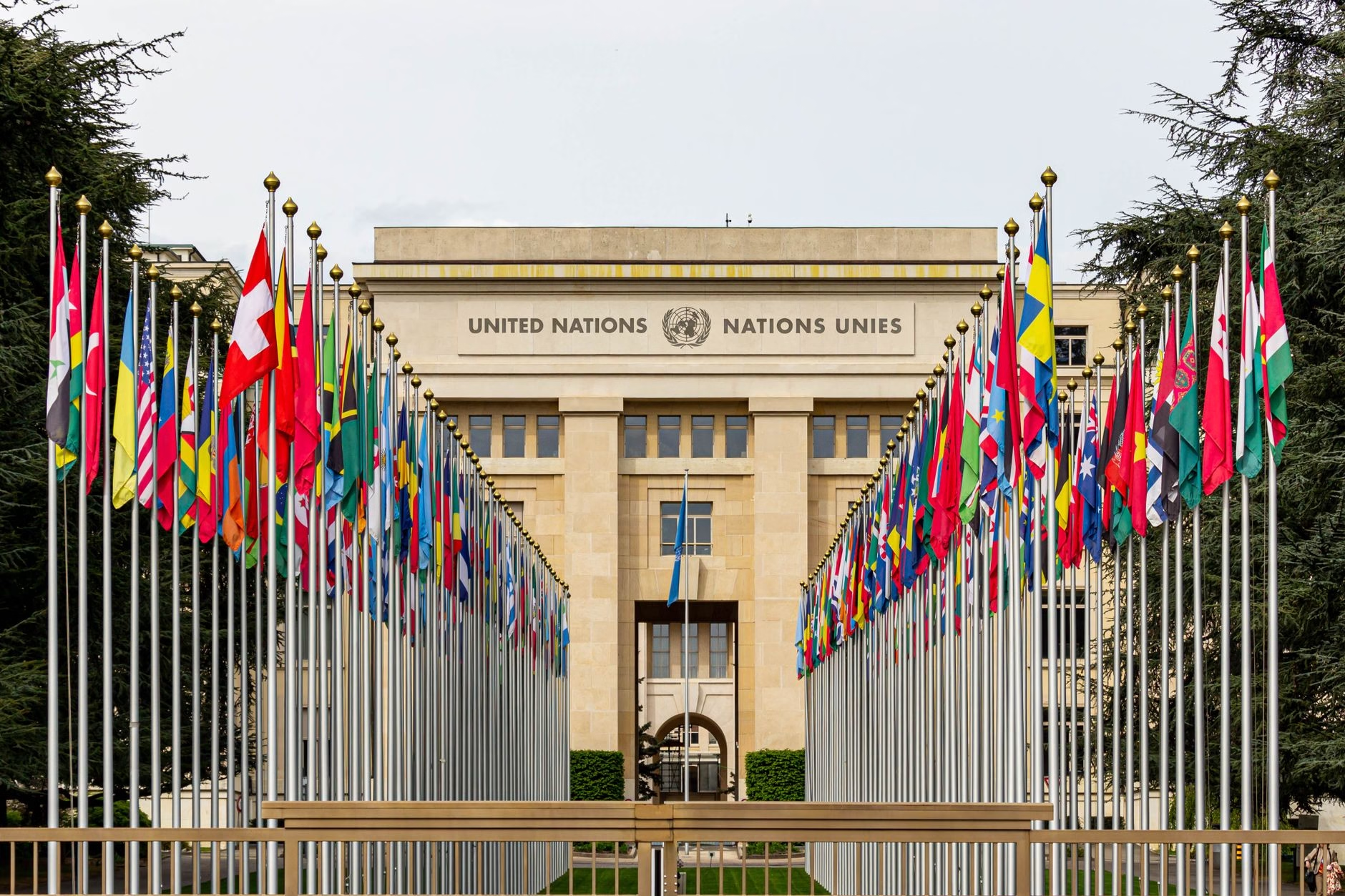
An international panel established by the United Nations recently released findings regarding military actions in the Middle East. Investigators concluded that sufficient evidence exists to suggest violations of international humanitarian law occurred during operations involving the United States and Iran. These conclusions trigger formal diplomatic reviews and place pressure on international legal institutions to address alleged infractions.
The implications of such investigations extend far beyond immediate military strategies. They influence international alliances, shape global public opinion, and test the efficacy of multilateral peacekeeping organizations. Legal experts continue to analyze the documentation provided by investigative panels to determine the appropriate procedural steps for accountability and potential tribunals.
Intersection Of Technology And Global Policy
The simultaneous emergence of advanced artificial intelligence risks and severe geopolitical conflicts highlights the complex nature of modern global management. Both technological advancement and international statecraft require careful navigation to prevent destabilization on a planetary scale. Policymakers must address digital safety and traditional security matters concurrently.
Cross-sector cooperation between technology enterprises and international regulatory agencies remains vital for establishing enforceable standards. Whether governing autonomous software behavior or enforcing international humanitarian law, transparency and accountability serve as foundational pillars. As the global landscape evolves, leaders across all domains must adapt to multifaceted challenges that impact societal stability and international security.





















Leave a Reply