

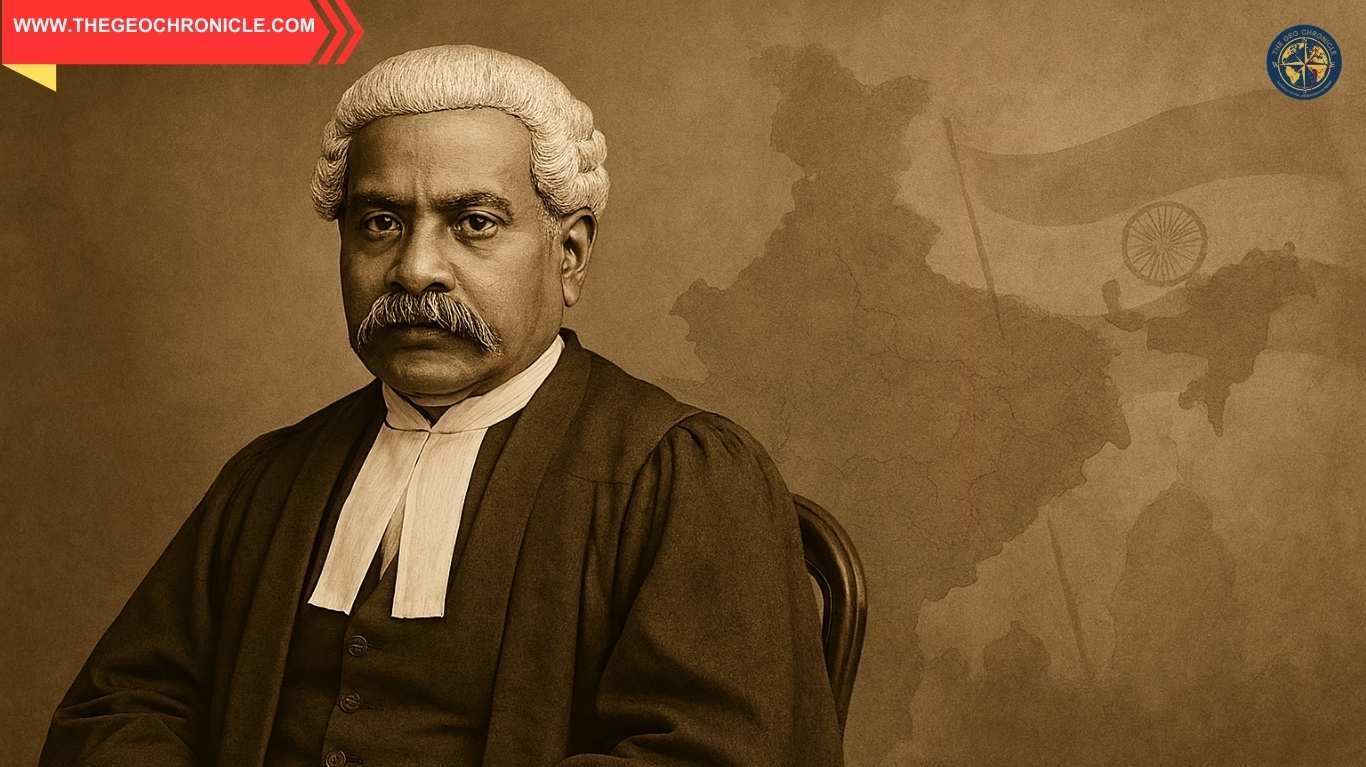
On December 28, 1885, a historic moment unfolded in Bombay that would shape the destiny of a nation. The Indian National Congress (INC) was born, and at its helm stood Womesh Chandra Bonnerjee, a barrister from Calcutta whose leadership marked the beginning of India’s organized political movement against colonial rule. As the first President of the INC, Bonnerjee laid the intellectual and strategic foundation for what would become the largest democratic movement in the world.
This article explores Bonnerjee’s life, legacy, and the significance of the 1885 Congress session, offering a comprehensive view of his contributions to India’s freedom struggle.
Early Life and Legal Career
- Born: December 29, 1844, Calcutta, Bengal Presidency
- Education: Oriental Seminary, Calcutta; Middle Temple, London
- Called to the Bar: June 1867
- Return to India: 1868, joined Calcutta High Court
Bonnerjee’s legal acumen was honed under the mentorship of Sir Charles Paul and J.P. Kennedy. His reputation as a formidable barrister grew rapidly, and he became one of the first Indians to establish a successful legal practice in England.
Political Awakening and London Indian Society
While in England, Bonnerjee became involved with the London Indian Society, founded by Dadabhai Naoroji. This platform allowed Indian intellectuals to engage with British lawmakers and advocate for reforms in colonial governance. Bonnerjee’s exposure to liberal political thought and his legal training positioned him as a natural leader in India’s emerging nationalist movement.
The Birth of the Indian National Congress
| Event | Details |
|---|---|
| Date | December 28, 1885 |
| Location | Gokuldas Tejpal Sanskrit College, Bombay |
| Attendees | 72 delegates from across British India |
| Presiding Officer | Womesh Chandra Bonnerjee |
| Objective | To create a platform for Indian voices in governance |
Bonnerjee’s presidential address emphasized constitutional methods, unity across religious and regional lines, and the need for Indian representation in legislative councils. His tone was moderate yet assertive, reflecting the strategic caution of early Congress leaders.
Key Themes from Bonnerjee’s 1885 Address
- Unity in Diversity: Advocated for communal harmony and pan-Indian identity
- Constitutional Reform: Called for increased Indian participation in governance
- Education and Representation: Emphasized the role of educated Indians in shaping policy
- Moderation and Dialogue: Urged peaceful engagement with British authorities
Legacy and Later Years
Bonnerjee continued to serve the Congress and was re-elected as President in 1892 (Allahabad session). He also contested elections to the British Parliament from Barrow-in-Furness in 1892, becoming one of the first Indians to do so. Though unsuccessful, his candidacy was symbolic of India’s growing political consciousness.
He passed away in Croydon, England, on July 21, 1906, but his legacy endured through the INC and the leaders it nurtured—Naoroji, Gokhale, Tilak, and eventually Gandhi.
Comparative Impact of Early INC Presidents
| Name | Term | Contribution |
|---|---|---|
| W.C. Bonnerjee | 1885, 1892 | Foundational leadership, legal framing of Congress |
| Dadabhai Naoroji | 1886, 1893, 1906 | Economic critique of colonialism, “Drain Theory” |
| Gopal Krishna Gokhale | 1905 | Moderate reformist, mentor to Gandhi |
| Bal Gangadhar Tilak | 1907 | Assertive nationalism, mass mobilization |
Relevance Today
Bonnerjee’s legacy is especially relevant in today’s India, where democratic institutions continue to evolve. His emphasis on constitutionalism, inclusivity, and intellectual leadership remains a guiding light for political discourse. As India navigates complex global challenges, remembering pioneers like Bonnerjee helps anchor its democratic journey in historical wisdom.
Conclusion
Womesh Chandra Bonnerjee was more than a barrister; he was a visionary who understood the power of organized political action. His presidency of the first Indian National Congress session marked the beginning of India’s transformation from a colony to a republic. His life reminds us that leadership rooted in intellect, integrity, and inclusivity can shape the course of history.
Disclaimer
This article is intended for educational and informational purposes only. It draws upon publicly available historical sources and does not represent any political endorsement or official viewpoint.







Leave a Reply