

A Revolutionary Path Beyond Non-Violence
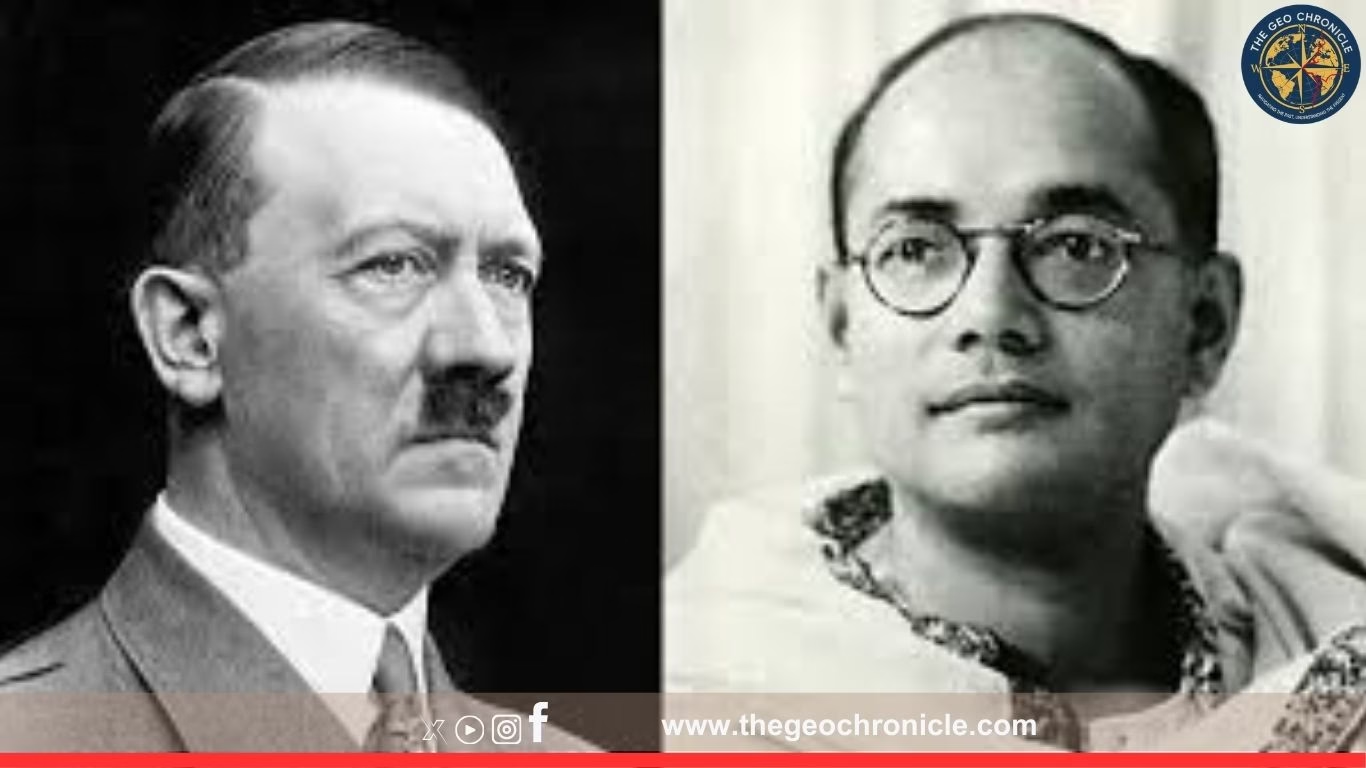
Netaji Subhas Chandra Bose remains one of the most dynamic and debated figures in India’s freedom movement. While Mahatma Gandhi and Jawaharlal Nehru championed non-violent resistance, Bose believed that British colonialism could only be dismantled through armed struggle. His radical vision led him to seek support from Britain’s wartime enemies—most notably Nazi Germany and Imperial Japan—during World War II.
Bose’s decision to approach Adolf Hitler was not born out of ideological alignment but strategic necessity. In a world torn by global conflict, Bose saw an opportunity to leverage shifting alliances to further India’s independence. His journey from house arrest in Calcutta to Berlin, and later Tokyo, was a testament to his unwavering commitment to freeing India from colonial rule.

The Escape from India: A Daring Journey to Germany
In January 1941, Bose escaped British surveillance in Calcutta disguised as a Pathan. He traveled through Afghanistan and the Soviet Union, eventually reaching Berlin in April 1941. His arrival in Nazi Germany marked the beginning of a controversial chapter in India’s freedom struggle.
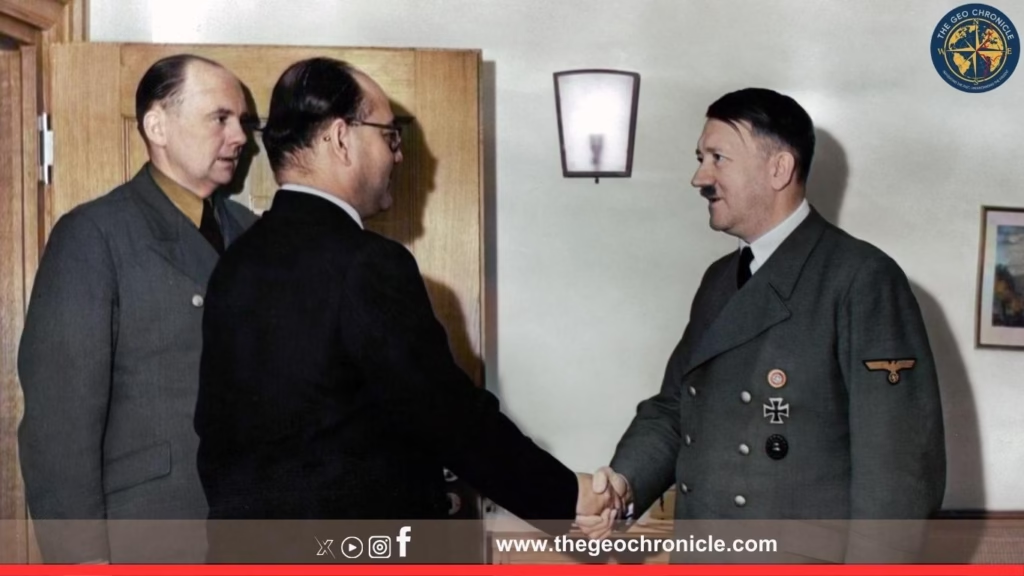
Once in Berlin, Bose established the Free India Centre and began broadcasting anti-British propaganda via German radio. His speeches urged Indians to rise against colonial rule and join the fight for independence. He also met with senior Nazi officials, including Foreign Minister Joachim von Ribbentrop, and eventually Adolf Hitler himself.
The Free India Centre and Indian Legion
Bose’s most significant achievement in Germany was the formation of the Indian Legion (Indische Legion), composed of Indian prisoners of war captured by Axis forces in North Africa. These soldiers, many of whom had served in the British Indian Army, pledged allegiance to Bose and the cause of Indian independence.
| Entity | Founded By | Location | Purpose | Strength |
|---|---|---|---|---|
| Free India Centre | Subhas Chandra Bose | Berlin, Germany | Political and propaganda wing for Indian independence | ~30 staff members |
| Indian Legion | Bose (with Nazi support) | Germany | Military unit to fight British forces in India | ~4,500 soldiers |
The Legion was trained in German military tactics and wore uniforms bearing the insignia of the Azad Hind. Though it never saw combat in India, its formation was symbolic of Bose’s resolve to build an army outside British control.

Bose’s Meeting with Hitler: A Clash of Priorities
Bose met Adolf Hitler in May 1942. The meeting, however, was not fruitful. Hitler was more focused on his European campaigns and showed little interest in India’s liberation. Moreover, Nazi racial ideology viewed Indians as inferior, which created friction during the discussions.
Despite these challenges, Bose remained pragmatic. He understood that Germany’s primary value lay in its opposition to Britain. His goal was not to endorse Nazi ideology but to exploit geopolitical conditions to India’s advantage.
“Bose’s relationship with Hitler was fraught with complexity, as his goals were fundamentally incompatible with Nazi ideology,” writes historian Ryan Baidya.
Shift to Japan: The INA and Southeast Asian Campaign
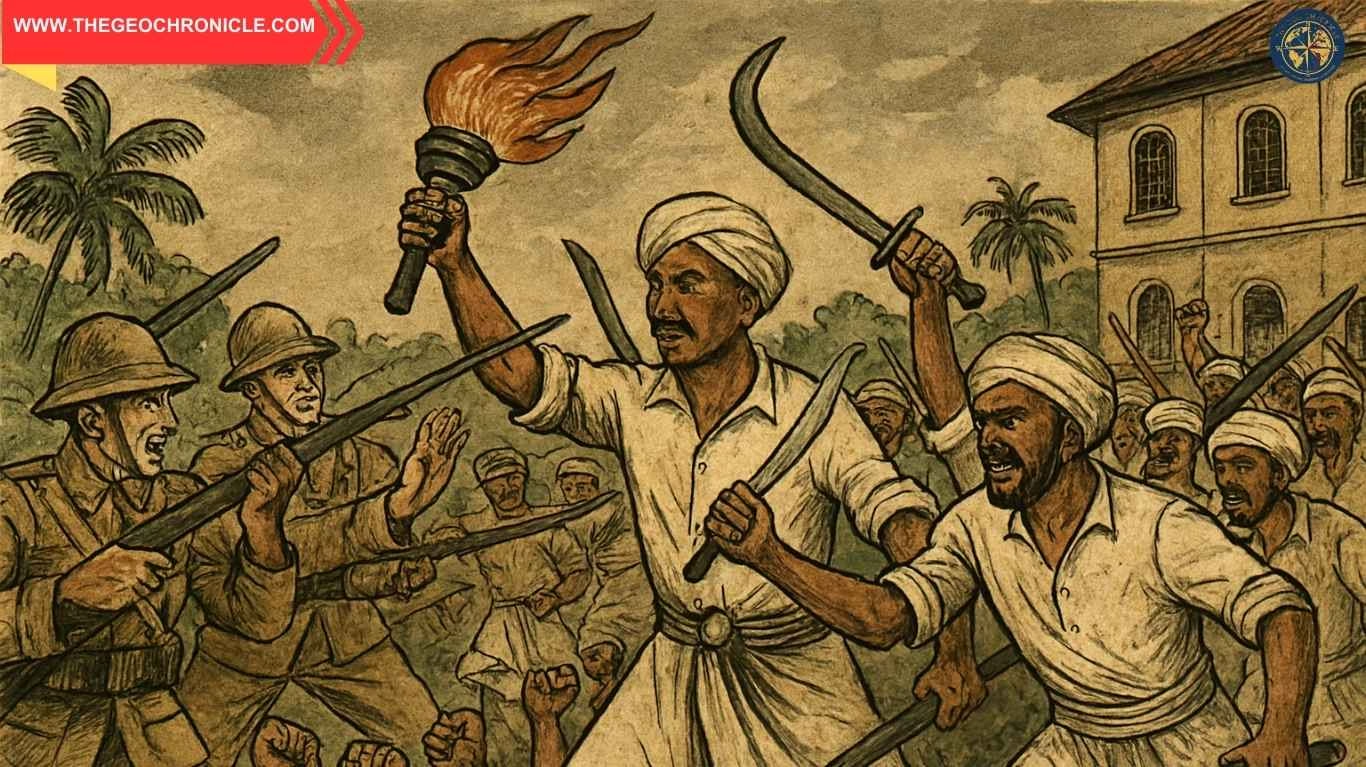
Realizing Germany’s limitations, Bose shifted his efforts to Japan in 1943. There, he took command of the Indian National Army (INA), originally formed by Rash Behari Bose. Under Netaji’s leadership, the INA grew to over 40,000 soldiers and launched campaigns in Burma and northeastern India.
The INA’s most notable battles occurred in Imphal and Kohima, where they fought alongside Japanese forces against the British. Though ultimately unsuccessful, these campaigns galvanized Indian nationalist sentiment and laid the groundwork for post-war independence.
Ethical Dilemmas and Historical Debate
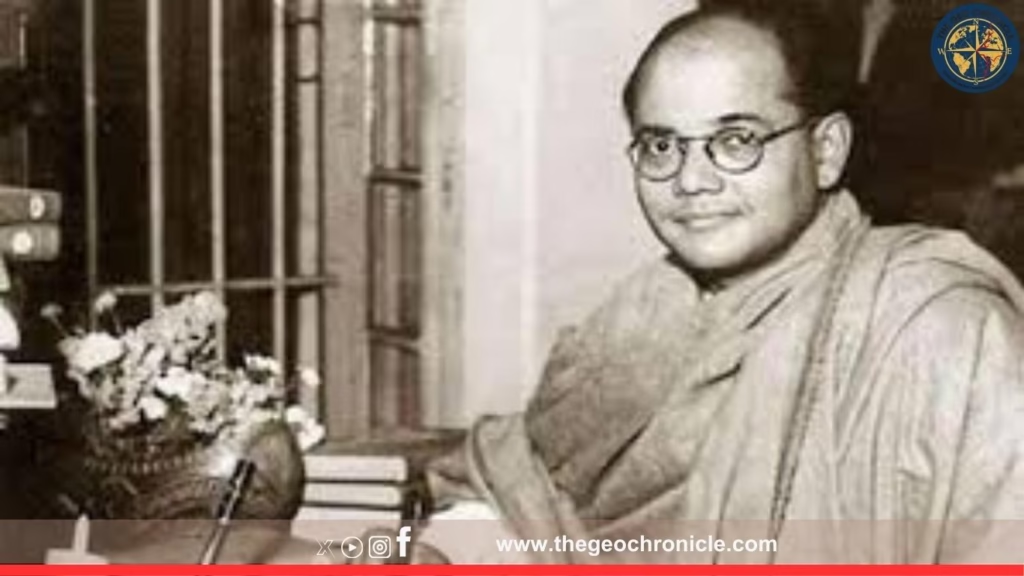
Bose’s alliances with Axis powers have sparked decades of debate. Critics argue that aligning with regimes responsible for atrocities, including the Holocaust, was morally indefensible. Supporters counter that Bose’s actions were driven by desperation and patriotism, not ideology.
“Netaji was not a Nazi collaborator. He was just fighting for India’s independence,” writes Abhishek Banerjee in Firstpost.
Western leaders, including Winston Churchill and Franklin D. Roosevelt, also engaged with Stalin despite his brutal regime. Bose’s supporters argue that his actions should be viewed through the same lens of wartime pragmatism.

Legacy and Impact on India’s Freedom Movement
Despite the controversies, Bose’s legacy remains powerful. His call for armed resistance inspired generations of revolutionaries. The INA trials in 1945–46 sparked mass protests across India, weakening British resolve and accelerating independence.
Bose’s vision of a free India was secular, inclusive, and militarily strong. His Azad Hind Government, declared in exile in 1943, was recognized by nine countries and operated with its own currency, civil code, and cabinet.

Comparative Analysis: Bose vs. Other Freedom Leaders
| Leader | Approach | Foreign Alliances | Military Strategy | Legacy |
|---|---|---|---|---|
| Mahatma Gandhi | Non-violent resistance | None | Civil disobedience | Father of the Nation |
| Jawaharlal Nehru | Parliamentary activism | Allied with British liberals | No military involvement | First Prime Minister of India |
| Subhas Chandra Bose | Armed struggle | Nazi Germany, Imperial Japan | INA campaigns in Southeast Asia | Revolutionary icon, INA founder |
Conclusion: A Patriot’s Calculated Gamble
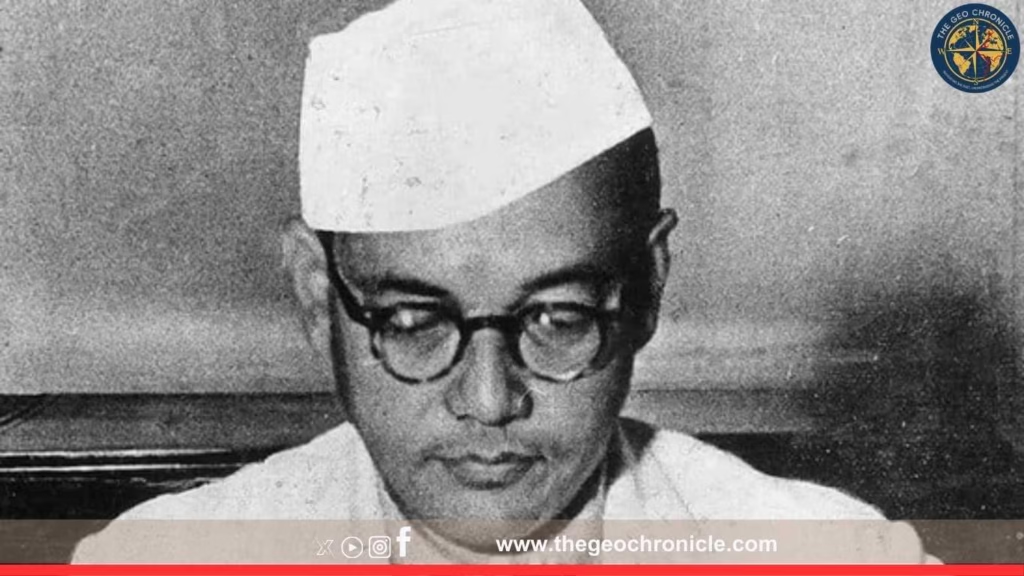
Netaji Subhas Chandra Bose’s decision to seek support from Hitler was born out of urgency, pragmatism, and a fierce desire for freedom. His journey from Berlin to Tokyo, and his leadership of the INA, reflect a bold strategy to liberate India by any means necessary.
While his alliances remain controversial, Bose’s patriotism is beyond question. He challenged colonialism not with petitions, but with armies. His legacy continues to inspire debates, documentaries, and generations of Indians who see in him a symbol of uncompromising resistance.
Disclaimer
This article is based on publicly available historical records, academic research, and media reports as of September 2025. The views expressed in quoted material are those of the respective authors and do not represent the views of this publication. All data and references are cited from credible sources including Firstpost, EducationPost, and MyIndNet.



Leave a Reply