

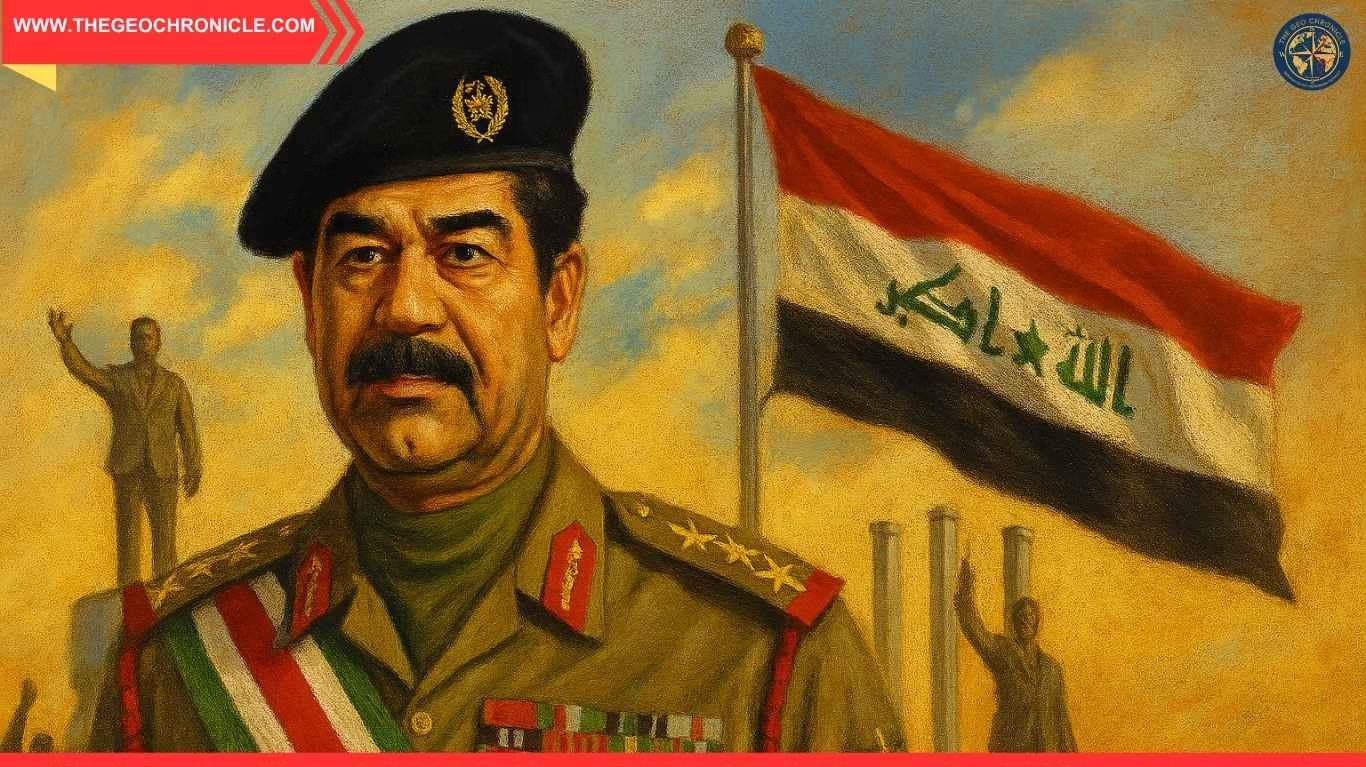
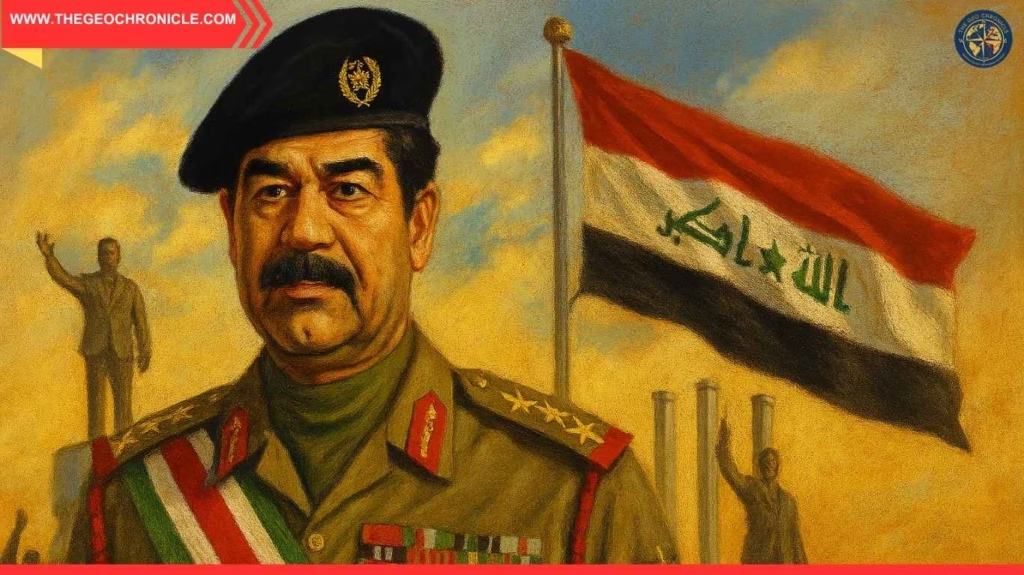
The name Saddam Hussein is synonymous with modern Iraqi history—a history marked by turbulence, ambition, oppression, conflict, and dramatic change. Rising from a precarious childhood in rural Tikrit to the absolute ruler of Iraq, Saddam Hussein’s personal journey paralleled that of the Iraqi nation itself: from the embers of colonialism, through the aspiration of Arab socialism, to authoritarianism, warfare, and, ultimately, downfall. Hussein’s rule (1979–2003) shaped Iraq’s socio-economic trajectory and left indelible scars on its political, ethnic, and sectarian fabric. As Iraq faces new challenges in 2025—with fresh parliamentary elections, lingering security concerns, and enduring economic malaise—the legacy of Saddam Hussein looms large, both as a cautionary tale and as a reference point in popular and political discourse.
Early Life and Family Background of Saddam Hussein
Saddam Hussein Al-Majid Al-Tikriti was born on April 28, 1937, in the remote village of Al-Awja near Tikrit, north of Baghdad. His upbringing was marred by tragedy and hardship. His father died or disappeared before his birth, and his older brother soon after succumbed to cancer. These events devastated his mother, Subha Tulfah al-Mussalat, to the point of attempted self-harm and severe neglect. As a result, Saddam was initially raised by his uncle Khairallah Talfah, an Iraqi army officer and ardent Arab nationalist, who became a significant political and paternal influence. The hardships of his childhood—marked by poverty, deprivation, and alleged abuse by a stepfather—were later mythologized by Saddam to construct an image of resilience and ruthlessness.
A prevailing theme of Saddam’s early life was his exposure to violence and reliance on blood ties for protection and advancement. According to several accounts, Saddam’s adolescence was marked by episodes of violent behavior and hardened self-preservation, including a family murder for which he was briefly imprisoned.
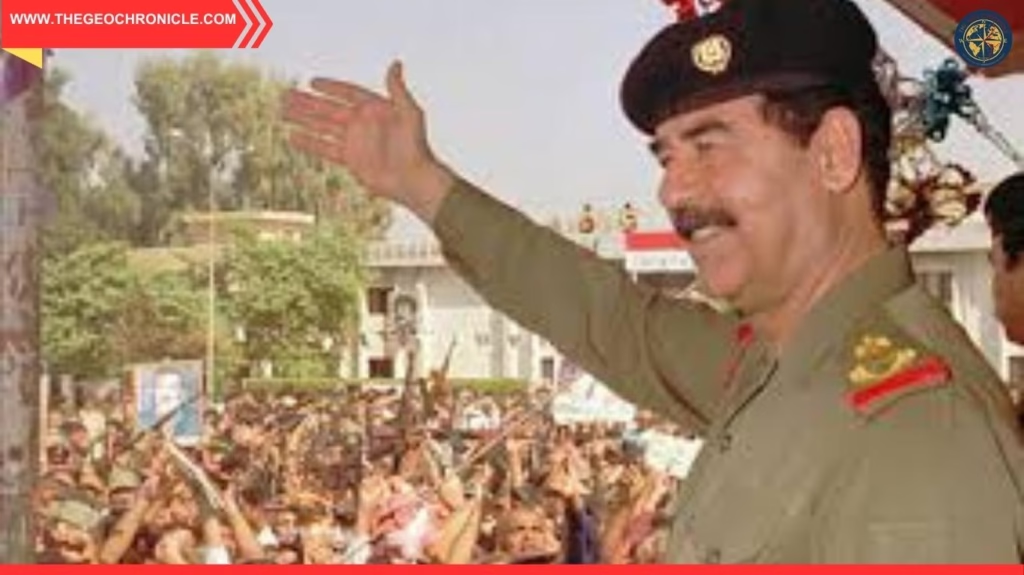
Hussein’s formative years were thus shaped by insecurity, tribal loyalty, and the politicization of family ties. This background informed not only his personal ambitions but also the network of patronage and kinship that underpinned his subsequent rise through the ranks of the Ba’ath Party and, eventually, the Iraqi state.
Ba’ath Party Emergence and Saddam’s Involvement
The political awakening of Saddam coincided with the ferment of pan-Arab nationalism sweeping the region in the aftermath of World War II and the decline of colonialism. In 1957, at the age of 20, he formally joined the Ba’ath Party (literally meaning “renaissance” or “resurrection” in Arabic), a movement founded in Syria and predicated on secular Arab nationalism and socialism. The Iraqi Ba’ath was initially a small, radicalized group with an undercurrent of violence and conspiracy, seeking to unify the Arab world under a single, transformative state.
Inspired by the ascendancy of Egypt’s Gamal Abdel Nasser and the ideology of Ba’athist founders Michel Aflaq and Salah al-Din Bitar, a young Saddam quickly became involved in party activities. The movement grew in the shadow of Iraq’s monarchy, which was overthrown during the 1958 revolution—an event that established Iraq as a republic but also plunged it into a cycle of coups and counter-coups amid ideological infighting.
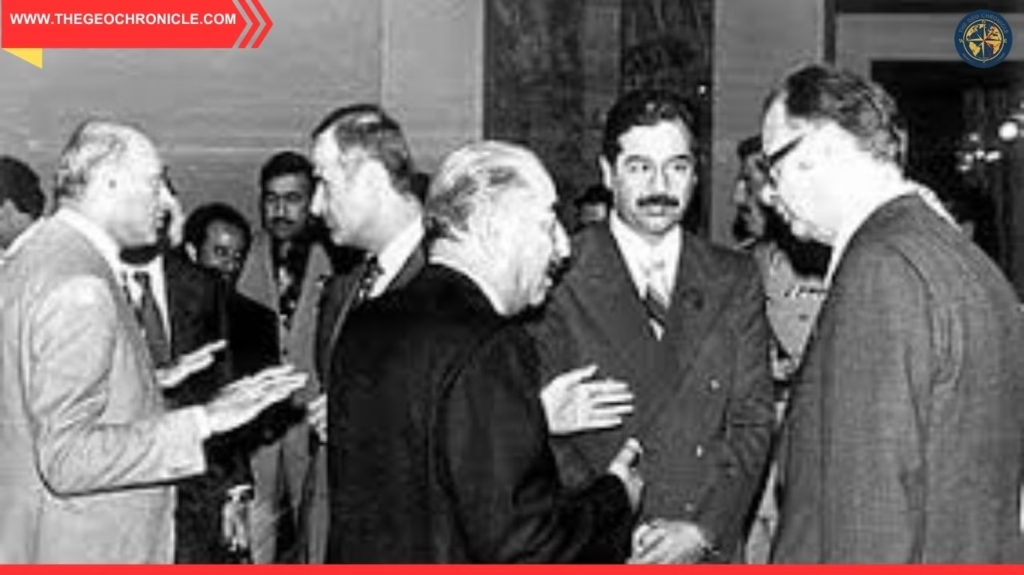
Saddam’s first major act of political violence occurred in 1959, when he participated in a failed Ba’athist plot to assassinate then-Prime Minister Abdul Karim Qassim. Wounded and forced to flee, Saddam took refuge first in Syria (under protection from the Ba’ath’s Syrian comrades) and then in Cairo, Egypt, where he studied law and mingled with other exiled Arab revolutionaries. These years in exile consolidated his commitment to the ideals of Arab unity and anti-imperialism, but also exposed him to the machinations of power politics and the value of clandestine action.
Political Maneuvers Leading to the 1968 Coup
The early 1960s saw repeated oscillations in Iraq’s ruling coalitions. The February 1963 “Ramadan Revolution” brought the Ba’ath Party to power for the first time but they were ousted within months, leading to internal divisions and further repression. Saddam briefly returned to Iraq following this 1963 coup but soon found himself imprisoned for his involvement in another failed plot against the new leadership. He spent nearly two years in prison, where he reflected on the Ba’ath’s strategic mistakes, particularly their overreliance on the military—an error he vowed not to repeat.
Escaping from prison in 1966, Saddam set about rebuilding the Ba’ath’s internal security apparatus, creating a powerful and loyal shadow force of party enforcers who would operate beyond the reach of the military establishment. This focus on secret police and ruthless elimination of rivals became the hallmark of his subsequent leadership.
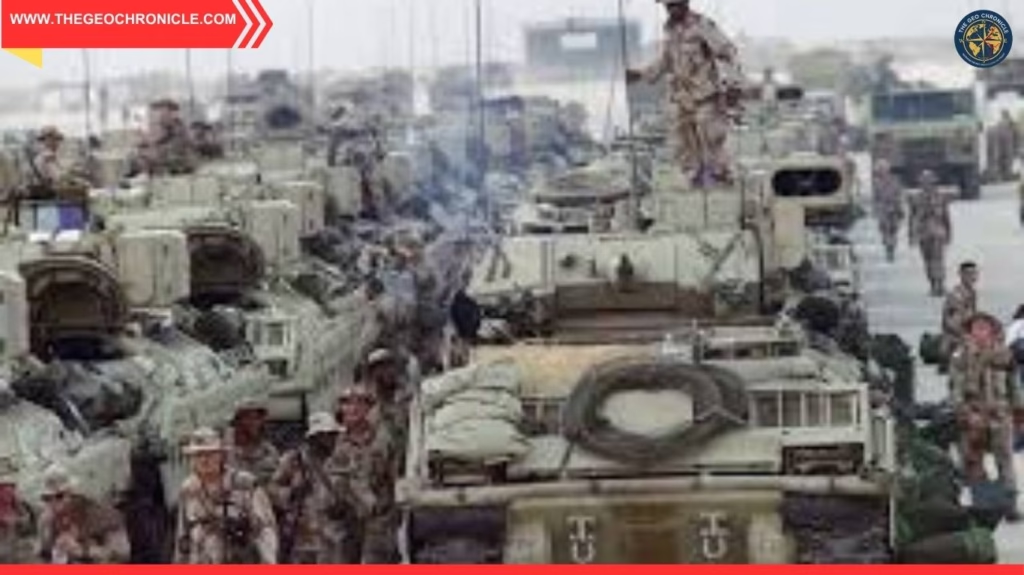
The pivotal moment came in July 1968, when Saddam, working alongside his cousin Ahmed Hassan al-Bakr, engineered a bloodless coup that toppled President Abdul Rahman Arif and established Ba’athist rule anew. While Bakr assumed the presidency, it was widely recognized that Saddam, as vice chair of the Revolutionary Command Council (RCC) and head of internal security, was the regime’s primary architect and operative power.
Key Figures in the 1968 Coup
| Name | Role in Coup | Later Position |
|---|---|---|
| Ahmed Hassan al-Bakr | Coup Leader | President of Iraq |
| Saddam Hussein | Deputy, Security Organizer | President of Iraq |
| Abd ar-Razzaq an-Naif | Prime Minister (post-coup) | Exiled |
| Abd ar-Rahman al-Dawud | Defence Minister (post-coup) | Exiled |
This period also saw the Ba’athists consolidate power through purges, public executions (notably of alleged Israeli spies in 1969), and systematic terror, sending a clear message of zero tolerance for dissent.
Saddam Hussein’s Rise to Presidency in 1979
Throughout the 1970s, Saddam steadily expanded his authority, leveraging his control of the security state, tribal networks (notably his Tikriti clan), and internal Ba’athist rivalries. His ascent was marked by the systematic sidelining of President al-Bakr, especially as the latter’s health waned. In July 1979, Saddam forced Bakr’s resignation, assuming the roles of president, prime minister, and chairman of the RCC, thus formalizing his absolute control.
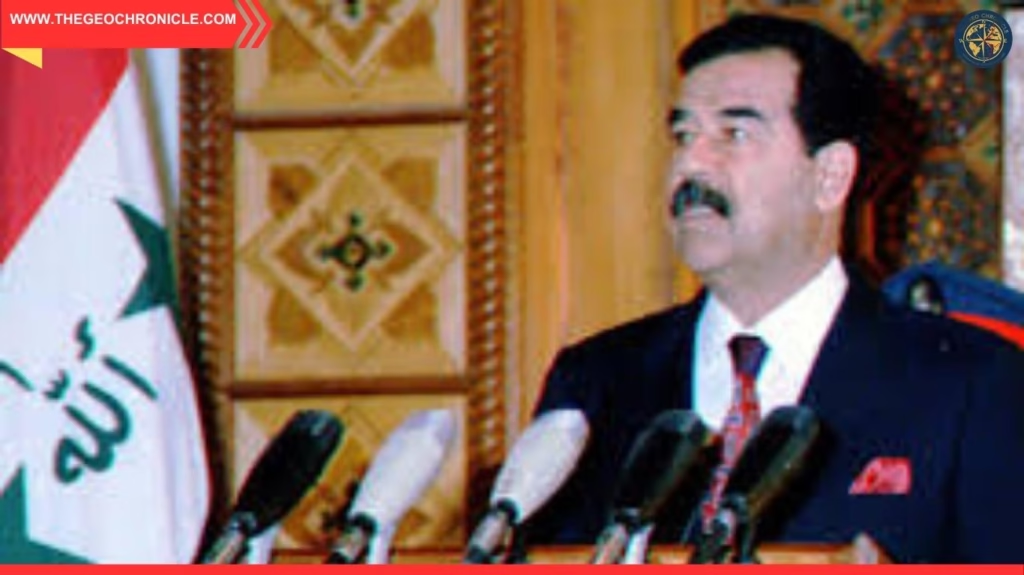
Days after taking power, Saddam convened an infamous Ba’ath Party assembly in Baghdad’s al-Khuld Hall. There, amid a carefully orchestrated spectacle, senior party official Muhyi Abd al-Hussein Mashhadi publicly “confessed” to a Syrian-orchestrated plot against Saddam. One by one, sixty-eight alleged conspirators were named and removed; twenty-one were executed. The event was videotaped and broadcast throughout Iraq, creating a climate of terror and enforced loyalty, and cementing Saddam’s reputation as a ruthless master of power.
This “Comrades Massacre” marked the beginning of one of the most totalizing and violently repressive dictatorships of the late 20th century, and set the tone for the ensuing two decades of personal rule.
1979 Ba’ath Party Purges and Political Repression
The 1979 purge was the harbinger of a broader apparatus of repression that would characterize Saddam’s tenure. Using the party, the security apparatus (the Mukhabarat), and overlapping tribally-anchored networks, Saddam eliminated all perceived rivals, particularly those with ties to the earlier Ba’ath regime or to external actors—most notably Syria, with which the Iraqi Ba’ath had a tense relationship following the Ba’ath split of 1966.
Beyond executions, thousands of party and military officers were forcibly retired, exiled, or disappeared. Subsequent waves of purges—such as in June 1982, during the Iran-Iraq war—routinely eliminated half of the RCC membership or more, especially among minorities or those with potential allegiances to dissenting sectarian or ethnic constituencies.
The regime deployed torture, secret trials, disappearances, intimidation of families, and collective punishment in a systematic campaign to create a closed, fearful society. The Iraqi Intelligence Service and allied branches maintained pervasive surveillance not only of the population but of party members themselves.
Saddam publicly declared that his success depended on outmatching the plotting and ruthlessness of predecessors, boasting about his ability to preemptively annihilate conspiracies and reinforce his own myth as the embodiment of the state.
Saddam Hussein’s Cult of Personality
To consolidate this climate of fear with a veneer of legitimacy, Saddam cultivated an omnipresent cult of personality. His image, in various guises—from tribal chief to modernizer, father of the nation to revolutionary general—was displayed on virtually every public building, school, and government office, as well as on billboards, street murals, and mass media.
State narratives depicted Saddam as the “Anointed One”, “Modern Saladin”, conflating his persona with Iraqi heritage, Islamic authority, and the “glory” of Mesopotamian civilization. State media elevated him to the status of a near-mythical provider, defender, and redeemer of the Arab nation.
The 1995 and 2002 referendums laughably reported official approval rates of 99.96% and 100% respectively, betraying the extent of both state control and regime insecurity.
The Iran–Iraq War (1980–1988)
Causes and Outbreak
The Iranian Revolution in 1979, and the subsequent establishment of a theocratic Shiite state under Ayatollah Khomeini, dramatically altered the regional balance of power. Saddam perceived the revolutionary Shi’ite fervor as an existential threat to his Sunni-dominated, ostensibly secular regime—especially given Iraq’s own restive Shi’a majority and Kurdish populations. Territorial disputes over the Shatt al-Arab waterway, together with the memory of Iranian support for Kurdish insurgents, further heightened tensions.
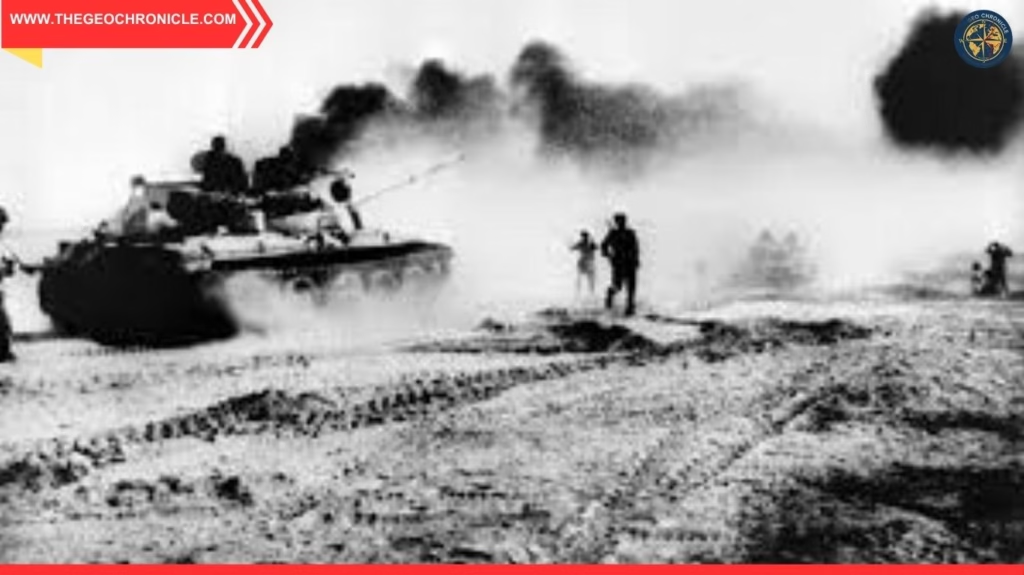
On September 22, 1980, Iraq launched a surprise invasion of Iran, expecting a swift victory and the annexation of the oil-rich province of Khuzestan. The campaign quickly bogged down, however, as Iranian forces regrouped and the war devolved into a brutal war of attrition, marked by trench warfare, chemical attacks, and repeated offensives and counteroffensives.
Conduct and Costs
The Iran–Iraq War became one of the longest and bloodiest conflicts of the 20th century, lasting eight years and claiming up to one million lives. Iraq received massive financial backing from Gulf Arab states (Kuwait, Saudi Arabia, UAE), military equipment from the Soviet Union, France, and even limited support from the United States, whose leadership feared the spread of Iranian Islamism and Soviet influence in Iraq.
Both sides employed unprecedented brutality. Iraq used chemical weapons against Iranian troops and against its own Kurdish population, most infamously in the 1988 Halabja massacre, which killed thousands of civilians. Iran resorted to mass “human wave” assaults, often with teenage and child volunteers.
The eight-year conflict destroyed infrastructure, bankrupted both economies, and traumatized whole generations. At war’s end, neither side achieved strategic objectives; the border returned to the pre-war status quo.
Iran–Iraq War Key Facts
| Aspect | Detail |
|---|---|
| Duration | September 1980 – August 1988 |
| Estimated Deaths | 500,000–1,000,000 (combined) |
| Iraq’s War Debt | $80 billion+ (much owed to Kuwait and Gulf States) |
| Use of Chemical Weapons | Widespread (Iranian and Kurdish targets) |
| Result | Stalemate, status quo ante bellum |
Invasion of Kuwait and the Gulf War (1990–1991)
Background and Causes
The end of the Iran–Iraq War left Saddam with enormous debts, a battered economy, and an increasingly restive society. Gulf Arab states, especially Kuwait, began to demand repayment of wartime loans while keeping oil prices low—a policy that Iraq viewed as economic warfare. Accusations followed that Kuwait was slant-drilling into the Iraqi-controlled Rumaila oil field.
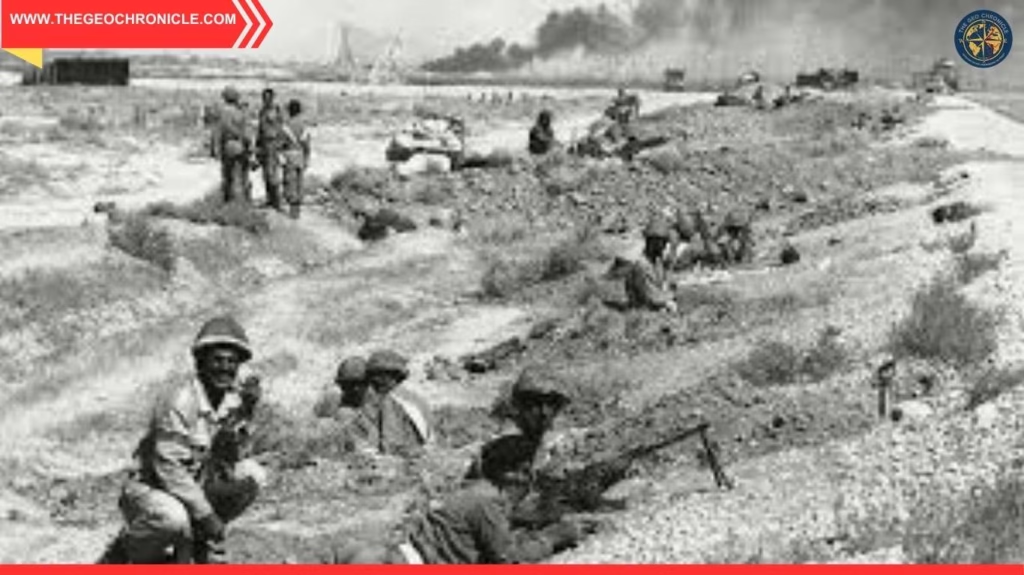
On August 2, 1990, Hussein ordered the invasion of Kuwait. Iraqi forces swiftly occupied the emirate, pillaged assets, and declared it Iraq’s nineteenth province. The international community, led by the United States, immediately condemned the invasion and orchestrated a global economic embargo.
The Gulf War: Coalition Response and Outcomes
The U.N. issued a series of resolutions demanding Iraq’s withdrawal, culminating in Security Council Resolution 678 authorizing the use of “all necessary means.” In January 1991, Operation Desert Storm commenced: a massive aerial and ground campaign by a U.S.-led coalition that expelled Iraqi forces from Kuwait in six weeks.
The war’s aftermath saw a devastated Iraq: bombed infrastructure, environmental disasters (notably the torching of Kuwaiti oil fields), and an embittered population.
International Sanctions and Economic Impact (1991–2003)
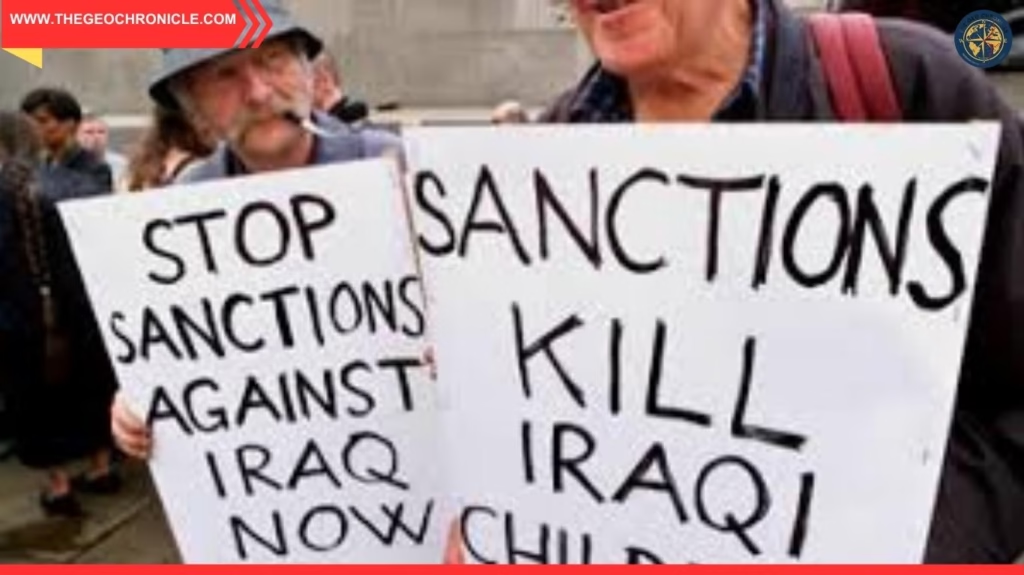
In the wake of the Gulf War, the U.N. imposed the most comprehensive sanctions regime ever designed, nearly totally isolating Iraq from the world economy. Under Security Council Resolutions 661 and subsequent mandates, all trade and financial flows—except for restricted humanitarian exceptions—were prohibited until Iraq complied with weapons disarmament and other conditions.
Economic, Social, and Humanitarian Consequences
These sanctions, lasting until 2003, had catastrophic consequences for the Iraqi population:
- GDP collapse: Iraq’s per capita income plummeted from $1,371 in 1990 to $241 by 1995.
- Malnutrition and disease: Malnutrition soared, child mortality spiked, and the healthcare system collapsed under a lack of medicine and clean water.
- Education and infrastructure: Decaying schools, mass illiteracy, and “brain drain” as professionals fled or were forced into menial labor.
- Informal economy and corruption: The state’s rations system, pervasive black-market activity, and elite profiteering replaced preexisting welfare networks.
- State survival: Saddam channeled rations and resources to regime loyalists and used the sanctions to further suppress opposition, blaming external “imperialists” for the country’s misery.
The Oil-for-Food Programme (approved in 1996) provided some humanitarian relief, but was manipulated by regime officials for corruption and patronage, and could not reverse the extraordinary damage of prolonged embargoes.
Domestic Policies and Socio-Economic Programs under Saddam
While best remembered for its brutal repression, the Ba’athist regime under Saddam also presided over periods of significant investment in social welfare, industry, and infrastructure—especially prior to the Iran–Iraq War.
Modernization and Public Services
In the 1970s, especially after the nationalization of the Iraq Petroleum Company in 1972, massive oil revenues fueled the expansion of hospitals, schools, roads, and state enterprises. Illiteracy campaigns, universal free education, rural electrification, and improved women’s rights were flagship policies. UNESCO recognized Iraq’s educational achievements. The government provided generous subsidies for agriculture and land reform, as well as free healthcare.
Iraq under Saddam boasted some of the most modern infrastructure in the region, with high rates of literacy, women’s participation in the workforce, and life expectancy.
Control and Social Engineering
But these programs were also instruments of control: state employment was tied to Ba’ath Party membership, and educational and professional advancement depended on loyalty oaths. Tribal and neighborhood networks were coopted to create a vast surveillance state, with incentives for informants and collective punishment for resistance.
Human Rights Violations and Repression Mechanisms
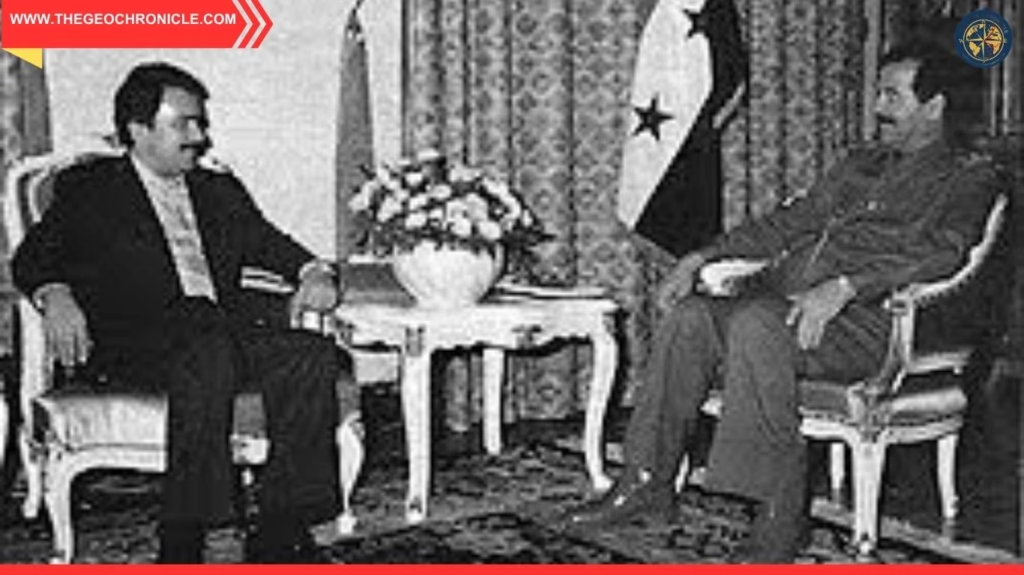
Saddam’s Iraq became synonymous with gross human rights abuses. Non-governmental organizations and the U.S. State Department catalogued an extensive array of crimes, including:
- The deaths of 50,000–100,000 Kurds (especially during the Anfal campaign)
- The destruction of 2,000 Kurdish villages
- The internal displacement of nearly a million civilians
- Summary executions of over 10,000 political opponents
- Systematic torture, rape, and enforced disappearances
- Extermination campaigns against minority populations (Kurds, Shi’ites, Marsh Arabs)
The regime’s security agencies (Mukhabarat, Amn, and others) operated secret prisons, torture facilities, and assassination squads at home and abroad. Entire families, including women and children, were targeted for the alleged crimes of a single member.
High-profile abuses include the 1982 Dujail massacre (the eventual basis for Saddam’s conviction), the post-Gulf War suppression of Kurdish and Shi’a uprisings (with indiscriminate bombing and chemical attacks), and systematic repression of any form of independent civil organization.
Saddam Hussein’s Cult of Personality
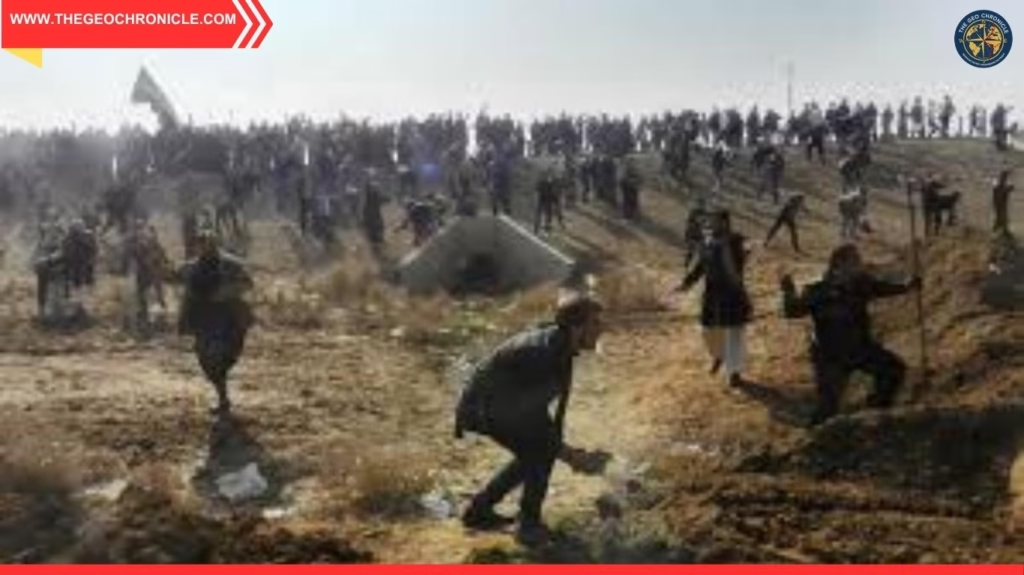
The psychological dimensions of Saddam’s rule cannot be overstated. Saddam’s image-building strategy combined Stalinist, fascist, and Arab nationalist motifs:
- Visual omnipresence: His face and slogans on banknotes, stamps, media, and monumental statuary.
- Myth-making: Saddam was reinvented as heir to Nebuchadnezzar, Saladin, and other regional icons, blending pan-Arab and Mesopotamian historical narratives.
- Gendered and generational appeal: Portrayed simultaneously as father of the nation, fearless military genius, and humble shepherd of his people.
- Direct engagement: Himself as a poet, novelist, and intellectual leader, personally intervening in cultural, educational, and religious affairs.
Such methods promoted ideological uniformity and fear, but also fostered enduring nostalgia among some Iraqis for the stability and sense of national pride (however illusory) of the Ba’athist era.
US-Led Invasion of Iraq and Saddam’s Downfall (2003)
The events of September 11, 2001, provided the geopolitical context in which the U.S., under President George W. Bush, accused Saddam of sustaining weapons of mass destruction (WMD) programs and supporting terrorism—claims later discredited but widely accepted at the time. As diplomatic efforts stagnated, President Bush issued a 48-hour ultimatum for Saddam to leave office.
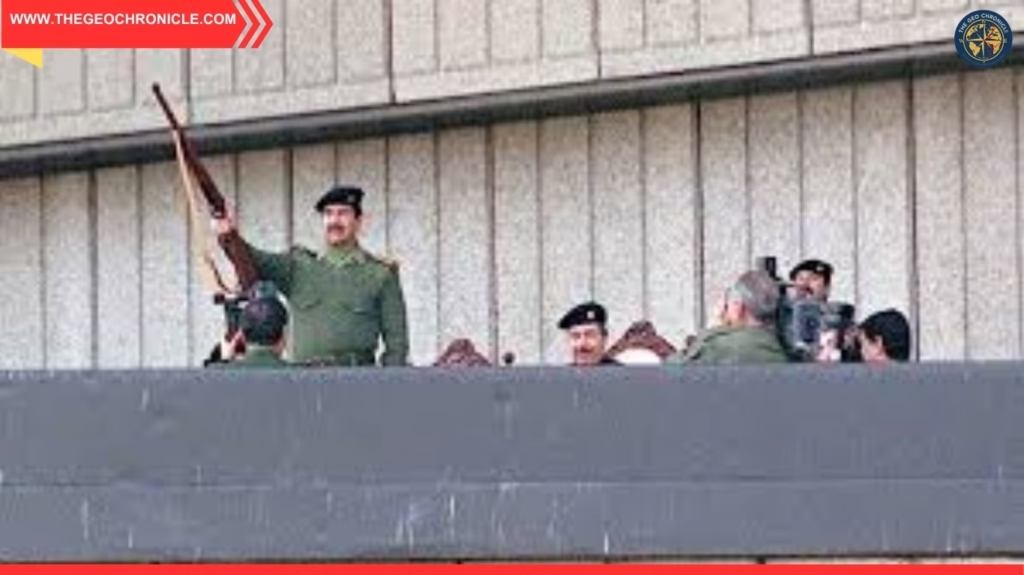
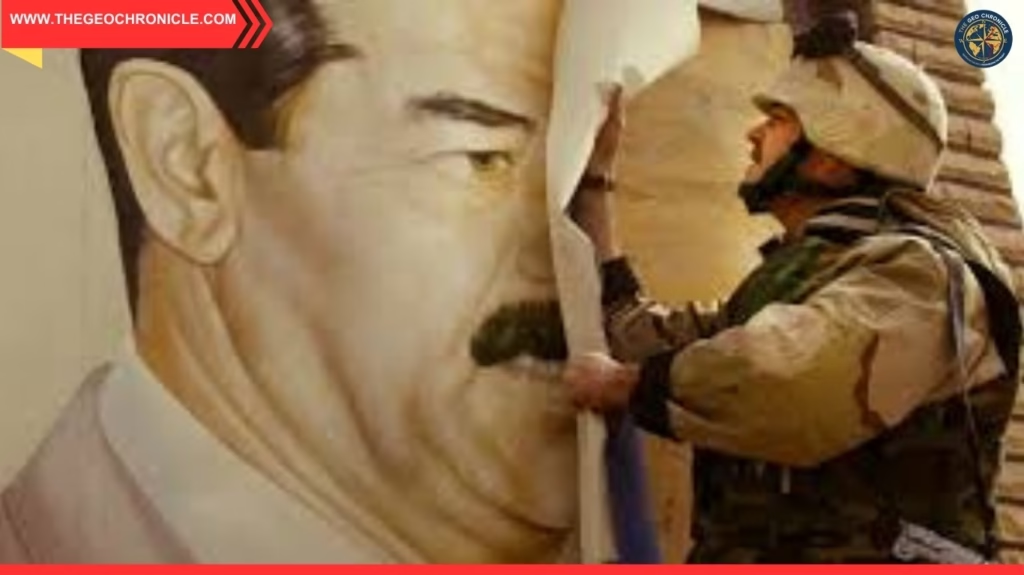
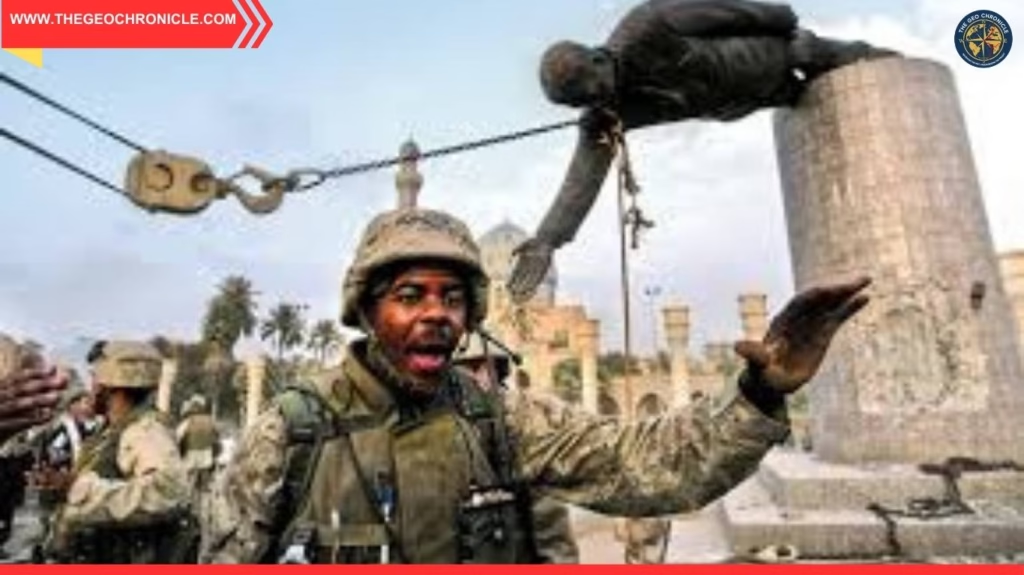
On March 20, 2003, coalition forces invaded Iraq—a campaign that decapitated the Ba’ath regime in less than a month. Major cities fell rapidly, culminating in the iconic toppling of Saddam’s statue in Baghdad on April 9.
Saddam vanished, evading capture for months. On December 13, 2003, he was discovered hiding in a “spider hole” near Tikrit. He was arrested, transferred to Iraqi custody in June 2004, and put on trial for crimes against humanity.
Trial and Execution of Saddam Hussein
Judicial Process
Saddam’s trial, under the auspices of the Iraqi High Tribunal (IHT), began in October 2005 and centered on his responsibility for the killing of 148 Shi’a villagers in Dujail after a 1982 assassination attempt. The proceedings were highly publicized and contentious:
- Saddam used the platform to denounce the court and the occupation.
- The trial was marred by assassinations of defense lawyers, judicial resignations, and allegations of political interference.
- Human rights observers criticized the process for failing to meet international standards of fairness and impartiality.
Verdict and Execution
On November 5, 2006, Saddam was convicted and sentenced to death by hanging; the sentence was hastily carried out on December 30, 2006, despite controversy and widespread documentation of flaws in the judicial proceedings. His execution was videotaped and leaked online, displaying scenes of sectarian taunting and further fueling divisions.
Post-2003 Iraqi Political Developments
Transition and State-building
The removal of the Ba’ath regime was followed by prolonged occupation and the attempted reconstruction of Iraq’s shattered institutions. A new Transitional Administrative Law was adopted in 2004, followed by a permanent constitution in 2005, and a series of elections to establish new representative organs of government.
- The Coalition Provisional Authority’s “De-Ba’athification” purged former Ba’athists from public life, resulting in large-scale loss of institutional memory and exacerbating unemployment and insecurity.
- Power-sharing arrangements entrenched an ethno-sectarian balance: Shia prime ministers, Kurdish presidents, and Sunni parliamentary speakers.
- While a formal transition to democracy occurred, the process was plagued by insurgency, sectarian violence (peaking 2006–2008), the emergence of terrorist groups like Al Qaeda in Iraq and ISIS, and widespread endemic corruption.
Security and Sectarian Dynamics
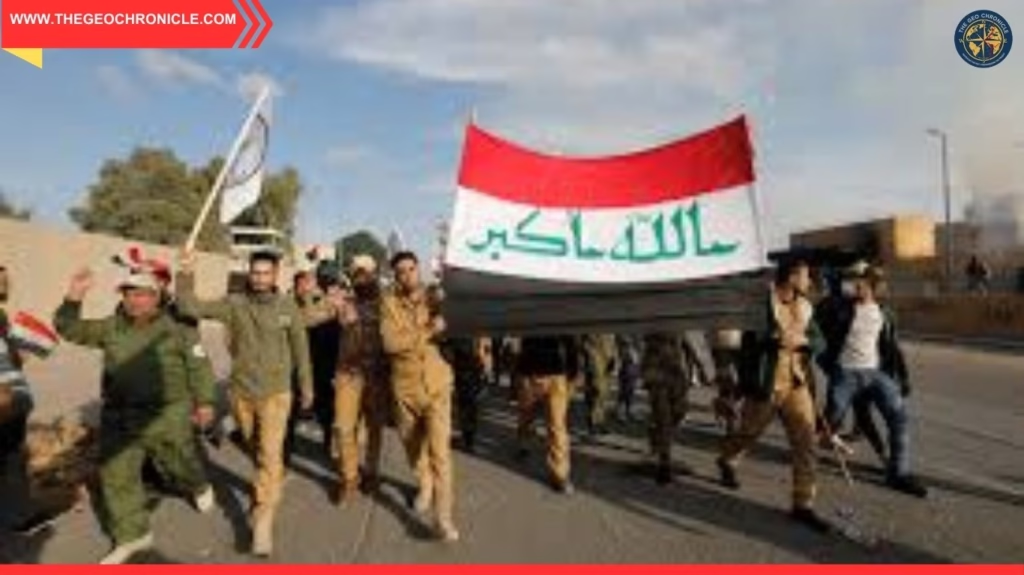
Iraq in the two decades since 2003 has been marked by cyclical crises: terrorism, civil war, displacement, and, more recently, the challenge of reintegrating areas liberated from ISIS. Paramilitary groups, often with support from regional powers (especially Iran), play an outsized role in politics and security.
Disillusionment and Fractured Trust
Recent elections, such as those scheduled for November 2025, are notable for low voter turnout, public cynicism, and the dominance of competing elite factions over popular political participation. Corruption, patronage, and “managed democracy” have replaced popular contestation, with periodic protest movements harshly repressed.
Socio-Economic Situation in Iraq Today
Economic Overview
Despite being one of the world’s leading oil producers, Iraq remains hampered by deep structural constraints:
- Oil Dependency: Oil accounts for over 90% of government revenue and 60% of GDP, but employs only a small fraction of the workforce.
- Growth Stagnation: Post-2018, non-oil economic growth has stagnated at an average of 1.3%, with per capita non-oil GDP at $2,700, among the lowest in MENA region.
- Unemployment and Demographics: Unemployment officially stands at 16.6%, with youth unemployment and inactivity even higher—over 74% of young people are not in work, education, or training.
- Public Sector Dominance: A bloated public sector inflates government spending, but fails to absorb new labor market entrants.
- Structural Barriers: Corruption, complex bureaucracy, and poor regulatory quality hinder private sector growth and investment.
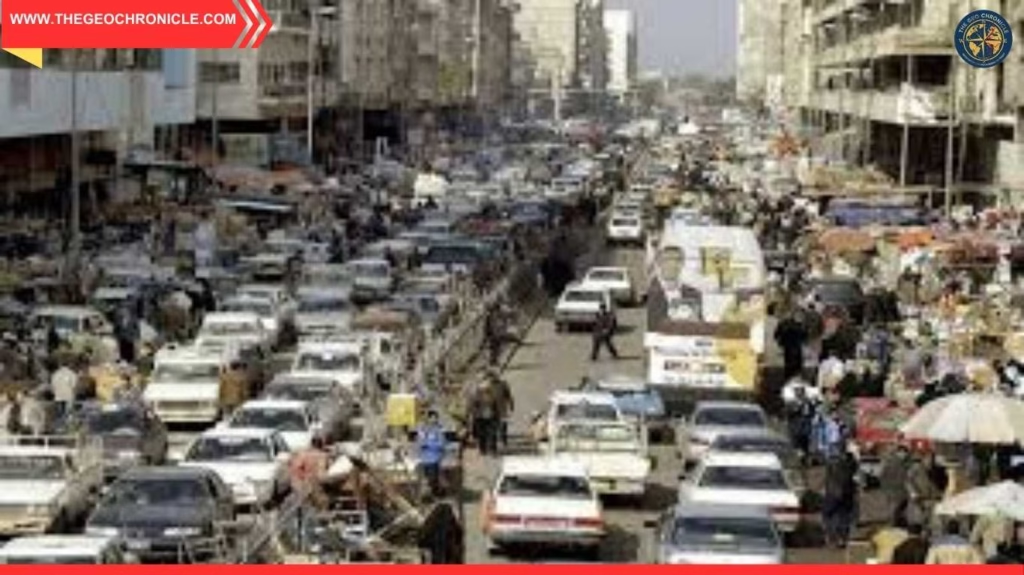
- Social Service Deficits: Many Iraqis still lack reliable electricity, clean water, or healthcare, despite significant oil-driven revenues.
The IMF and World Bank repeatedly cite the need for structural reforms in governance, anti-corruption, financial sector development, and labor market modernization if Iraq is to achieve sustained, inclusive growth.
Recent Economic Indicators (2025 estimates)
| Indicator | Value |
|---|---|
| Population | ~45.5 million |
| Real GDP Growth | 0.5% (2025 projected) |
| Non-Oil GDP Growth | 1.3% (average, 2018–2023) |
| Youth Unemployment (15–24) | ~74% inactive/not in training |
| Female Labor Force Part. | ~12% (in labor market) |
| Oil as % of Revenue | >90% |
Current Security and Sectarian Dynamics in Iraq
Iraq in 2025 remains a nation divided by multiple, overlapping cleavages:
- Sectarianism: Although the worst excesses of civil war have abated, government and militia power-sharing still often follows ethno-sectarian lines.
- Insurgency/ISIS Legacy: Pockets of ISIS activity persist, especially in the north and west, complicating recovery and prolonging displacement.
- Federal Kurds vs. Baghdad: Relations between the semi-autonomous Kurdistan Regional Government and Baghdad are tense, with disputes over oil revenue, territorial control, and constitutional powers.
- Regional Rivalries: Iraq finds itself at the center of U.S.-Iran, Saudi-Iran, and Turkish proxy competitions, impeding independence and exacerbating local tensions.
Efforts by civil society and government to promote reconciliation, rebuild state capacity, and foster economic inclusion continue amid these formidable challenges.
Legacy and Historical Interpretation of Saddam’s Era
Saddam Hussein’s legacy remains a source of sharp division, both within Iraq and across the Arab world:
- Supporters: Some Iraqis and Arabs remember Saddam as a symbol of Arab independence and a bulwark against “Western imperialism” and Iranian influence—nostalgia often rooted less in affection for the dictator than in frustration with current instability.
- Opponents: For most Iraqi Kurds, Shi’a, and many Sunnis, Saddam is remembered as a tyrant responsible for mass murder, repression, and the devastation of an entire nation.
- Historians: Scholarly evaluations recognize the complexity: Saddam modernized Iraqi infrastructure, promoted education and healthcare, and sought pan-Arab leadership, but did so through pervasive violence, ethnic cleansing, wars of aggression, and the suppression of civil society.
- Contemporary Impact: Democratic promise post-2003 has been largely unfulfilled, replaced by elite patronage, sectarian competition, and new forms of authoritarianism. This fuels a disappointment that colors the interpretation of the Ba’athist era—sometimes more rosy in hindsight than in reality.
In museums and memory, Saddam’s face is both despised and, paradoxically, missed—not so much the man himself, but the sense of order his regime imposed compared to contemporary chaos.
Key Events in Saddam Hussein’s Iraq
| Year/Event | Description |
|---|---|
| 1937 | Saddam Hussein born in Al-Awja near Tikrit |
| 1957 | Joins Ba’ath Party |
| 1959 | Involved in attempted assassination of Prime Minister Qassim |
| 1963 | Ba’ath coup in Iraq, brief power, then ousted |
| 1968 | Ba’ath Party recaptures power; Saddam becomes Vice President |
| 1972 | Nationalization of Iraq Petroleum Company; oil revenues surge |
| 1974 | Agreement granting Kurdish autonomy (later reneged) |
| 1979 | Saddam assumes presidency; Ba’ath purges |
| 1980–1988 | Iran–Iraq War |
| 1988 | Chemical attack on Halabja; end of war |
| 1990 (Aug) | Invasion of Kuwait |
| 1991 (Jan–Feb) | Operation Desert Storm; Iraq expelled from Kuwait |
| 1991 onward | U.N. sanctions imposed |
| 1996 | Oil-for-Food Programme begins |
| 2003 (Mar–Apr) | U.S.-led invasion, collapse of Ba’ath regime |
| 2003 (Dec) | Saddam captured |
| 2006 (Dec) | Saddam executed |
Conclusion
Saddam Hussein’s legacy is an intertwined narrative of ambition and tragedy, of fleeting modernization and enduring trauma. He left behind a country broken by war, dictatorship, and sanctions—yet also one with immense resilience and potential. Iraq in 2025 bears the deep imprint of his rule, not only in the scars of loss and division but in the unresolved questions of national identity, the limits of state power, and the pursuit of justice for past and present wrongs.
The challenge for modern Iraq, as it faces elections, demographic pressures, and the temptation of nostalgia for strongman rule, is to move beyond both the traumas of Saddam’s legacy and the disappointments of his successors. Only through genuine structural reform, broad-based reconciliation, and a politics of accountability and inclusion will Iraq find a future that transcends the shadows of its past.
Disclaimer
This article is intended for informational and educational purposes only. It provides a synthesis of multiple sources on the history, politics, and socio-economic context of Saddam Hussein’s Iraq and makes no endorsement of any political viewpoint or regime. The report strives to present history accurately and impartially; however, interpretations of events, especially regarding Saddam Hussein’s legacy, remain contested and subject to ongoing scholarly and public debate.







Leave a Reply