
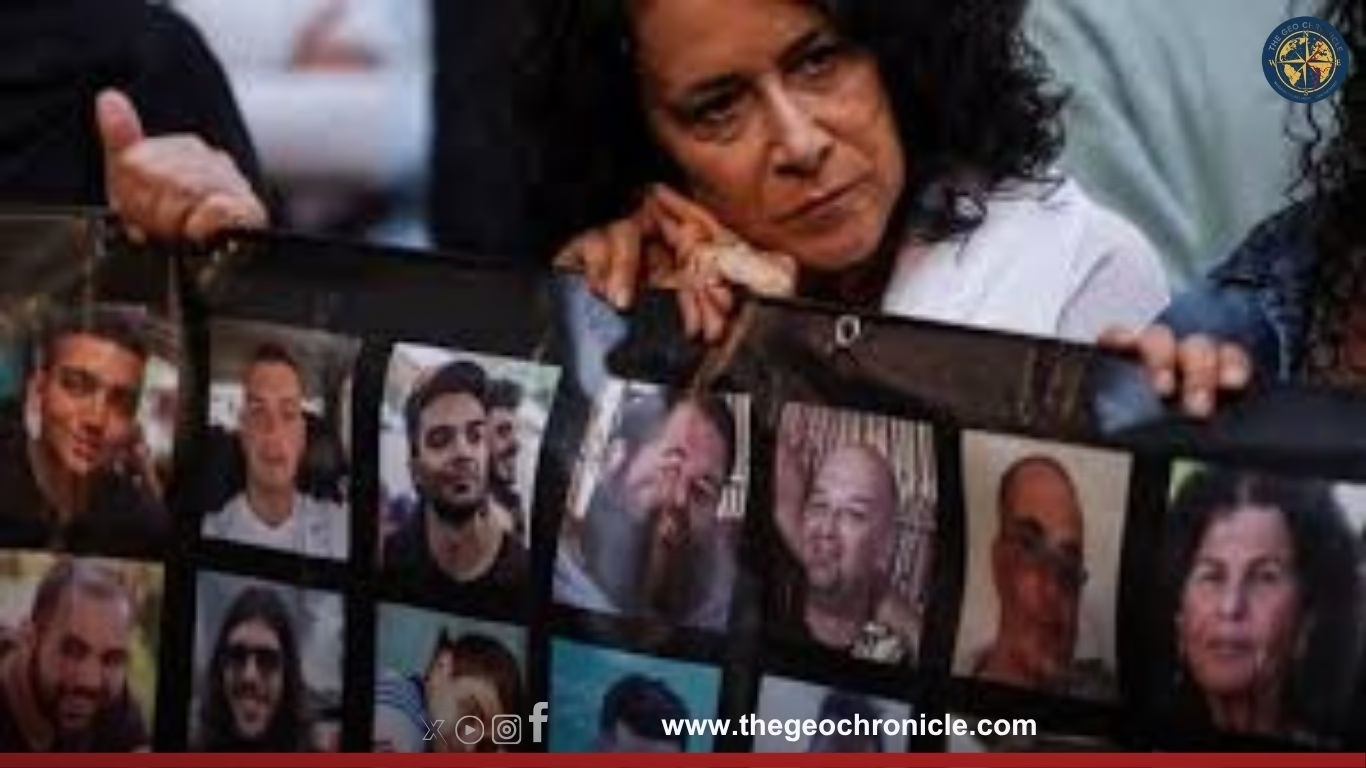
On October 7, 2023, Israel witnessed one of the deadliest and most shocking assaults in its modern history. Hamas, the militant group based in Gaza, launched a coordinated and brutal attack on southern Israel, resulting in over 1,200 Israeli deaths and the abduction of more than 200 civilians. This event marked the beginning of a new phase in the Israeli-Palestinian conflict, triggering a full-scale war and reshaping regional dynamics.
This article explores the background leading to the attack, the events of October 7, Israel’s military response, and the broader implications for Middle Eastern geopolitics.

Background: Tensions Before October 7
The Israeli-Palestinian conflict has been simmering for decades, rooted in territorial disputes, religious divisions, and political ideologies. Prior to October 2023, tensions were already high due to:
- Escalating clashes in the West Bank between Israeli forces and Palestinian militants.
- Internal political instability in Israel, including mass protests over judicial reforms.
- Economic hardship and humanitarian crises in Gaza, exacerbated by Israeli blockades and limited international aid.
- Hamas’s growing military capabilities, including drone technology, tunnel networks, and rocket arsenals.
Israel’s defense strategy, historically shaped by existential threats from neighboring Arab states, had evolved into a doctrine of active deterrence and preemptive strikes. However, the scale and surprise of the October 7 attack exposed vulnerabilities in Israel’s intelligence and border security apparatus.
The Attack: What Happened on October 7, 2023?
On the morning of October 7, coinciding with the Jewish holiday of Simchat Torah, Hamas launched a multi-pronged assault:
Key Elements of the Attack
| Mode of Attack | Description |
|---|---|
| Ground Infiltration | Thousands of Hamas fighters breached the Gaza-Israel border using explosives, bulldozers, and RPGs. |
| Rocket Barrage | Over 3,000 rockets were fired into Israeli territory, targeting cities like Tel Aviv, Ashkelon, and Be’er Sheva. |
| Airborne Assault | Paragliders and drones were used to infiltrate military bases and civilian areas. |
| Naval Incursion | Hamas attempted sea-based attacks near Zikim beach. |
Targeted Locations
- Southern Israeli towns such as Sderot, Ofakim, and Kfar Aza were invaded.
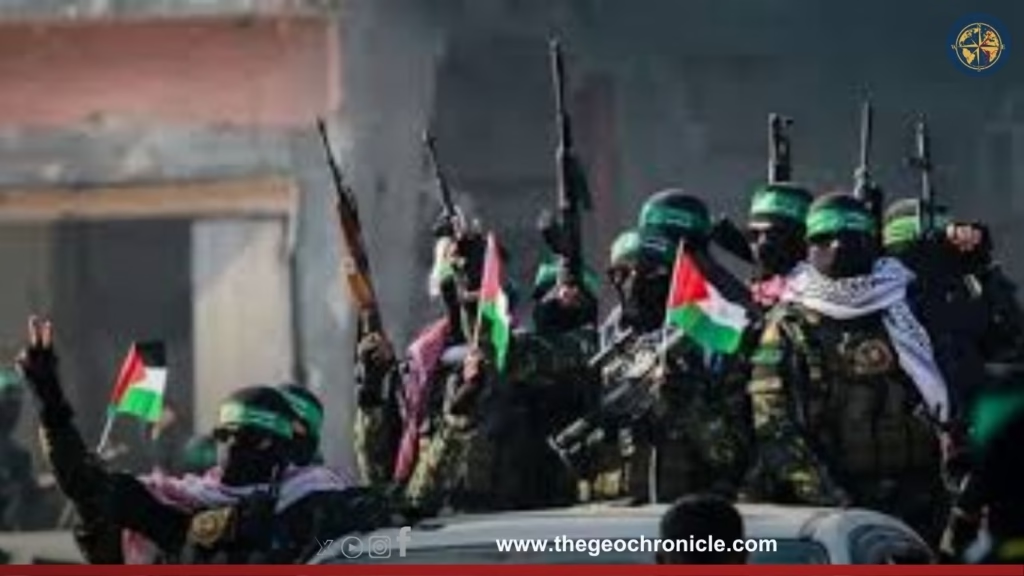
- IDF bases were overrun, with soldiers killed or taken hostage.
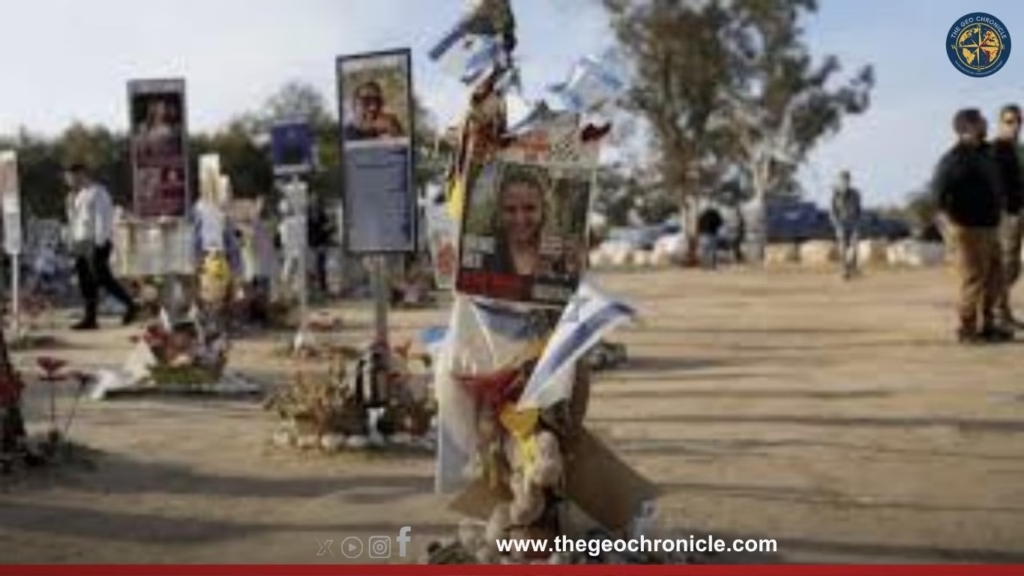
- Nova Music Festival near Re’im saw a massacre of over 260 attendees.
Casualties and Atrocities
- Over 1,200 Israelis killed, including infants, elderly, and foreign nationals.
- More than 200 hostages taken to Gaza.
- Reports of rape, mutilation, and execution-style killings shocked the global community.
Israel’s Retaliation: Operation Swords of Iron
In response, Israel launched Operation Swords of Iron, a comprehensive military campaign aimed at dismantling Hamas’s infrastructure and rescuing hostages.
Phase 1: Airstrikes and Mobilization
- Massive airstrikes targeted Hamas command centers, tunnels, and weapons depots.
- Over 360,000 reservists were called up, marking the largest mobilization since the Yom Kippur War.
- Gaza’s power and communication networks were disrupted.
Phase 2: Ground Invasion
- Israeli Defense Forces (IDF) entered northern Gaza in late October.
- Urban warfare ensued in areas like Beit Hanoun, Shuja’iyya, and Jabalia.
- IDF faced booby traps, sniper fire, and tunnel ambushes.
Phase 3: Hostage Rescue and Intelligence Operations
- Special forces conducted targeted raids to locate hostages.
- Intelligence-sharing with allies like the U.S. and Egypt intensified.
- Some hostages were rescued, while others remained missing or confirmed dead.

Humanitarian Crisis and Global Reactions
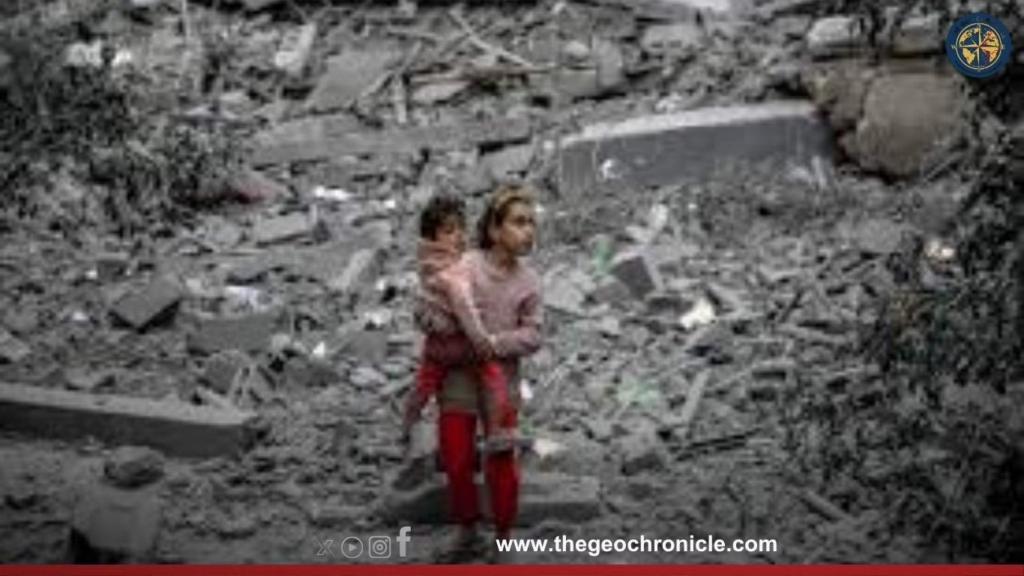
Gaza’s Humanitarian Situation
- Over 30,000 Palestinians killed, including civilians, according to Gaza’s Health Ministry.
- Hospitals overwhelmed, with shortages of medicine, fuel, and clean water.
- UN agencies called for ceasefires and humanitarian corridors.
International Response
- United States and European Union backed Israel’s right to self-defense.
- Arab nations, including Egypt and Jordan, condemned civilian casualties and urged restraint.
- Global protests erupted, with polarized views on the conflict.
Strategic and Political Implications
For Israel
- Renewed focus on border security and intelligence reform.
- Strengthened political unity amid wartime leadership under Prime Minister Benjamin Netanyahu.
- Increased defense spending and international military cooperation.
For Hamas
- Despite tactical success, Hamas faced crippling losses in leadership and infrastructure.
- Its international legitimacy further eroded due to atrocities committed.
For the Region
- Peace talks stalled, with Egypt and Qatar mediating limited negotiations.
- Iran’s role as a Hamas backer drew scrutiny, raising fears of regional escalation.
- The Abraham Accords faced setbacks, with normalization efforts paused.
Timeline of Key Events
| Date | Event |
|---|---|
| October 7, 2023 | Hamas launches surprise attack on Israel. |
| October 8–15, 2023 | Israel conducts airstrikes; declares war. |
| Late October 2023 | IDF begins ground invasion of Gaza. |
| November 2023 | Hostage negotiations begin via Egypt and Qatar. |
| December 2023 – March 2024 | Continued fighting; humanitarian crisis deepens. |
| April 2024 | Partial ceasefire agreements and hostage exchanges. |
Media and Public Opinion
The October 7 attack and subsequent war dominated global headlines. Social media platforms became battlegrounds for narratives, misinformation, and advocacy.
- Israeli media focused on national trauma, heroism, and unity.
- Palestinian outlets highlighted civilian suffering and resistance.
- International journalists faced challenges accessing Gaza due to safety and censorship.
Conclusion
The October 7, 2023 Hamas attack on Israel was a watershed moment in the Israeli-Palestinian conflict. It exposed deep-rooted vulnerabilities, reignited global debates on terrorism and human rights, and reshaped the strategic calculus of the Middle East.
While military operations may eventually subside, the psychological, political, and humanitarian scars will endure. The path to peace remains fraught, demanding renewed diplomacy, accountability, and a commitment to protecting civilian lives on all sides.
Disclaimer
This article is intended for informational and journalistic purposes only. It seeks to present verified facts and balanced perspectives based on publicly available sources. The content does not endorse any political stance or party. Readers are encouraged to consult multiple sources and exercise critical judgment.



Leave a Reply