

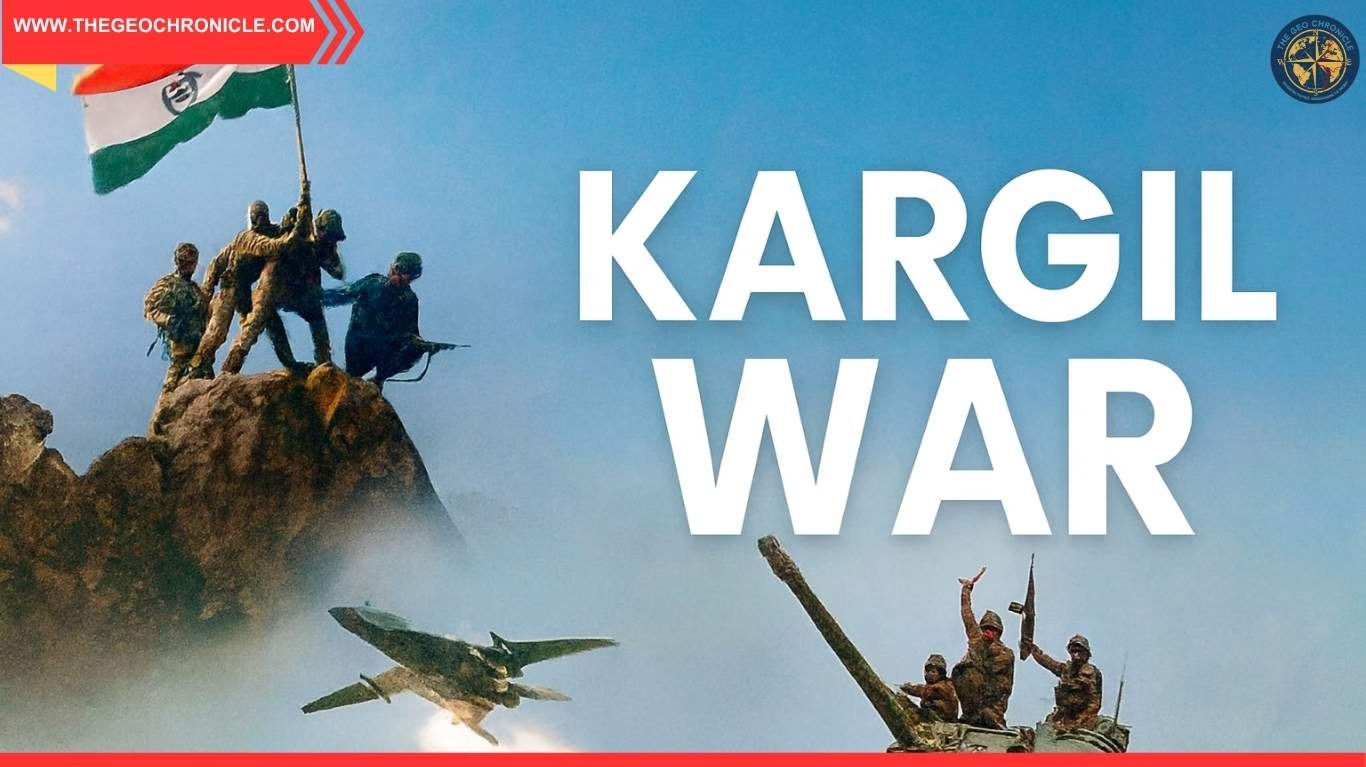
The Kargil War of 1999 stands as one of the most pivotal episodes in the Indo-Pakistani conflict over Kashmir—a high-altitude, limited-war scenario fought between two nuclear-armed neighbors. Beyond the battles fought on icy mountaintops lay deeper undercurrents of history, politics, strategic miscalculations, intelligence shortcomings, and a transformation in South Asian geopolitics. Occurring just months after the Lahore Declaration—a seemingly hopeful peace accord—the war exposed the volatility of the India-Pakistan relationship and the enduring dangers of the unresolved dispute over Kashmir. This comprehensive report explores the Kargil War through a wide-angle lens: from its historical background and strategic causes, through the step-by-step conduct of operations by Indian forces, an analysis of the weaponry and technology used, to the war’s lasting aftermath and its imprint on the region today.
1. Background and Causes of the Kargil War
1.1 The Pre-1999 Kashmir Conflict
The roots of the Kargil War are nested in the broader history of the Kashmir dispute. At partition in 1947, Jammu and Kashmir became the focal point of territorial claims by both India and Pakistan, leading to a series of wars (1947–1948, 1965, 1971) and numerous skirmishes over subsequent decades. The Simla Agreement of 1972 converted the ceasefire line into the Line of Control (LoC), establishing a de facto but not internationally recognized border, while formally committing both countries to resolve differences bilaterally and respect the sanctity of the LoC.
Throughout the 1980s and 1990s, insurgency grew in the Kashmir Valley, often with alleged support from Pakistan and the use of cross-border infiltration and proxy militant warfare. These dynamics created the context in which both conventional military doctrines and sub-conventional warfare would interact, setting the stage for future escalations.
1.2 Political Causes and Triggers
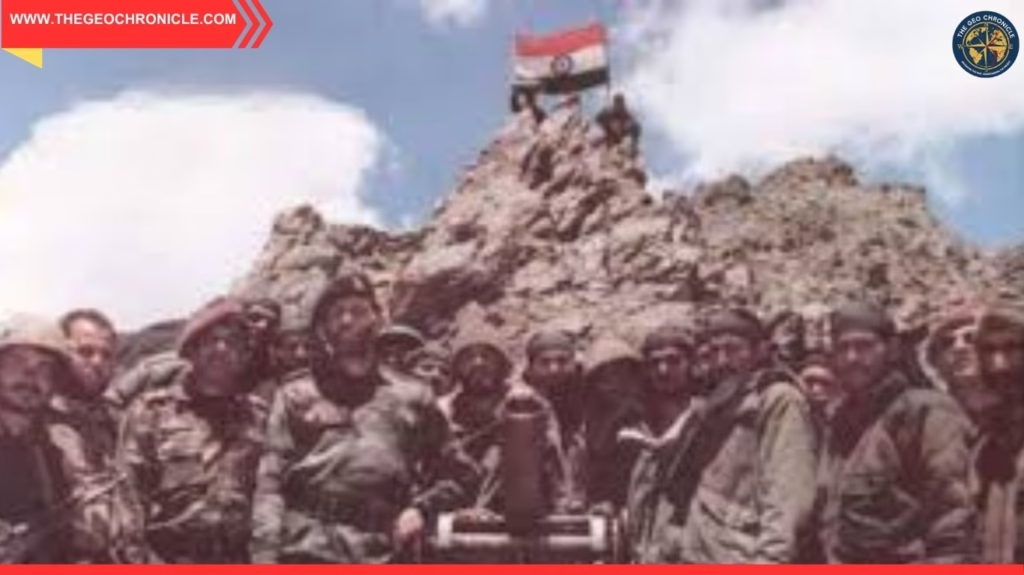
A vital political backdrop was provided by the nuclearization of South Asia—both India and Pakistan conducted nuclear tests in 1998. Paradoxically, the perceived stability induced by nuclear deterrence emboldened the Pakistani military establishment to undertake more audacious moves, believing that India would avoid escalation at the risk of nuclear holocaust.
The Lahore Declaration, signed in February 1999 by Prime Ministers Atal Bihari Vajpayee and Nawaz Sharif, was intended to usher in a new era of confidence building, seeking to constrain the nuclear arms race and establish mechanisms for dialogue and peaceful dispute resolution—including on Kashmir. However, while the civilian leaderships celebrated rapprochement, military planners in Pakistan simultaneously accelerated covert preparations for a cross-LoC operation.
1.3 Operation Badr: Pakistan’s Plan
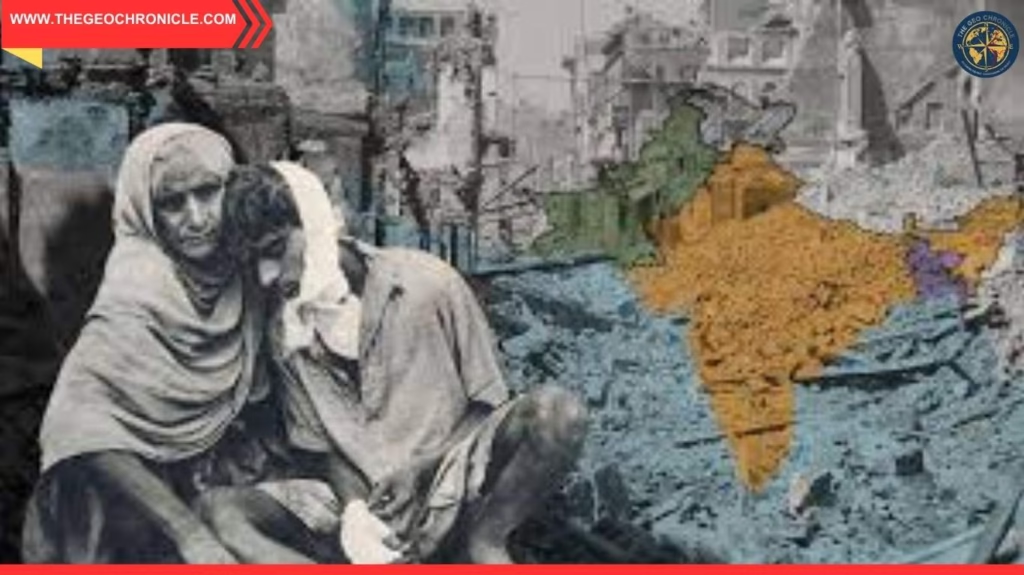
Pakistani planning for the Kargil intrusion (code-named “Operation Badr”) began in earnest during the winter of 1998–1999. Its key objectives were:
- To occupy vacated high-altitude posts on the Indian side of the LoC during winter, gaining control of strategic peaks overlooking the Srinagar–Leh highway (NH 1A), the lifeline to Ladakh and Siachen.
- To disrupt Indian logistics, sever the link between Kashmir and Ladakh, and threaten India’s maintenance of Siachen, thereby leveraging negotiations on favorable terms for Pakistan.
- To internationalize the Kashmir dispute by creating a military crisis that would draw in the United States and other powers.
- To undercut the growing India-Pakistan détente, denying political space to Kashmiri pro-India groups and boosting the morale of local and foreign Jihadi militants.
Pakistani forces—primarily regulars of the Northern Light Infantry (NLI), alongside irregulars and some Afghan mercenaries—began infiltrating in small, clandestine groups in January and February 1999, establishing forward winter bases and advancing further in April as snow conditions eased.

1.4 The Element of Surprise and Intelligence Failure
Indian intelligence agencies failed to detect the scale and intent of the Pakistani operation, misreading the increased militant presence and ammunition pileups as precursors to the typical summer infiltration and shelling pattern. Only in early May 1999 did local shepherds, including Tashi Namgyal, report enemy presence to Indian Army patrols.
Initial army assessments underestimated the scale; the intruders were thought to be isolated militants rather than well-armed regulars. However, escalated gunfire, casualties, and the capture and torture of Indian patrols, notably Captain Saurabh Kalia and his men, soon revealed the gravity of the incursion.
1.5 The Political Fallout in Pakistan
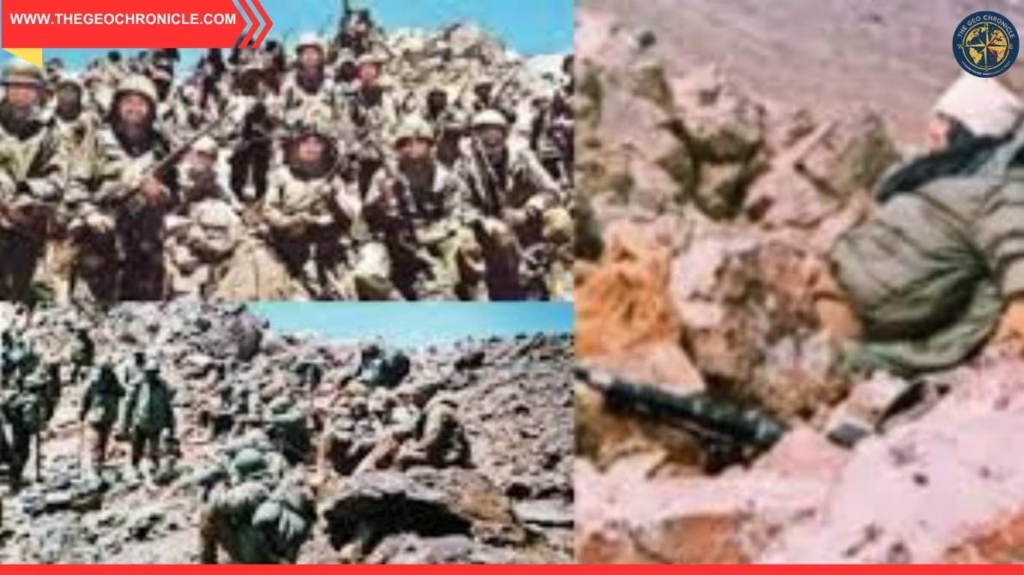
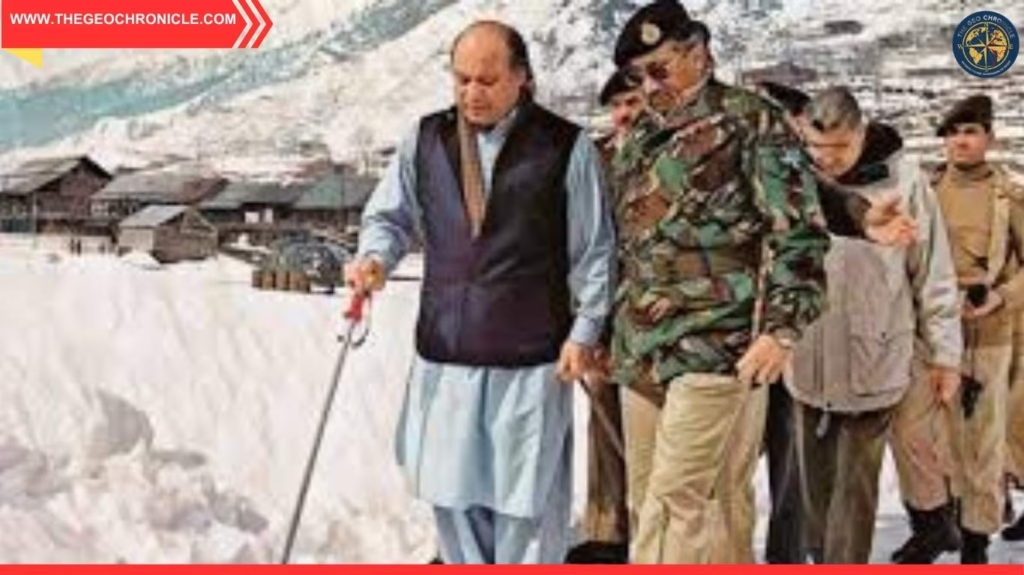
There remains controversy over the degree of political oversight in Pakistan. While General Pervez Musharraf (then army chief) and a circle of high-ranking officers were the key planners, Prime Minister Sharif repeatedly claimed ignorance of the plan in its initial stages, leading to subsequent tensions between civilian and military leadership and, by October 1999, a coup that brought Musharraf to power.
2. Indian Army Movements and Achievements: Chronological Overview
The Indian counter-infiltration operation was code-named “Operation Vijay.” It combined concentrated ground assaults with air support, systematic artillery bombardment, and multi-sectoral coordination. The conflict lasted from early May to late July 1999.
2.1 Timeline and Sectoral Focus
Below is a chronological summary highlighting major Indian Army achievements:
| Date | Event/Battle | Units Involved | Outcome/Significance |
|---|---|---|---|
| Early May | Detection of intrusion | 4 Jat, 18 Grenadiers, Jammu Sector | Confirmed professional, well-armed intrusion by regular Pakistani Army elements |
| 9–24 May | Troop mobilization & initial engagements | Siachen returnee battalions in Batalik, plus reinforcements from Valley | Contained rapid spread of intrusion; by 24 May, two additional brigades inducted, Indian Air Force on alert |
| 15–22 May | First Army assaults in Dras, Tololing | 18 Grenadiers, 16 Grenadiers, 1 Naga, 8 Sikh | Initial setbacks due to entrenched enemy positions and harsh terrain |
| 22 May–14 June | Battle of Tololing | 18 Grenadiers, later 2 Rajputana Rifles, 16 Grenadiers | Intense assaults, heavy casualties, culminating in recapture of Tololing by mid-June—a morale and tactical turning point |
| 17–20 June | Assault on Point 5140 (“Gun Hill”) | 13 J&K Rifles, led by Lt. Vikram Batra | Successful recapture; “Yeh Dil Maange More” radioed after victory |
| 28–29 June | Three Pimples/Knoll/Lone Hill assaults | 2 Rajputana Rifles | Cleared another critical segment overlooking NH-1A |
| 4–8 July | Battle for Tiger Hill (Point 5353) | 18 Grenadiers, 8 Sikh | Key victory; Pakistani command decapitated—shifted momentum completely |
| 7–8 July | Point 4875 (“Helmet”) | 13 J&K Rifles, Lt. Vikram Batra (KIA) | Pivotal hand-to-hand combat, ultimate sacrifice of Batra ensured success |
| 1–12 July | Clearing operations Mushkoh–Dras–Batalik | Multiple units including 17 Jat, 2 Naga, Parachute Regiment SF | Systematic clearance of remaining occupied peaks |
| 12–14 July | Consolidation, mopping up remnant pockets | Multiple units | Ceasefire agreements, further pressure led to full withdrawal of intruders |
| 26 July | Kargil Vijay Diwas: War declared over | National and military leadership | India’s complete recapture; only Indian territory under control |
Major Operations by Sector:
| Sector | Key Battles/Points | Strategic Objective/Outcome |
|---|---|---|
| Dras | Tololing, Tiger Hill, Point 5140, Three Pimples | NH-1A security, highest casualties, swung momentum |
| Batalik | Khalubar Ridge, Jubar Peak, Pt 4812 | Cut enemy reinforcement routes; isolated enemy groups |
| Mushkoh–Kaksar | Points 4875, 4700 | Prevented Pakistani threat to Srinagar-Leh Highway, secured Indian rear areas |

Narrative Analysis:
The Indian response, after initial miscalculations, was built on multi-axis assaults supported by massed artillery, infantry bravery in hand-to-hand combat, adaption to high-altitude challenges, reinforcement by acclimatized units (e.g., Ladakh Scouts, Siachen veterans), and close Army–Air Force joint operations.
The recapture of Tololing is widely regarded as the turning point—it allowed Indian guns to cover the Dras–Kargil highway, enabling logistics and narrowing Pakistani lines. The subsequent battles for Tiger Hill and Point 4875 were spectacular feats of arms—steep night climbs by Indian commandos under heavy fire, direct assaults on fortified bunkers, and the display of conspicuous gallantry (with multiple Param Vir Chakra, Maha Vir Chakra, and Vir Chakra awards).
After the death of many Pakistani officers and following failures in their attempts to relieve besieged positions, morale disintegrated among the intruders. U.S. diplomatic intervention compelled Pakistan to agree to withdrawal, largely under Indian threat of further escalation.
3. Indian Army Weaponry and Ammunition
The Kargil conflict was a testbed for both classic and newly inducted Indian Army weapon systems, proven against well-prepared enemy positions.
3.1 Inventory of Weapons and Ammunition
Below is a summarized military-technical inventory:
| Weapon/Equipment | Type/Caliber | Role/Use in Kargil War | |
|---|---|---|---|
| Small Arms | |||
| INSAS Rifle | 5.56mm Assault Rifle | First large-scale deployment; standard infantry weapon; some reliability issues in cold but provided lightness and higher rate of fire | |
| SAF Carbine | 9mm Carbine | Close quarter-combat, patrols | |
| AK-47 | 7.62mm Automatic Rifle | Standard for Line of Control (LoC) fighting | |
| Grenade Launcher | 40mm/30mm | For clearing entrenched positions | |
| Artillery | |||
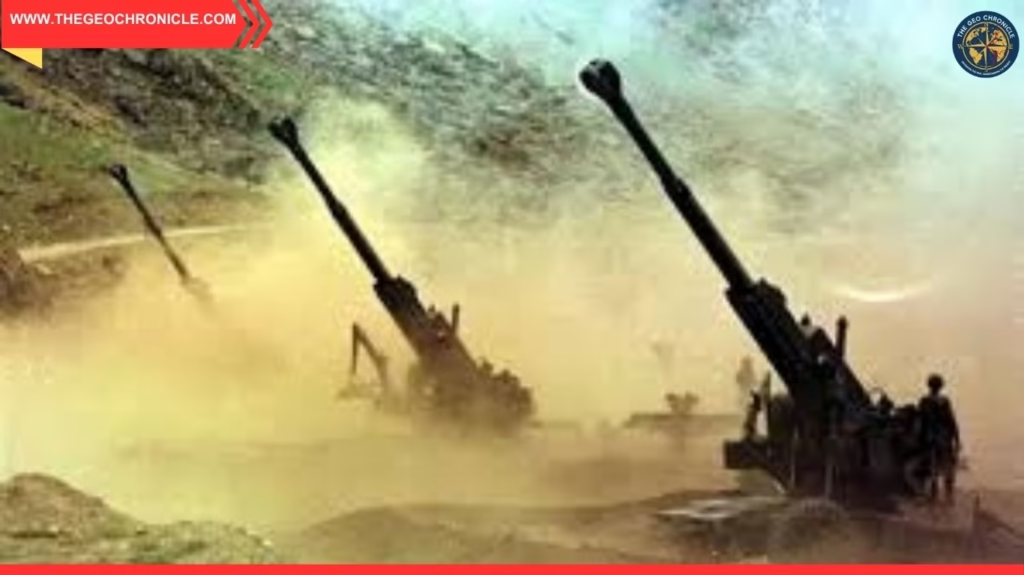
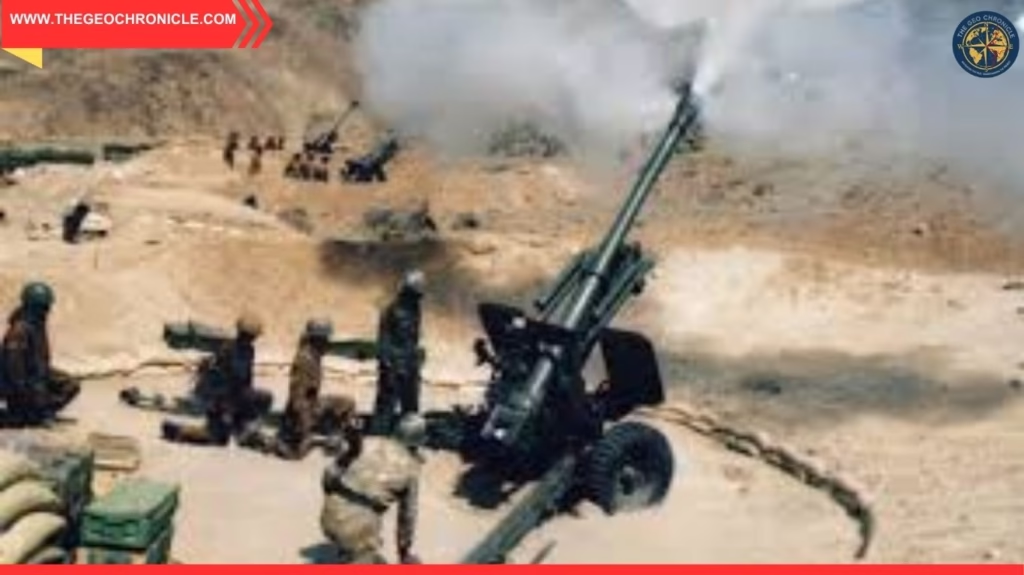
| Bofors FH-77B Howitzer | 155mm | Backbone of fire support, credited with breaking up enemy defenses; could fire rapidly and at high angles into mountain bunkers | |
| 105mm Indian Field Gun | 105mm | Versatile mountain artillery | |
| 130mm M-46 Field Gun | 130mm | Long-range, used for counter-battery fire | |
| Mortars | 81mm, 120mm | Used for high-angle indirect fire on peaks | |
| Multiple Rocket Launchers | 122mm BM-21 Grad | Provided saturation fire, area denial | |
| Armoured Vehicles | |||
| T-72 Tank | 125mm gun, missile firing | Used in rear areas for possible escalation, deterrence; did not directly participate in mountain combat but key in support, logistics, and demonstrations of force | |
| BMP-2 | Infantry Fighting Vehicle | Used for rapid deployment in lower valleys | |
| Anti-Personnel/Anti-Tank | Landmines, anti-tank guided missiles (ATGMs) | Defensive, controlling approaches | |
| Explosives & Support | Plastic explosives, Bangalore torpedoes, satchel charges for bunker clearance | ||
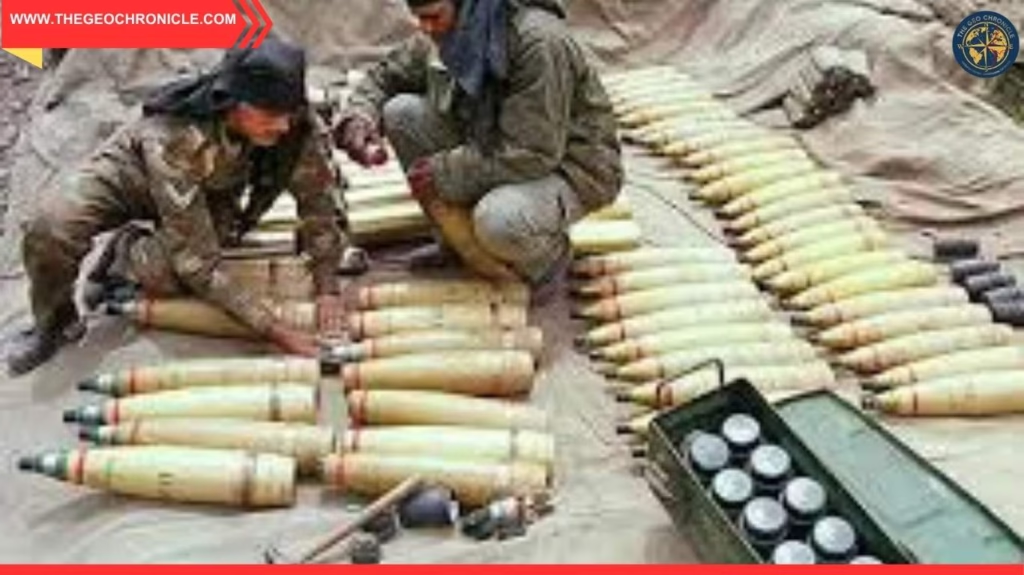
| Ammunition | 155mm Shells (Bofors Gun), Illumination rounds, smoke shells | Used for bombardment, night ops, and disorienting entrenched enemy units; heavy use led to resupply challenges |
3.2 Analysis of Effectiveness and Limitations
- Bofors FH-77B: This howitzer achieved almost legendary status during the war for its rate of fire, mobility, and high-trajectory shelling—decimating Pakistani sangars (bunkers) and logistics in inaccessible terrain. Its range of over 24km, rapid laying and firing, and precision targeting (using newly inducted forward observers and UAV-based targeting on some occasions) were critical in supporting uphill assaults.
- INSAS Rifle: While generally praised for its lightweight and rate of fire, the first generation faced issues like cracking polymer magazines in cold weather and jamming, leading to renewed modernization post-war.
- Massed Firepower: The war highlighted the need for high stockpiles of 155mm shells and other heavy munitions, leading to India’s concerted efforts in artillery shell manufacture and supply-chain management, amplified with recent advances and export ambitions.
- Logistics: Challenging terrain—altitudes above 15,000 feet, narrow mountain paths, thin supply lines—required immense effort in the supply of ammunition, medical supplies, and reinforcements, influencing equipment selection towards what could be easily airlifted/sling-loaded.
3.3 Key Indian Army Armaments Used
| Category | Weapon/Equipment | Description/Role |
|---|---|---|
| Small Arms | INSAS Rifle, AK-47, SAF Carbine, Grenade Launchers | Infantry combat, patrols, bunker clearance |
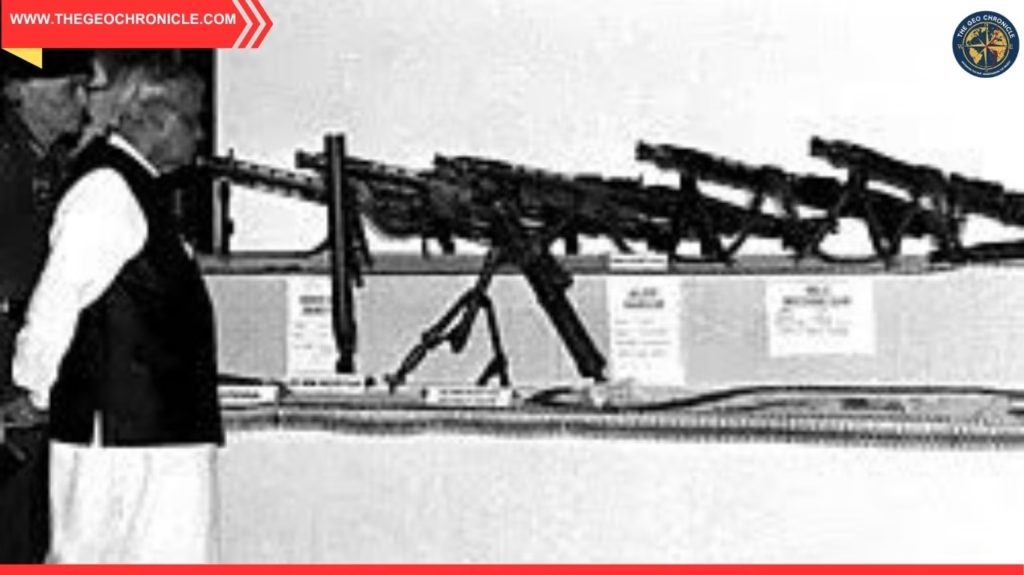
| Machine Guns | LMG (INSAS/PKM), MMG | Suppressive fire |
| Artillery | 155mm Bofors FH-77B, 105mm Indian Field Gun, 130mm M-46 | Key to breaking up fortified posts |
| Mortar/RL | 81mm/120mm mortars, RLs | Indirect fire on reverse slopes, close support |
| Armour | T-72, BMP-2 | Logistic, deterrent presence, demonstration |
| Rocket | Grad BM-21, multi-rocket launchers | Area bombardment, support |
4. Indian Air Force (IAF): Aircraft, Technology, and Operations
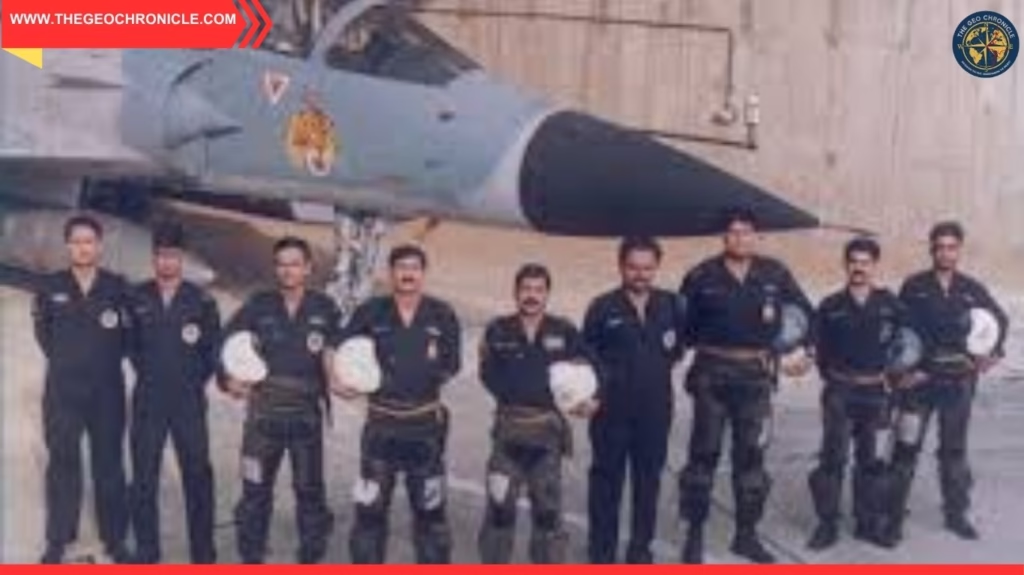
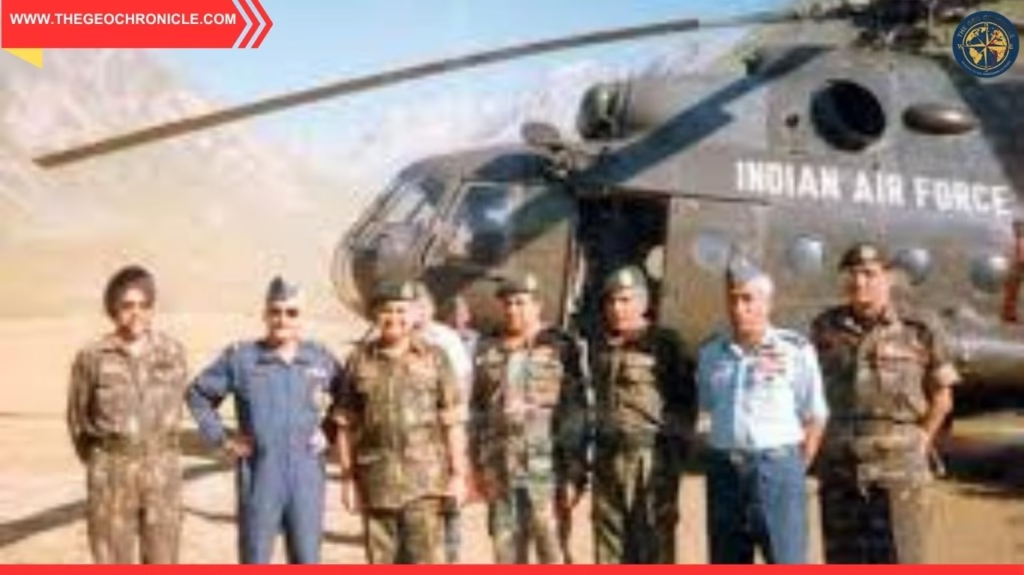
Operation Safed Sagar, the codename for IAF’s Kargil operations, was a watershed moment for Indian air power, being the first time in military history that combat air operations were mounted at such extreme altitudes (up to 18,000 feet) and under stringent rules of engagement (not to cross the LoC).
4.1 Operational Overview
- Start Date: May 26, 1999 (after government authorization on May 25).
- Objective: Degrade enemy positions, destroy supply lines, provide close air and artillery support, conduct reconnaissance, and interdict infiltration without crossing the LoC.
- Sorties flown: ~550 strike missions, 150 reconnaissance, 500+ escort sorties, and 2,185 helicopter sorties (for transport and casualty evacuation).
Key Milestones
- Early May: IAF mobilized key squadrons to Srinagar, Udhampur, Awantipur; initiated photo-recce sorties with Canberras and Jaguars.
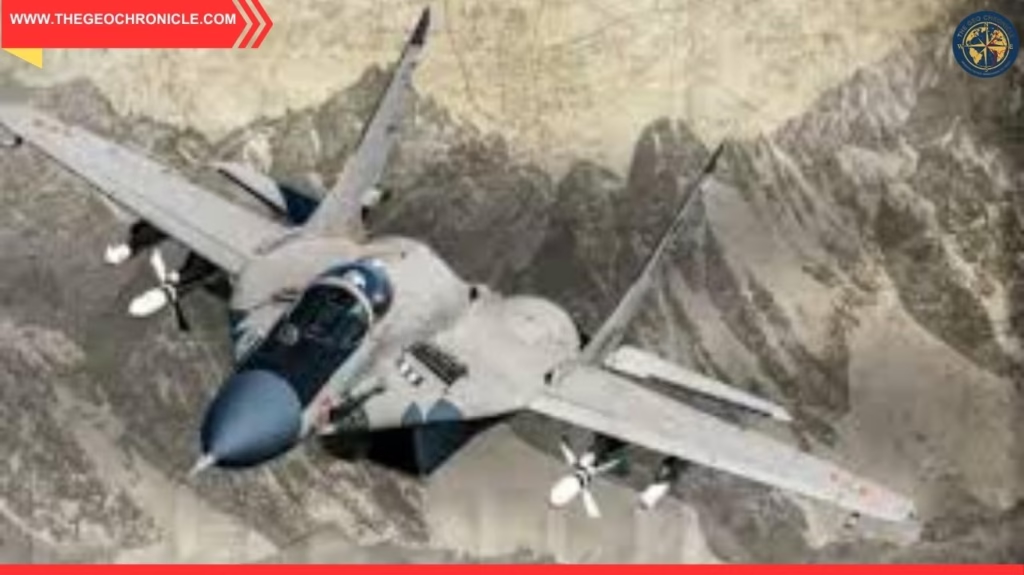
- May 26: First strike missions flown by MiG-21, MiG-23BN, MiG-27ML—targeted enemy positions; MiG-29s provided air cover.
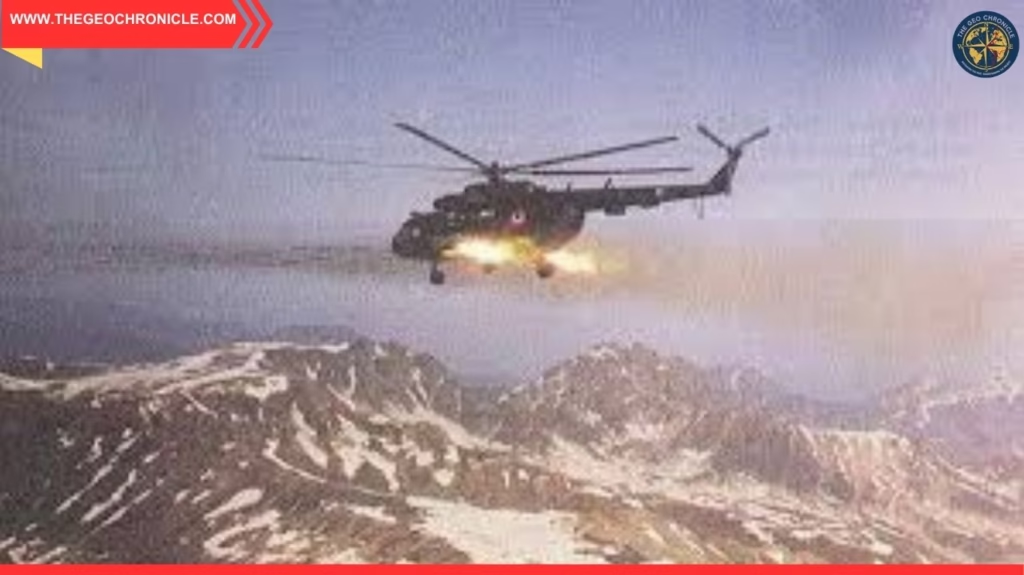
- Late May: Losses—MiG-27 (engine flameout; pilot Flt Lt Nachiketa ejected, captured); MiG-21 (Sqn Ldr Ajay Ahuja KIA, awarded Vir Chakra); Mi-17 helicopter shot down by Stinger MANPADS.
- June: Induction of Mirage 2000H with Litening pods and integration of LGBs (with Israeli assistance); precision strike on Muntho Dhalo camp (largest single-attack enemy casualty, a turning point).
- Late June–Early July: Day and night precision bombing on Tiger Hill, other entrenched positions; live targeting coordinated closely with Army units to avoid friendly fire.
4.2 Aircraft Inventory and Roles
| Aircraft | Role | Notable Uses and Missions |
|---|---|---|
| MiG-21 (Bison) | Air defense, ground attack | Flew early strike/protective sorties; suffered losses to MANPADS |
| MiG-23BN/27ML | Strike, ground attack | Conducted rocket/bomb attacks on enemy supply dumps and logistics |
| MiG-29 | Combat Air Patrol (CAP) | Provided air dominance; deterred PAF involvement |
| Mirage 2000H | Precision strike, LGB delivery | Equipped with Israeli Litening pods, fired LGBs on Tiger Hill, Muntho Dhalo, and other objectives; night/day attacks |
| Canberra PR57 | Photo Reconnaissance | Brought critical confirmation of enemy deployments |
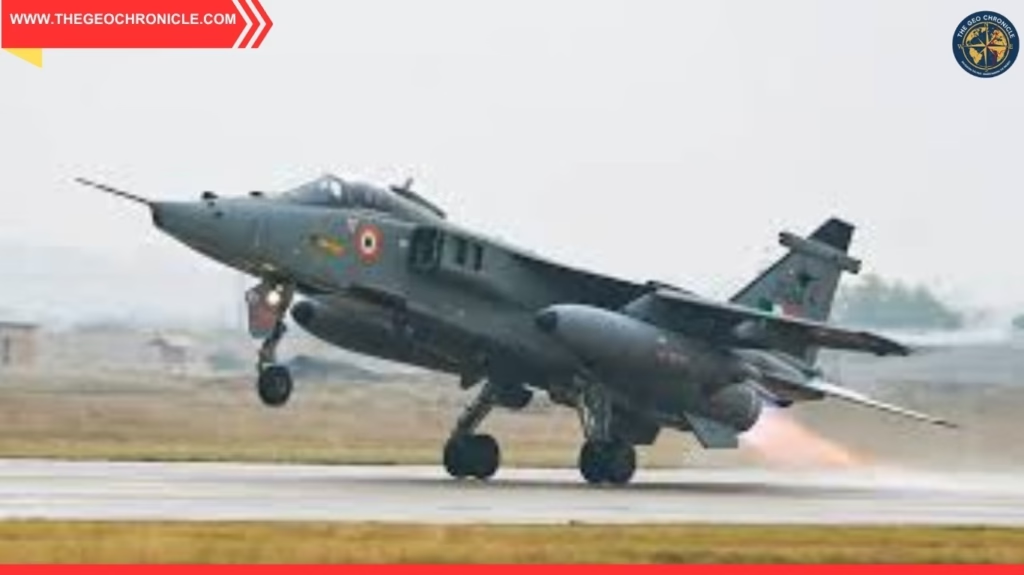
| Jaguars | Tactical reconnaissance | Used onboard oblique photography systems for recce; did not conduct main strikes |
| Mi-17/Mi-8 | Transport, limited attack | Troop supply, casualty evacuation, light rocket attacks; Mi-17 lost to Stinger SAM |
| UAVs (Israeli Searcher) | Reconnaissance | Monitored enemy positions; indirect targeting assistance |
Major IAF Aircraft and Their Roles (Kargil War)
| Aircraft | Origin | Principal Role(s) | Contribution in Kargil |
|---|---|---|---|
| MiG-21 Bison | Soviet/India | Air defense, ground support | Recon, early attack, lost an aircraft |
| MiG-27 | Soviet/India | Strike, ground attack | Major initial strikes; 1 aircraft lost |
| MiG-29 | Soviet/India | Air superiority, CAP | Deterred PAF sorties in theater |
| Mirage 2000H | France | Multirole, precision strike | Game changer, LGB attacks, night bombing |
| Mi-17/Mi-8 | Soviet/India | Transport, light ground attack | Supply and evacuation over intelligence-saturated valleys |
| Jaguar IS/IM | UK/India | Strike, reconnaissance | Tactical recon using oblique photography |
| Canberra PR57 | UK | Photo Recon | Provided high-altitude recce |
| UAV (Searcher) | Israel | UAV Recce | Provided daily intelligence updates |
4.3 Precision Munitions and Technology
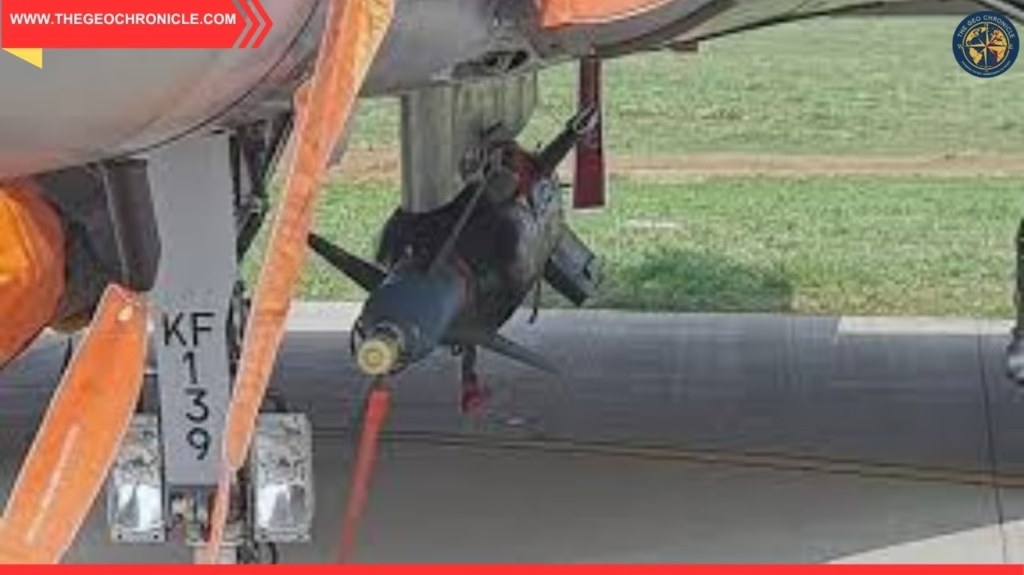
- Laser-Guided Bombs (LGBs): First combat use by India, key for bunkers on Tiger Hill, Muntho Dhalo. Integration and deployment of the Israeli Litening targeting pod on Mirages were accelerated—crucial for precision in high wind, thin-air, and fluctuating weather.
- Dumb Bombs: Modified (with Israeli assistance) for night and high-altitude delivery, used extensively before LGBs became available.
- Missile/AAMs: Aircraft carried AA-8, Magic II, and R-60 air-to-air missiles for self-defense; were on CAP but saw no air-to-air combat.
4.4 Challenges and Adaptations
- Altitude and Ballistics: Thin air at 15,000–18,000 ft affected ballistics (higher bomb trajectory, less drag, longer time-to-impact), requiring rapid tactical updates.
- MANPADS Threat: Pakistani possession of Stinger missiles inflicted early casualties; forced IAF to fly higher, use stand-off weapons, and accelerate precision-strike integration.
- Restricted Engagement Rules: The prohibition on crossing the LoC limited options but also projected India’s strategic restraint, limiting international escalation.
4.5 Israeli and Other Foreign Assistance
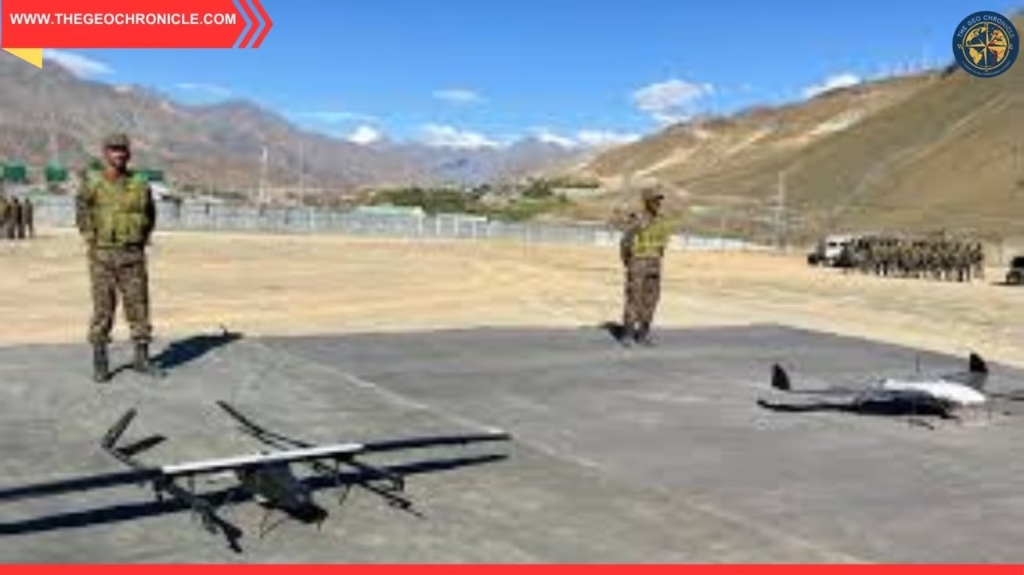
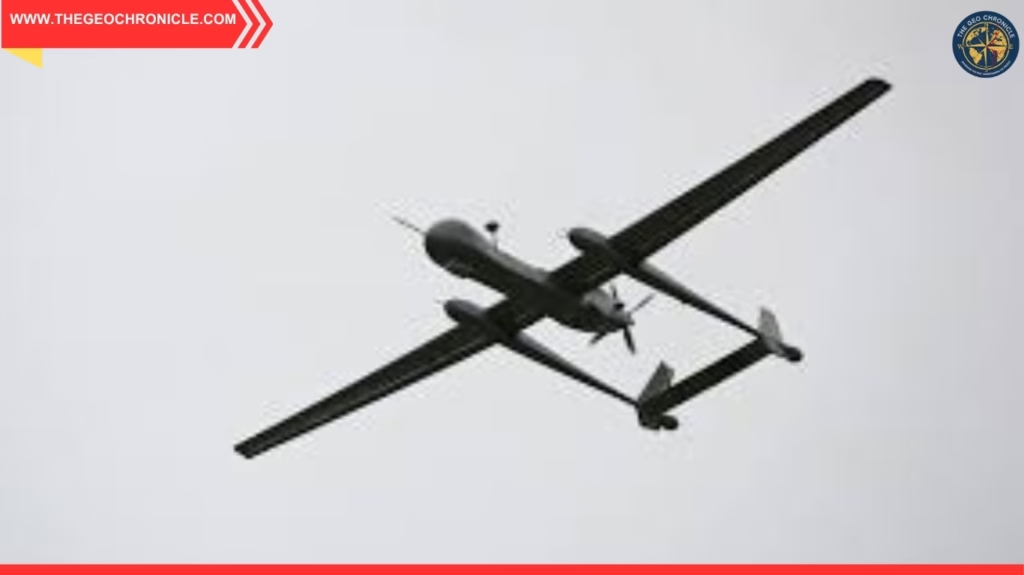
Israel discreetly supplied Litening pods, technical personnel, and a small number of UAVs, and provided training and satellite imagery. The speed and effectiveness of LGB integration (within two weeks) was praised by Indian commanders. UAV sorties, primarily for real-time recon and post-strike damage assessment, enhanced the accuracy of both air and artillery strikes.
5. Aftermath: Political, Military, and Diplomatic Consequences
5.1 Political and Strategic Outcomes
- Indian Victory and Territorial Status: India recaptured all heights; returned to status quo ante bellum, but with far higher year-round vigilance and a determination to never vacate forward posts even in winter.
- Indian Losses: 527 killed, 1,363 wounded. Pakistani losses estimated by different sources at 400–4,000; higher Pakistani figures are contested.
- Surge in Indian Nationalism: The war created a wave of patriotism and respect for the military, influencing subsequent elections (BJP/NDA’s victory) and boosting defense budgets.
- Strategic Doctrine: For the first time, India demonstrated restraint under the nuclear overhang, with international support validating its response. The war showed limited conflicts were possible even between nuclear-armed neighbors.
5.2 Diplomatic Impact
- International Isolation of Pakistan: Once India provided clear evidence of regular Pakistani Army involvement (such as documents captured on infiltrators and the famous Musharraf–Aziz tape), world opinion, especially the U.S. (President Bill Clinton) and G8, squarely blamed Pakistan for the escalation.
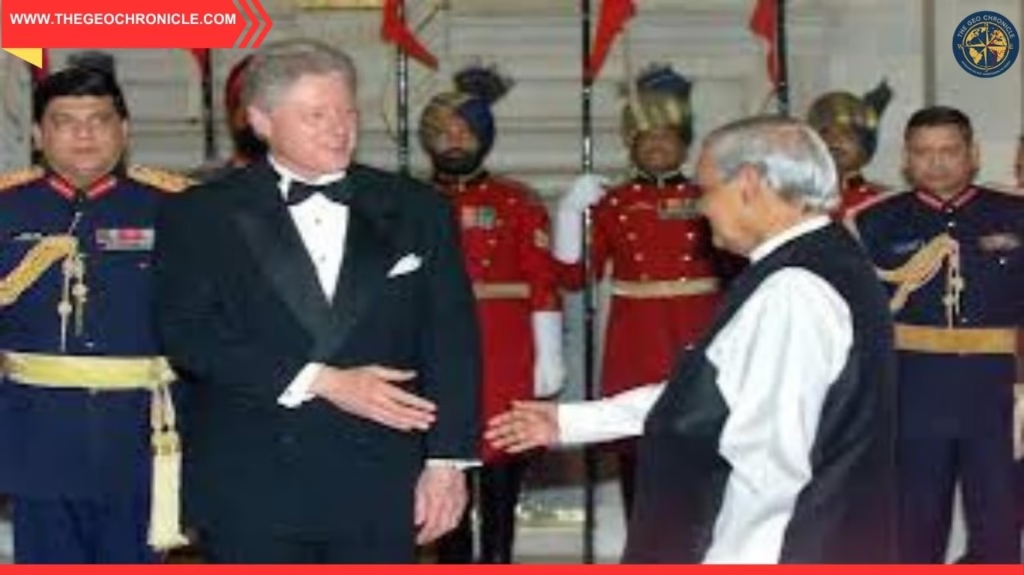
- Indo-U.S. Relations: U.S. condemnation of Pakistan, support for India’s position, and subsequent high-profile visits (Clinton’s visit to India in 2000) marked an unprecedented warming of ties.
- Israel–India Military Ties: The war deepened India-Israel defense cooperation; Israel became a significant supplier and development partner for high-technology munitions and UAVs.
5.3 Military Reforms and Lessons—The Kargil Review Committee
The Kargil Review Committee (KRC), established in July 1999, produced a landmark report in January 2000, identifying systemic intelligence, coordination, and military modernization failures. Key findings and reforms included:
- Intelligence Restructuring: Greater coordination among agencies (e.g., establishment of Multi-Agency Centre, induction of technical collection platforms, UAVs, satellite recce).
- National Security Advisor/NSC: Created to provide strategic guidance.
- Chief of Defense Staff (CDS): Long-recommended joint command, implemented in 2019.
- Defence Budget Reforms: Calls for sustained funding for arms modernization.
- Higher Defense Organization: Calls for integrating Service HQ with government, increasing synergy in planning and execution.
- Border Management: Initiatives for fencing the LoC, improved surveillance, and all-weather use of forward posts.
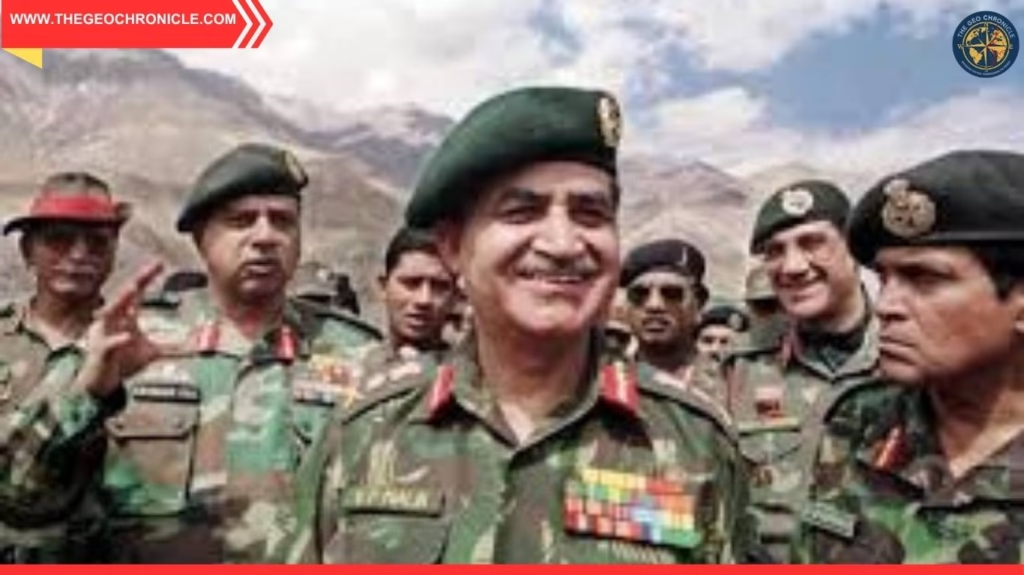
Some reforms remain ongoing; others, such as the procurement system changes, are debated. Still, the war indelibly shifted India’s military priorities towards high-altitude warfare proficiency, modern surveillance, and jointness in tri-services operations.
5.4 Impact on Pakistan
- Domestic Military–Civilian Rift: The war dramatically weakened Prime Minister Nawaz Sharif’s position, leading to his ouster by Musharraf’s coup in October 1999.
- Loss of Credibility: Pakistan’s attempt to present the incursion as a militant-led uprising failed; international isolation grew, and the NLI (Northern Light Infantry) had to be formally integrated into the regular army in recognition of casualties.
- Operational Dissonance: The lack of inter-services coordination and the misreading of India’s response capacity exposed grave flaws within Pakistan’s high command.
6. Current Situation in Kargil and Indo-Pak Relations
6.1 Kargil Region: Security and Civilian Life
- Security Environment: The Kargil district remains heavily militarized, with permanent Indian Army presence on all high points; forward posts are now never vacated during winter. Border security (fencing, surveillance, UAVs) is at an all-time high.
- Development: Kargil and Ladakh have seen infrastructure leaps—better roads, tunnel projects (e.g., Zojila), upgraded airports, education expansion (new colleges, IIT campi), a tourism revival, and improved power, all accelerated after the region’s transition into a Union Territory in 2019.
| Kargil Development Highlights (2024–2025) |
|---|
| All-weather roads and open Zojila tunnels |
| Expanded Kargil and Leh airports |
| IIT Jammu Satellite Campus operational |
| Baramulla–Udhampur railway, digital upgrades |
| Record tourism post-pandemic (18 lakh+ in 2024) |
By contrast, the situation across the LoC in Pakistan-occupied Kashmir (PoK) and Gilgit–Baltistan is marked by poor infrastructure, power shortages, and political unrest, with local disaffection mounting against Pakistani administration.
6.2 Military Standoff and the Indo-Pakistan “New Normal”
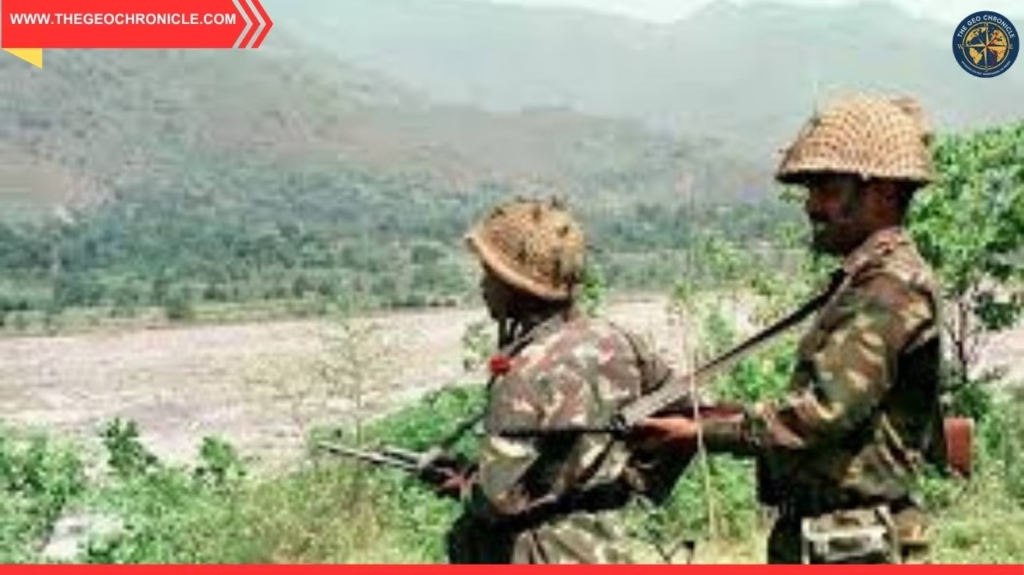
Since the Kargil War, the region witnessed sporadic ceasefire violations, infiltration attempts, and cross-border shelling. However, after 2021, a formal LoC ceasefire resulted in a significant decrease in hostilities, especially in the Kargil sector, which remains relatively undisturbed compared to other Kashmir sectors.
In 2025, another military crisis flared (the “Operation Sindoor” confrontation) after a terror attack in Pahalgam. India responded with missile and drone strikes against terrorist camps in Pakistan and Pakistan-Occupied Kashmir (PoK), reflecting its new doctrine of “forceful and proportionate retaliation” against terror infrastructure, maintaining escalation control below the nuclear threshold:
- Operation Sindoor (May 2025): India’s strikes used new munitions (BrahMos, SCALP, Excalibur shells, drones); both sides invoked restraint, avoided major escalation, and accepted a U.S.-brokered ceasefire on May 10, 2025.
- Aftermath: India’s suspension of the Indus Waters Treaty and ongoing freezes in trade and dialogue have deepened the diplomatic chill. Pakistan’s internal divisions remain pronounced, but its military is now on high alert along the LoC.
6.3 Current Indo-Pak Diplomatic Relations
- Diplomatic Pause: All substantive political dialogue between India and Pakistan is suspended; back-channels occur only for ceasefire coordination and emergency military de-confliction.
- Conditions for Dialogue: India maintains “terror and dialogue cannot go together” and sets preconditions of cessation of support for cross-border terrorism.
- Water and People-to-People Ties: India suspended the Indus Waters Treaty in retaliation to 2025 attacks, raising regional stakes; cross-LoC trade and travel remain restricted under security provisions.
6.4 Socio-Political Contrast: Jammu-Kashmir/Ladakh vs PoK
While the Indian-administered side has seen improvements in economic and social indicators (literacy, education, health, roads, tourism, renewable energy), PoK and Gilgit–Baltistan communities continue to struggle with economic neglect, infrastructure parity, and lack of political rights—leading to sporadic unrest and protests against the Pakistani state.
Key Military Operations During the Kargil War
| Operation | Date | Description | Outcome |
|---|---|---|---|
| Operation Badr | Jan–May 1999 | Pakistani infiltration into Kargil | Initial success, later defeat |
| Operation Vijay | May–July 1999 | Indian Army’s counteroffensive | Complete eviction of intruders |
| Operation Safed Sagar | May–July 1999 | IAF’s air strikes, recon, support | Critical in dislodging entrenched enemy |
Main Indian Army Ammunition and Weaponry
| Category | Name | Origin | Description/Role |
|---|---|---|---|
| Small Arms | INSAS, AK-47, SAF Carbine | India, Russia | General infantry use |
| Artillery | Bofors FH-77B, 130mm M-46, 105mm IFG | Sweden, Russia, India | High-angle, massed fire, counter-battery |
| Armoured Vehicles | T-72, BMP-2 | Russia, India | Rear area, rapid movement |
| Mortar/Rockets | 120/81mm, BM-21 Grad | Multiple | Indirect/area effect |
| Munitions | 155mm shells, LGBs, grenades | India, US, Israel | Precision & area bombardment |
Indian Air Force Aircraft Used in Kargil War
| Aircraft | Role | Notes / Missions |
|---|---|---|
| MiG-21 | Interceptor, ground-attack | Early strikes, one lost |
| MiG-27 | Ground-attack | Major initial attacks, one lost |
| MiG-29 | Air superiority | CAP, deterred PAF |
| Mirage 2000 | Multirole/Precision strike | LGB, Litening pod, decisive attacks |
| Canberra | Recce | Essential for intelligence |
| Jaguar | Recon, strike | Electronic/optical recon |
| Mi-17/Mi-8 | Utility/Transport | Sorties, some lost to enemy fire |
| UAV Searcher | Recon | Real-time targeting assistance |
Disclaimer
This report is intended as a comprehensive synthesis based on publicly available information from a wide range of reputable sources. Some military and intelligence details remain classified and may only be partially verified by public documents. Analyses, opinions, and interpretations herein reflect a careful reading and integration of the references provided above.





Leave a Reply