

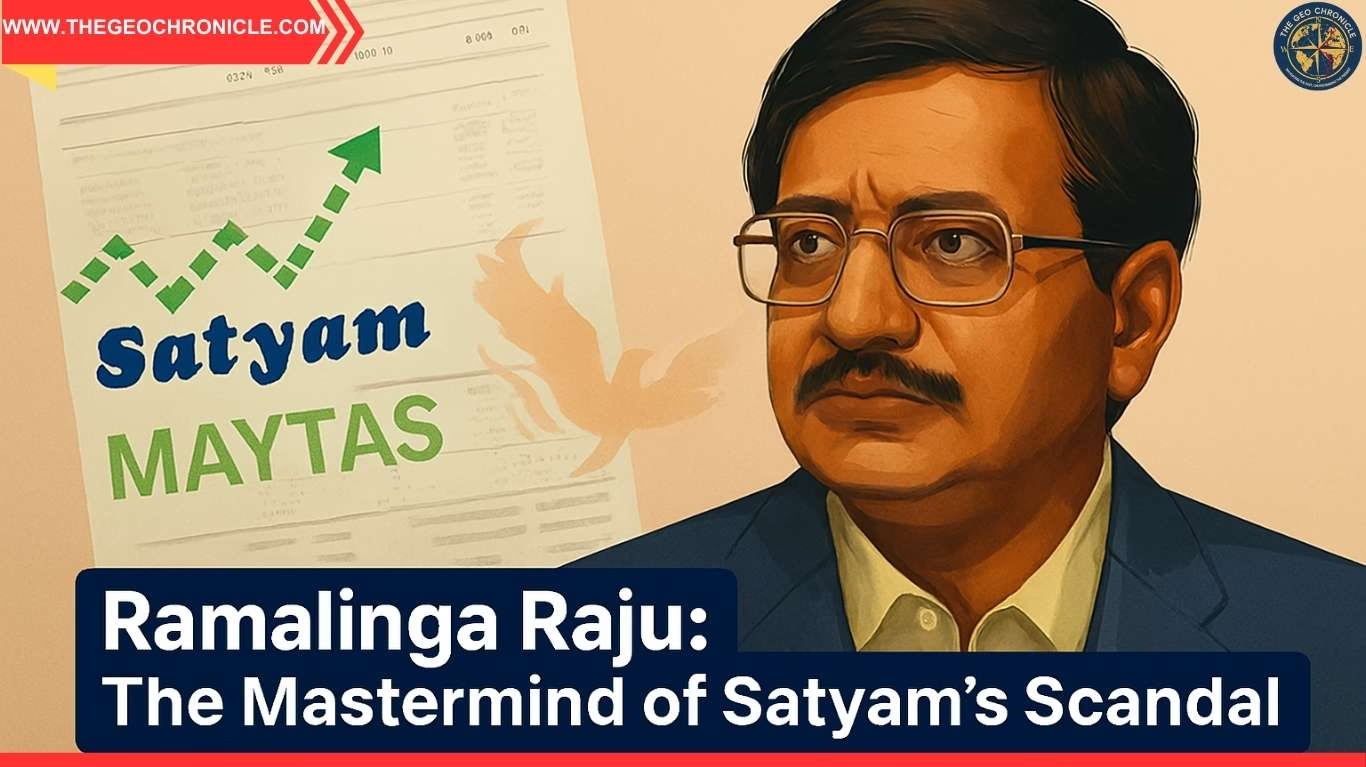
The collapse of Satyam Computer Services, once hailed as the crown jewel of the Indian IT industry, represents one of the most spectacular falls in corporate India’s history. Frequently referred to as “India’s Enron,” the Satyam scandal not only wiped billions of dollars in investor wealth but also shook the nation’s confidence in its burgeoning technology sector and corporate governance framework. On January 7, 2009, the founder and chairman, Byrraju Ramalinga Raju, confessed to orchestrating a massive accounting fraud that inflated the company’s assets and profits by over ₹7,136 crores (approximately $1.5 billion). Satyam’s shares crashed overnight, sending shockwaves through global markets and compelling urgent regulatory and legislative action in India.
Origins and Ascent of Satyam Computer Services
Founding and Early Expansion
Satyam Computer Services was founded in 1987 by B. Ramalinga Raju in Hyderabad, India, aiming to capitalize on the nascent but rapidly growing global information technology outsourcing industry. The company began as a private limited entity but soon expanded its horizons. By the early 1990s, Satyam had already established itself as a provider of software development and consulting services to major American and European corporations, riding the wave of economic liberalization and global demand for cost-effective IT solutions.
Satyam made its stock market debut in 1991-92 with an IPO that was oversubscribed 17 times, exemplifying the high investor confidence in India’s new economy sector. As it scaled new heights, Satyam received several international accolades, including becoming the first Indian IT company to be listed on the New York Stock Exchange (NYSE) in 2001.
Global Footprint and Recognition
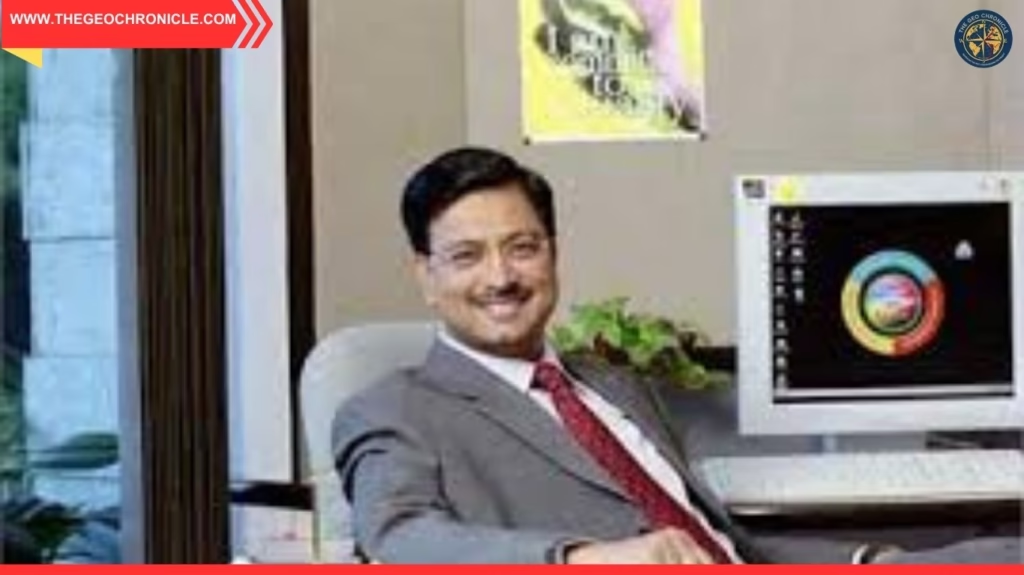
By the early 2000s, Satyam was widely considered one of India’s “Big Four” IT services providers alongside Tata Consultancy Services (TCS), Infosys, and Wipro. At its zenith, Satyam served 185 Fortune 500 companies, generated annual revenues exceeding $2 billion, and employed over 50,000 professionals across more than 60 countries.
Ramalinga Raju’s image as a visionary business leader was reinforced by prestigious awards: the Ernst & Young Entrepreneur of the Year (2007), the Dataquest IT Man of the Year (2000), and the Golden Peacock Award for Corporate Governance (2008)—a bitter irony in retrospect. Satyam’s success symbolized the rise of Indian IT, winning high-profile contracts such as official IT services provider for the FIFA World Cups in 2010 and 2014, and endorsements from business publications globally.

Ramalinga Raju: Architect of a Tech Empire and Its Downfall
Early Life and Entrepreneurial Journey
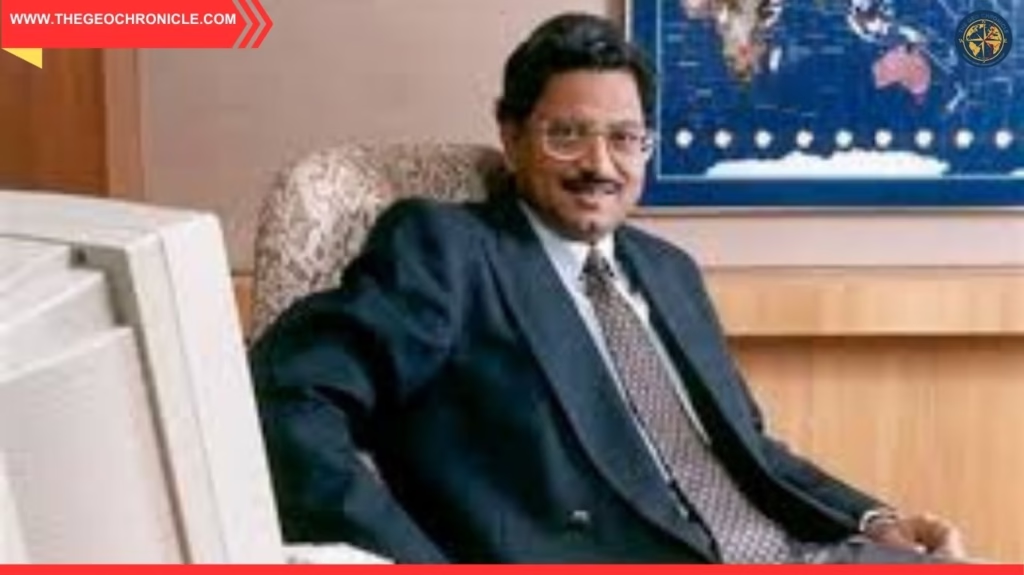
Born on September 16, 1954, in Bhimavaram, Andhra Pradesh, B. Ramalinga Raju epitomized the self-made businessman. After a B.Com from Andhra Loyola College and an MBA from Ohio University, Raju ventured into several unsuccessful businesses, ranging from textiles to real estate, before striking gold with Satyam Computer Services.
Known for his philosophical outlook, Raju was once considered an industry visionary, credited with building relationships with politicians and industry leaders in Andhra Pradesh. He not only helped shape the Information Technology policy for the region but also served on numerous influential corporate and policy boards.
The Dual Face: From Visionary CEO to Convicted Fraudster
Behind the scenes, Raju’s drive for ambitious growth led to a culture of “grow at any cost.” Satyam’s quarterly profit guidance consistently outperformed market expectations, and the company’s stock soared from Rs. 10 in the 1990s to Rs. 544 in 2008. Yet, as the company grew, so did the scale of financial manipulation.
In his own confession, Raju described the fraud’s evolution as, “It was like riding a tiger, not knowing how to get off without being eaten.” The gap between Satyam’s real and reported profits widened, compelling ongoing deception to maintain appearances.
Anatomy of the Satyam Scandal: Mechanics of the Fraud
Methods of Accounting Manipulation
Satyam’s fraud was perpetrated over at least seven years through an elaborate scheme involving:
- Falsification of Accounts: Revenue, profits, and cash balances were grossly overstated.
- Fake Invoices and Clients: Bogus sales entries and invoices were generated for non-existent clients and projects.
- Ghost Employees: Satyam reported over 53,000 employees, while the real figure was closer to 40,000. Salaries for non-existent employees were siphoned off.
- Inflated Bank Statements: Cash reserves shown in the balance sheet included large sums that simply did not exist; forged bank statements supported the illusion.
- Manipulated Payroll Systems: Funds meant for ‘employee salaries’ were redirected to company insiders.
Raju and a close circle of insiders—including his brother B. Rama Raju, CFO Srinivas Vadlamani, and a few senior finance staff—used shell companies and fictitious bank records to circumvent controls and deceive auditors and regulators. In effect, Satyam was reporting profits while bleeding cash—a Ponzi scheme that could only continue as long as the deception avoided discovery.
Auditor Complicity and Failures
PricewaterhouseCoopers (PwC), one of the world’s Big Four accounting firms, served as Satyam’s statutory auditor. Multiple investigations later revealed that PwC auditors failed to follow standard confirmation procedures, often relying on documentation supplied by Satyam’s management instead of directly confirming bank account balances and receivables with independent parties.
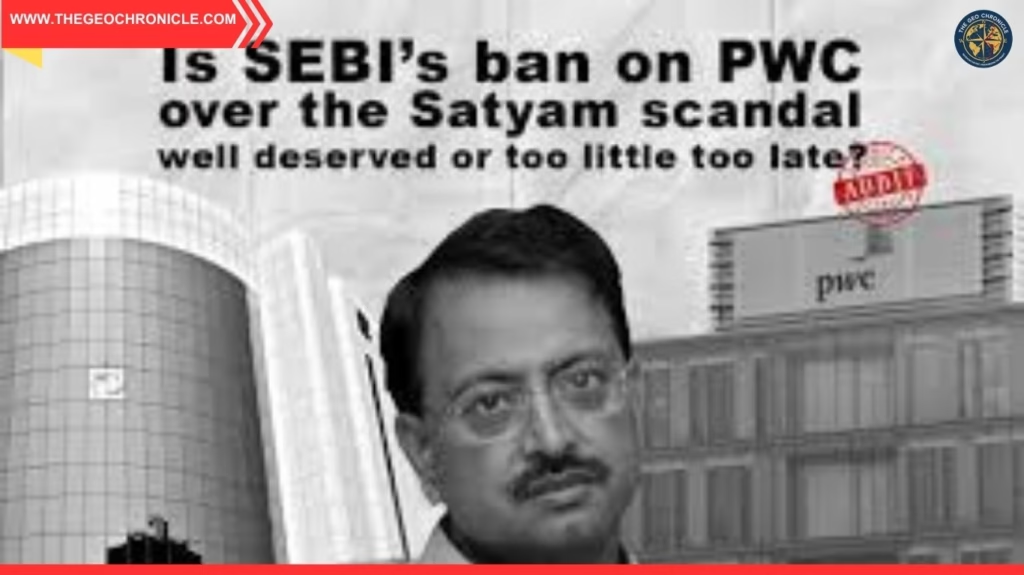
This negligence, and in some quarters alleged complicity, enabled fraudulent reporting at a global scale. The U.S. Securities and Exchange Commission (SEC) later fined PwC $6 million (its largest fine at the time for a foreign auditor), and the Indian Securities and Exchange Board (SEBI) banned PwC from auditing any listed public company in India for two years, an unprecedented sanction.

Maytas: The Mirror-Image Connection and the Failed Acquisition
What Were Maytas Infra and Maytas Properties?
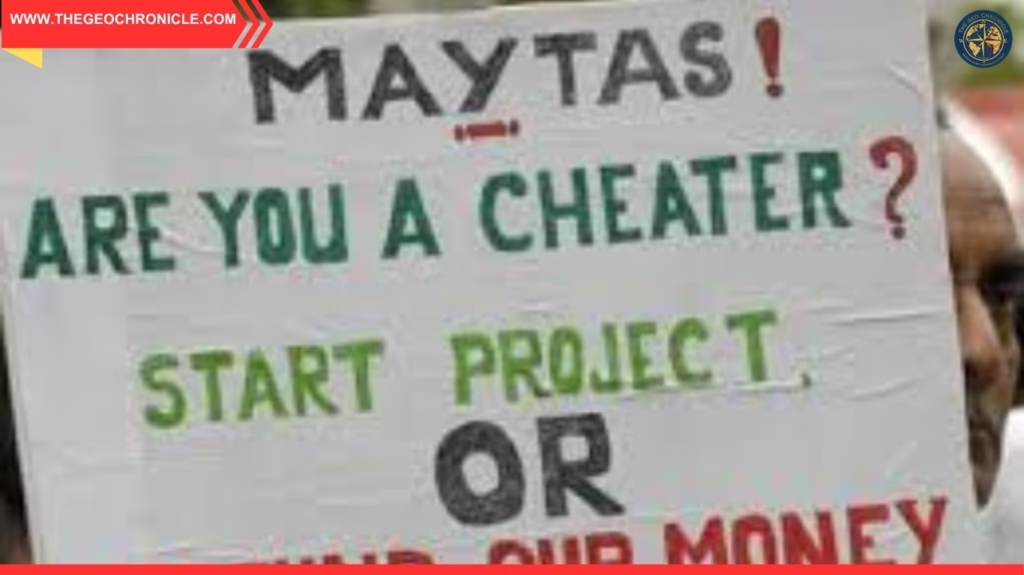
Maytas (Satyam spelled in reverse) comprised two companies—Maytas Infra and Maytas Properties—both controlled by the Raju family and managed, ostensibly, by Raju’s sons. Maytas Infra specialized in infrastructure projects, while Maytas Properties focused on real estate development.
The Grand Cover-Up: The Maytas Deal
In December 2008, in what would prove to be his undoing, Raju proposed that Satyam acquire Maytas Infra and Maytas Properties for $1.6 billion. Market investors and board members were stunned—the transaction would effectively transfer Satyam’s inflated (and fake) cash reserves to the Maytas companies, which had real, illiquid assets.
This move was, according to Raju’s later confession, an attempt to “fill fictitious assets with real ones.” In reality, it was a desperate bid to cover up years of accounting deception by absorbing the gap into Satyam’s balance sheet as property and infrastructure assets.
Timeline of the Maytas Acquisition Attempt
| Date | Key Event |
| Dec 16, 2008 | Satyam announces proposal to acquire 51% each in Maytas Infra and 100% in Maytas Properties, valued at $1.6 billion. |
| Within hours, Dec 16, 2008 | Following fierce investor backlash, the Satyam board cancels the acquisition. Satyam’s shares plunge 55% in a single day. |
| Late Dec 2008 | Four board members resign; the World Bank bans Satyam as a vendor for eight years over unrelated fraud and improper payments. |
The failed Maytas acquisition precipitated an immediate crisis of investor confidence and drew increased regulatory scrutiny. Within weeks, the fraud unraveled completely.
The Day Satyam Shares Crashed and Immediate Aftermath
The Crash: January 7, 2009
On January 7, 2009, in a letter addressed to the Satyam board and the Bombay/Dalal Street stock exchanges, Raju confessed to the fraud. He detailed inflations of cash reserves, profits, and revenues, stating that “the gap between actual and reported figures had become unmanageable”.
Market Reaction to Satyam Scandal
| Event | Share Price (BSE, INR)* |
| Jan 2, 2009 | 179 |
| Jan 7, 2009 (pre-confession) | 175 |
| Jan 7, 2009 (post-confession) | Crashed to 40 |
| Jan 9, 2009 | Fell further to 11.50 |
Indicative prices; BSE = Bombay Stock Exchange
Satyam’s market capitalization was decimated, falling by more than 90% in less than a week. Major institutional investors and multinational clients like Merrill Lynch and Credit Suisse immediately terminated their contracts. The global “Brand India” in technology and corporate governance suffered a severe blow.
Government Takeover and New Board
The Indian government acted swiftly, dissolving Satyam’s compromised board on January 9, 2009, and constituting a new caretaker board of respected industry figures, including Deepak Parekh and Kiran Karnik. The government’s goal was to preserve operational continuity, protect jobs, and facilitate a transparent resolution to the crisis.
Banks by then had frozen Satyam’s accounts, employees faced delayed paychecks, and Satyam’s survival was in serious doubt. The board, with advisors from the financial and consultancy worlds, stabilized operations and prepared the company for sale to a new owner.
Investigation, Legal Proceedings, and Regulatory Fallout
Investigation by Authorities
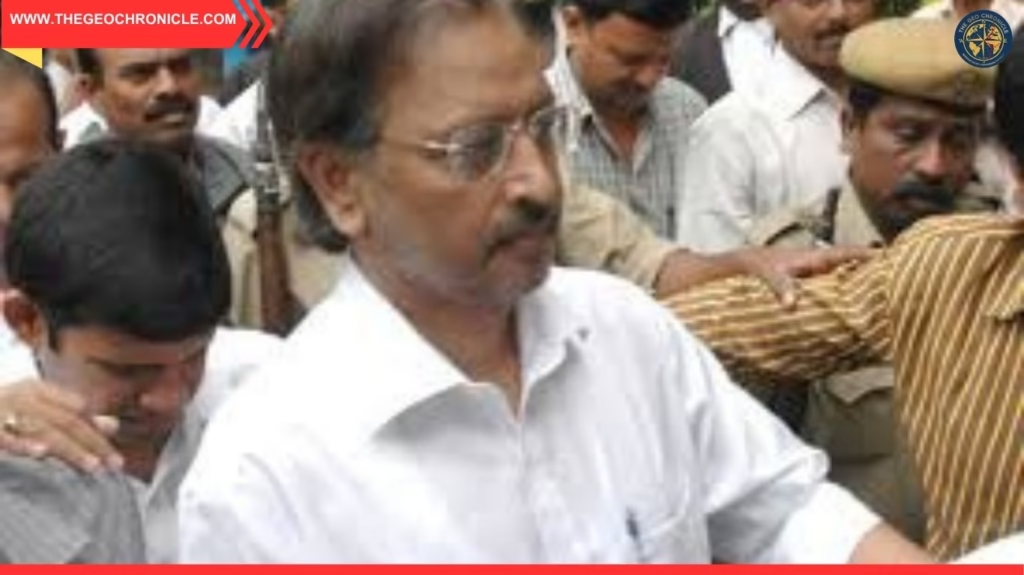
The Central Bureau of Investigation (CBI), Enforcement Directorate (ED), and Serious Fraud Investigation Office (SFIO) coordinated one of the largest white-collar crime probes in Indian history, examining thousands of documents, digital records, and testimony from hundreds of witnesses. By April 2009, the CBI had filed a 76-page chargesheet against Raju, his brother Rama, Satyam’s finance chief, auditors from PwC, and several company insiders.
Charges included:
- Criminal conspiracy
- Cheating and breach of trust
- Forgery and falsification of accounts
- Violation of the Companies Act and various securities regulations
Prosecution and Sentencing
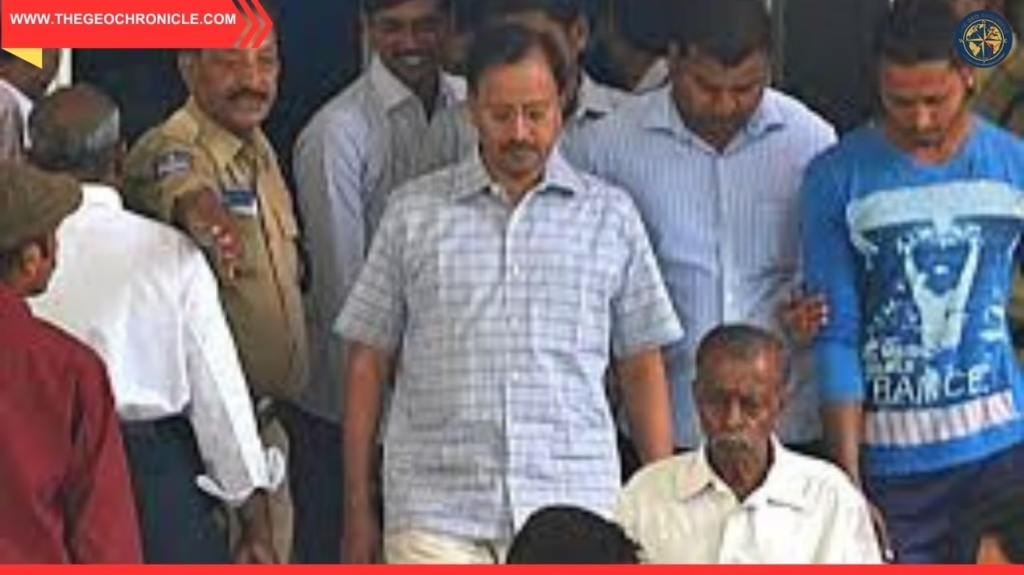
In April 2015, after years of legal proceedings, a special CBI court convicted Raju and nine others, sentencing them to seven years’ rigorous imprisonment and hefty fines. The conviction was historic as the most substantial legal action against a large-scale corporate fraud in India’s history.
Regulatory Reforms: Corporate Governance Overhaul
The Satyam debacle led to urgent reforms in India’s regulatory landscape:
- Companies Act, 2013: Overhauled to ensure stricter responsibilities for independent directors and auditors, mandatory rotation of auditors, more rigorous disclosures, and establishment of the National Financial Reporting Authority (NFRA).
- SEBI Guidelines: Enhanced requirements for board independence, regular disclosures, related-party transactions, and whistleblower protection.
- Whistleblower Protection: For the first time, legislative support for whistleblowers to report frauds without fear of retaliation.
- Professional Negligence: Auditors and directors became more liable for professional negligence, including the risk of debarment and civil and criminal penalties.
The Satyam-Mahindra Era: Acquisition, Rebranding, and Integration
The Tech Mahindra Takeover
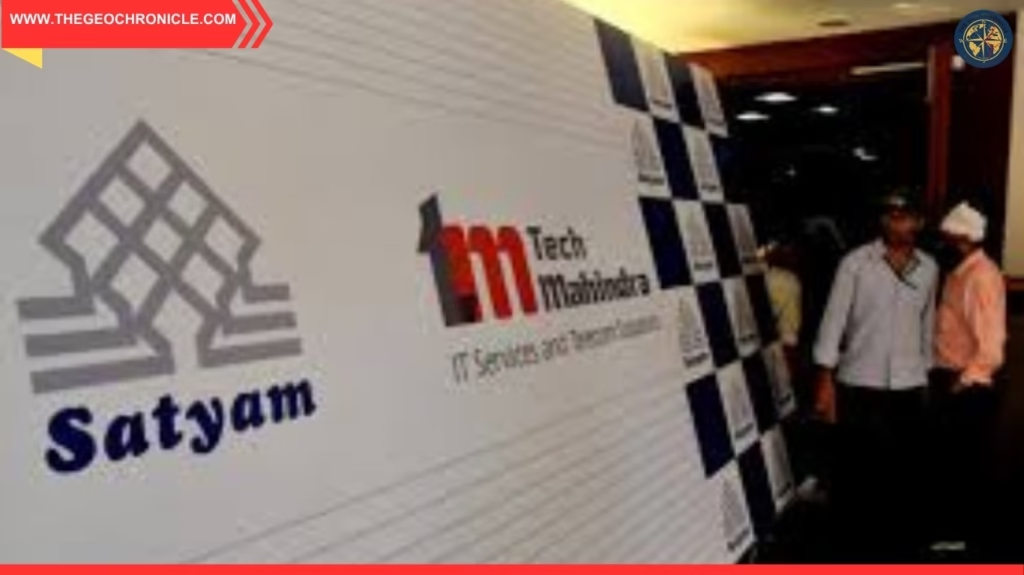
To safeguard Satyam’s assets, jobs, and ongoing client engagements, the government conducted a global auction in April 2009. Tech Mahindra, an arm of the Mahindra Group, emerged as the winning bidder with an offer of Rs. 58 per share for a 31% stake (totaling almost Rs. 1,757 crore), besting rivals like Larsen & Toubro.
Satyam-Tech Mahindra Transaction Summary
| Date | Event | Value/Stake |
| April 13, 2009 | Tech Mahindra wins Satyam auction | 31% at Rs. 58/share (Rs. 1,757 crore) |
| Post-acquisition | Open offer to acquire up to 51% | |
| June 2009 | Rebrand as “Mahindra Satyam” | – |
| March 2012 | Announcement of Mahindra Satyam–Tech Mahindra merger | – |
| June 2013 | Completion of merger; Tech Mahindra becomes the 5th largest Indian IT company | $2.7 billion revenues; 84,000 employees |
Tech Mahindra’s leadership team, including Vice Chairman Vineet Nayyar and CEO C.P. Gurnani, faced daunting challenges: restoring client and employee confidence, settling litigation, and restating financials for several years—a monumental audit task.
Rebranding and Merger
After navigating several legal and tax complications, Mahindra Satyam and Tech Mahindra merged in June 2013, creating a $2.7 billion entity with over 84,000 employees and 540 clients worldwide, cementing its position as the fifth largest IT services company in India. The merger diluted the “Satyam” brand but ensured the business’s continuity, employee retention, and restoration of trust in global customers.
The Fate of Maytas After Satyam
With the exposure of the accounting fraud, Maytas Infra and Maytas Properties also fell under intense scrutiny. Maytas’s shares plunged, and ongoing projects were audited by government agencies; its biggest projects, including Hyderabad Metro Rail, were suspended or cancelled.
- Maytas Infra was restructured and, following government intervention, eventually acquired by IL&FS (Infrastructure Leasing & Financial Services) in 2009 and renamed to IL&FS Engineering and Construction Company Ltd.
- Maytas Properties suffered liquidity crises and was subsequently restructured and renamed Hill County Properties Ltd, with severe losses and project delays.
The Raju family lost all operational control of these entities, with key managers and directors debarred from the capital market.

The Continuing Impact: Corporate Governance in India Post-Satyam
Lasting Legal and Regulatory Changes
The Satyam scandal proved catalytic for major legislative and regulatory reforms:
- The Companies Act, 2013, is widely regarded as a direct result of the Satyam scandal, introducing explicit accountability for auditors, directors, and top management, mandatory board oversight, and enhanced whistleblower protection.
- Additional oversight bodies like the National Financial Reporting Authority (NFRA) were created to supervise auditing standards and ensure accountability.
- Stricter SEBI rules enforced timely and transparent disclosures, while ICAI (Institute of Chartered Accountants of India) imposed professional bans and fines for audit negligence.
India’s “Enron Moment”
Satyam’s saga is now cited in finance and business schools worldwide as a warning of the dangers of unchecked power, the absence of checks and balances, auditor independence failures, and the perils of family-dominated corporate structures.
Life After Satyam: The Raju Family Today
Where is Ramalinga Raju Now?
After his conviction and a brief period in prison, B. Ramalinga Raju was released on bail amid ongoing legal appeals. In recent years, he has maintained a low public profile but is known to have mentored his sons and advised on family-run businesses in the fields of agriculture and technology. His renewed involvement in Brane Enterprises, an AI-focused IT company, has attracted new controversy amid allegations of unpaid wages and layoffs of over 2,500 employees, suggesting that the ghosts of the past continue to haunt any business associated with the Raju name.
Raju’s family, notably his sons, remain active in Hyderabad’s business scene, reportedly owning profitable land assets and maintaining interests in healthcare and agriculture. However, auditing authorities and the Enforcement Directorate have attached most of the family’s known real estate assets pending further legal proceedings.

The Satyam Legacy: Current Status Within Tech Mahindra
Strategic, Financial, and Organizational Integration
The Tech Mahindra–Satyam merger is regarded as an exemplary turnaround, preserving tens of thousands of jobs and much of the original client base. Several former Satyam delivery centers and business lines, particularly enterprise and engineering services, now operate as integrated components of Tech Mahindra’s global delivery system.
Satyam’s legacy operations contributed to Tech Mahindra’s emergence as a diversified, multi-vertical global technology services powerhouse, with an extensive international portfolio and a strong reputation for post-crisis corporate governance and transparency.
Key Events in the Satyam Scandal
| Year | Event |
|---|---|
| 1987 | B. Ramalinga Raju founds Satyam Computer Services in Hyderabad |
| 1991-92 | IPO oversubscribed 17 times; rapid growth in Indian and international markets |
| 2001 | Satyam becomes first Indian IT company to list on NYSE |
| 2005-2008 | Satyam receives multiple corporate governance and entrepreneurial awards |
| Dec 16, 2008 | Satyam proposes $1.6B acquisition of family-run Maytas firms; proposal is canceled |
| Dec 23, 2008 | World Bank bans Satyam for 8 years for fraud and improper payments |
| Jan 7, 2009 | Raju confesses to massive fraud; Satyam shares crash; board resigns |
| Jan 9, 2009 | CBI and government take over; new board appointed |
| Apr 13, 2009 | Tech Mahindra wins auction for 31% stake in Satyam |
| June 2009 | “Mahindra Satyam” brand is launched |
| 2012-13 | Mahindra Satyam is merged into Tech Mahindra, creating 5th largest Indian IT firm |
| Apr 9, 2015 | Raju and nine others convicted; sentenced to seven years in prison and fined |
| 2018 | SEBI bans PwC from auditing any Indian-listed company for two years |
| 2024 | Raju is reportedly mentoring new ventures but faces public and employee criticism |
Lessons Learned and Ongoing Reflections
The Satyam scandal serves as a textbook case on the perils of unchecked CEO authority, auditor negligence, and weak corporate governance. It also underscores the necessity for strong, independent boards; robust whistleblower protections; and regulatory vigilance. The transformation of Satyam from a pariah to a core part of Tech Mahindra’s global empire further demonstrates the possibility of organizational redemption through transparent leadership and governance system reforms.
Disclaimer
The information provided in this article is intended for general informational purposes only and is based on available sources as of the date of publication. www.thegeochronicle.com makes no representations or warranties of any kind, express or implied, about the completeness, accuracy, reliability, suitability, or availability of the information contained herein. Any reliance you place on such information is strictly at your own risk. The content does not constitute legal, financial, or professional advice. Readers are advised to consult with qualified professionals for specific advice relevant to their situation. www.thegeochronicle.com does not accept any liability for any loss or damage incurred as a result of the use of or reliance on the content presented in this article.









Leave a Reply