

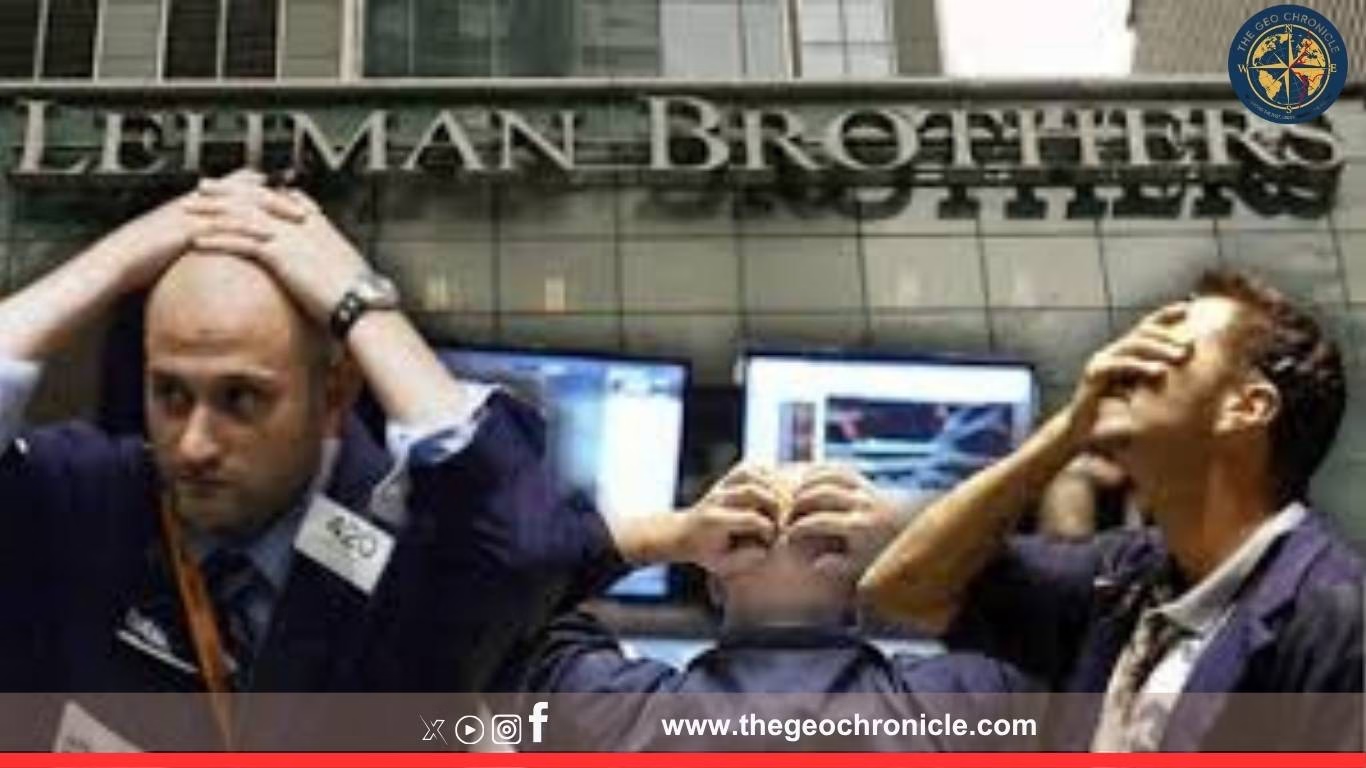
September 15, 2008 — The Day Wall Street Shook
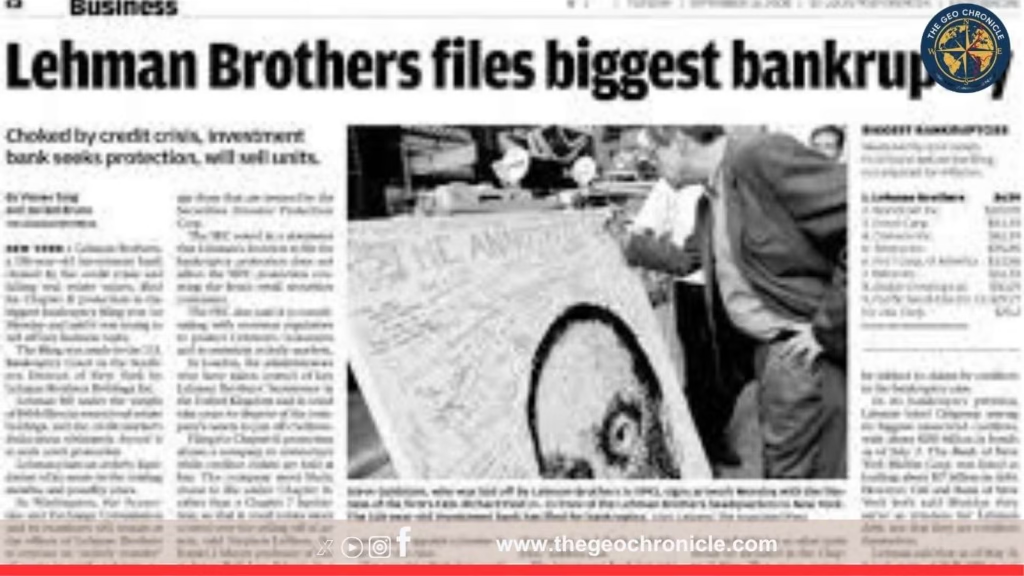
At 1:45 a.m. on Monday, September 15, 2008, Lehman Brothers Holdings Inc. filed for Chapter 11 bankruptcy protection in the United States Bankruptcy Court for the Southern District of New York. It was the largest bankruptcy in U.S. history, involving $639 billion in assets and $619 billion in debt. The collapse of the 164-year-old investment bank marked the tipping point of the global financial crisis, triggering panic across markets, governments, and households worldwide.
Lehman Brothers’ downfall was not a sudden event—it was the result of years of risky financial practices, regulatory gaps, and a housing bubble that burst with devastating force. Its collapse sent shockwaves through the global economy, leading to trillions in lost output, mass unemployment, and a rethinking of financial regulation.

Origins of Lehman Brothers: From Cotton to Capital Markets
Lehman Brothers began in 1844 as a dry-goods store in Montgomery, Alabama, founded by German immigrants Henry, Emanuel, and Mayer Lehman. The firm evolved into a commodities trading powerhouse and later into one of Wall Street’s most prestigious investment banks. Over the decades, it survived the Great Depression, two world wars, and multiple financial crises.
By the early 2000s, Lehman had become the fourth-largest investment bank in the U.S., employing over 25,000 people globally. Its aggressive expansion into mortgage-backed securities and real estate investments, however, would prove catastrophic.
The Subprime Mortgage Trap: Seeds of Collapse
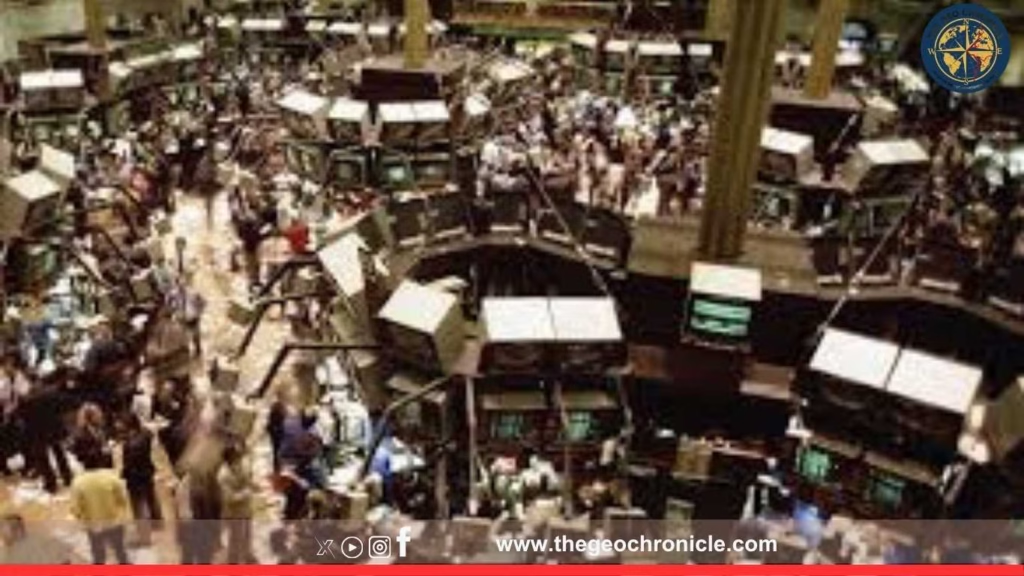
Between 2000 and 2006, Lehman Brothers aggressively expanded into the subprime mortgage market. It acquired several lenders, including Aurora Loan Services and BNC Mortgage LLC, which specialized in high-risk loans. By 2006, these subsidiaries were issuing nearly $50 billion in loans per month.
Lehman’s business model relied heavily on leverage—borrowing large sums to invest in mortgage-backed securities. At its peak, Lehman had $680 billion in assets supported by just $22.5 billion in firm capital. This meant that even a small decline in real estate values could wipe out its equity.
When housing prices began to fall in 2006–2007, defaults on subprime mortgages surged. Lehman’s mortgage-backed assets plummeted in value, and the firm began posting massive losses.
Timeline of Events Leading to Collapse
| Date | Event | Impact |
|---|---|---|
| March 2008 | Bear Stearns rescued by JPMorgan Chase with Fed backing | Raised concerns about Lehman’s stability |
| June 2008 | Lehman posts $2.8 billion quarterly loss | Investor confidence shaken |
| September 10, 2008 | Lehman announces $3.9 billion loss and asset write-downs | Stock price plunges, credit rating threatened |
| September 13–14 | Emergency meetings with Bank of America and Barclays | No buyer found, government refuses bailout |
| September 15, 2008 | Lehman files for bankruptcy | Global markets crash, panic spreads |
Why the Government Didn’t Bail Out Lehman
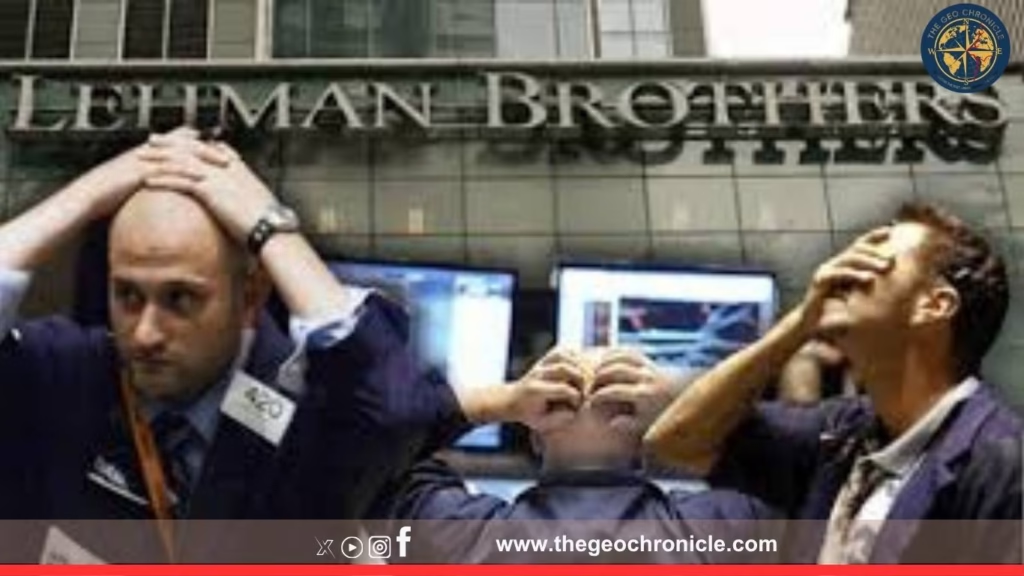
Unlike Bear Stearns, which was rescued with Federal Reserve support, Lehman Brothers received no government bailout. Treasury Secretary Hank Paulson and Fed Chairman Ben Bernanke urged Lehman’s CEO Dick Fuld to find a buyer. Barclays and Bank of America showed interest but demanded government guarantees for potential losses—up to $70 billion.
Paulson refused, citing legal limitations. Lehman was an investment bank, not a commercial bank like Fannie Mae or Freddie Mac, and thus couldn’t be nationalized. The Federal Reserve also couldn’t guarantee loans without sufficient collateral. With no buyer and no bailout, Lehman was forced to declare bankruptcy.

Immediate Impact: Market Chaos and Global Panic
Lehman’s collapse triggered a 4.5% drop in the Dow Jones Industrial Average—the largest one-day decline since 9/11. Credit markets froze, interbank lending stalled, and money market funds faced mass withdrawals. Investors lost confidence in the financial system, fearing more collapses.
Major institutions like AIG, Merrill Lynch, and Citigroup teetered on the brink. The U.S. government responded with emergency measures, including:
- The $700 billion Troubled Asset Relief Program (TARP)
- Federal Reserve’s quantitative easing programs
- Bailouts of AIG and General Motors
- Stress tests and capital injections for banks
Global Fallout: Recession, Unemployment, and Lost Output
The financial crisis triggered by Lehman’s collapse led to the Great Recession (2008–2009). Global GDP contracted, trade volumes plummeted, and unemployment soared.
| Region | Economic Impact | Unemployment Spike |
|---|---|---|
| United States | $10 trillion in lost output, housing crash | Rose from 5% to 10% by 2009 |
| European Union | Banking crisis, sovereign debt issues | Greece, Spain hit hardest |
| Asia | Export slowdown, stock market losses | China and India faced slowdowns |
| Latin America | Commodity price collapse | Brazil and Argentina affected |
Long-Term Consequences: Regulation and Reform
Lehman’s collapse exposed systemic flaws in financial regulation. In response, governments enacted sweeping reforms:
- Dodd-Frank Act (U.S.): Introduced stress tests, consumer protection, and oversight of derivatives.
- Basel III (Global): Strengthened capital requirements and liquidity standards.
- Volcker Rule: Restricted proprietary trading by banks.
Central banks also adopted unconventional tools like zero interest rates and asset purchases to stabilize economies.
Cultural and Psychological Impact
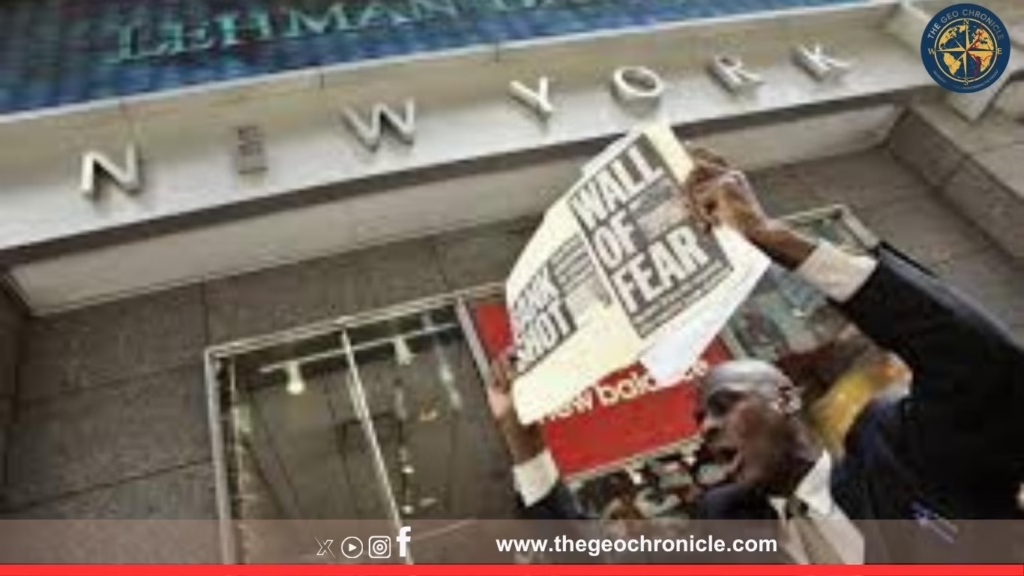
Lehman’s bankruptcy became a symbol of Wall Street excess and regulatory failure. Images of employees leaving with boxes in hand became iconic. Public trust in financial institutions eroded, and movements like Occupy Wall Street emerged in protest.
The crisis also reshaped generational attitudes toward finance. Millennials, entering the workforce during the recession, faced stagnant wages, student debt, and delayed homeownership.
Lessons from Lehman’s Collapse
The fall of Lehman Brothers was a watershed moment in global financial history. It revealed the dangers of unchecked leverage, opaque financial instruments, and regulatory blind spots. While reforms have strengthened the system, new risks—like shadow banking and crypto markets—continue to emerge.
Lehman’s legacy is a cautionary tale: in the pursuit of profit, stability must never be sacrificed. The collapse reminds us that financial systems are built on trust—and once broken, the consequences can be catastrophic.
Disclaimer
This article is based on publicly available information and verified reports from credible sources including The Balance, Investopedia, and Wikipedia as of September 2025. The views expressed in quoted material are those of the respective authors and do not represent the views of this publication. All data and references are cited for informational purposes only.










Leave a Reply