
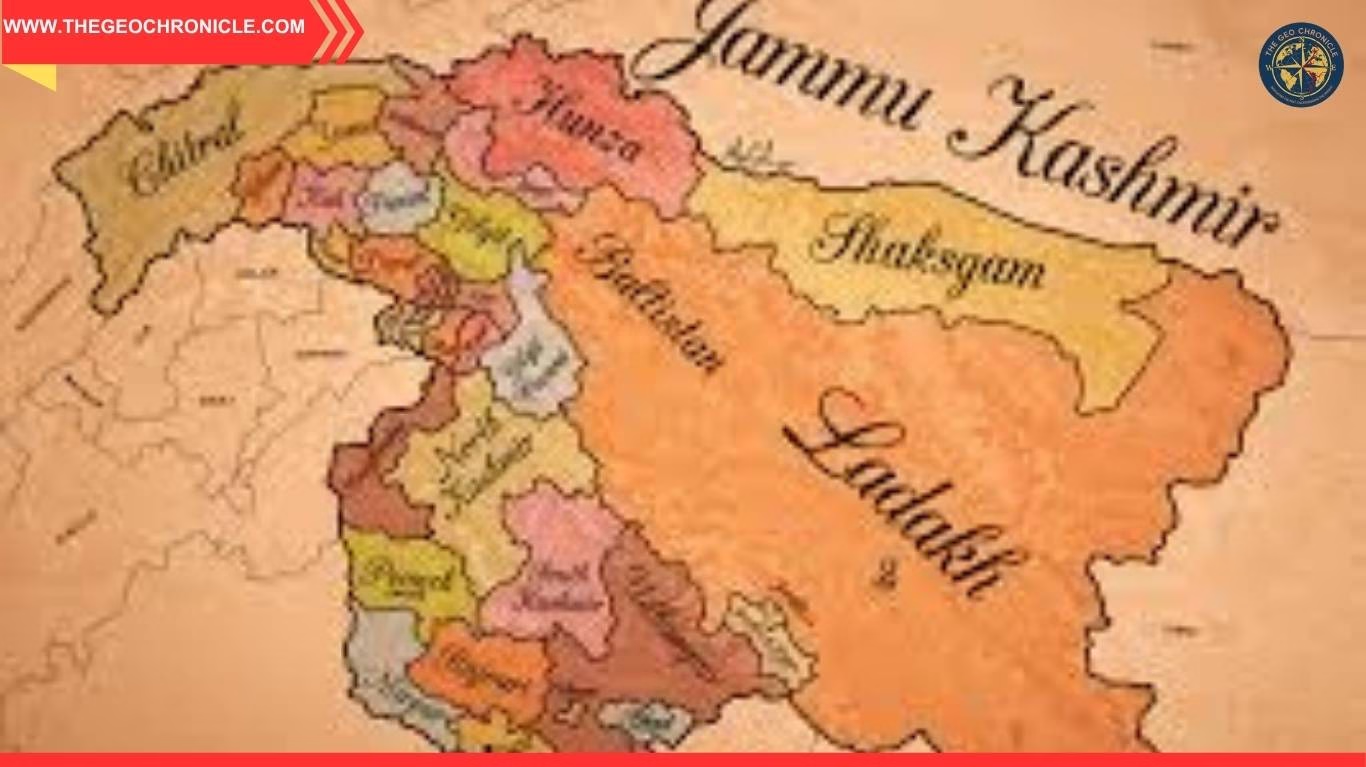
The India-Pakistan border is more than a geopolitical divide—it is a historical fault line that has reshaped identities, cultures, and territories. Among the regions deeply affected by this transformation is Swat Valley, a picturesque region in present-day Pakistan that once shared cultural and political ties with the Kashmir Kingdom. This article explores Swat Valley’s historical connection to Kashmir, the impact of the 1947 partition, its current status, and future prospects.

Historical Overview: Swat Valley and the Kashmir Kingdom
Ancient Cultural Affinity
- Swat Valley was a center of Gandhara civilization, flourishing with Buddhist monasteries and scholars.
- It shared linguistic, religious, and trade ties with Kashmir, especially during the Hindu Shahi and Durrani Empire periods.
- Though not formally part of the Kashmir Kingdom during British rule, Swat’s cultural alignment with Kashmir was evident in art, architecture, and governance.
Formation of the Princely State
- In 1849, Saidu Baba (Akhund of Swat) established Swat as a princely state.
- Recognized by the British in 1918, Swat maintained semi-autonomous status under the Wali of Swat.
- The region operated independently but retained cultural ties with Kashmir through shared religious practices and tribal affiliations.
Historical and Political Timeline of Swat Valley
| Period | Governance Structure | Relation to Kashmir Kingdom | Key Events | Geopolitical Status |
|---|---|---|---|---|
| Pre-1849 | Tribal Confederacies | Cultural Affinity | Buddhist influence, Gandhara legacy | Autonomous tribal region |
| 1849–1918 | Princely State (Saidu Baba) | Informal Cultural Link | Establishment of Wali rule | Semi-autonomous |
| 1918–1947 | British Protectorate | Peripheral to Kashmir | Recognition by British Raj | Princely state under British |
| 1947–1969 | Accession to Pakistan | Severed ties post-partition | Peaceful accession, retained autonomy | Integrated into Pakistan |
| 1969–Present | District in Khyber Pakhtunkhwa | No formal ties | Abolition of princely status | Full administrative control |
Partition of 1947: Redrawing Borders and Realigning Loyalties
Accession and Integration
- Swat Valley peacefully acceded to Pakistan in 1947, unlike Kashmir which became a flashpoint.
- The Wali of Swat signed the Instrument of Accession, aligning with Pakistan’s federal structure.
- In 1969, Swat was fully integrated into Khyber Pakhtunkhwa, ending its princely autonomy.
Strategic Importance
- Swat’s proximity to Afghanistan and Kashmir made it a strategic buffer zone.
- Post-partition, Swat became a focal point for tribal governance, military operations, and counter-insurgency efforts.

Current Scenario: Swat Valley in Contemporary Pakistan
Administrative Status
- Swat is now a district in Khyber Pakhtunkhwa, governed by Pakistan’s federal laws.
- The region has seen significant development post-2009 military operations against Taliban insurgents.
- Investments in tourism, education, and infrastructure have revitalized the valley.
Cultural Identity
- Despite integration, Swat retains a distinct cultural identity rooted in its princely past.
- Local customs, tribal governance, and historical narratives continue to shape its social fabric.
Kashmir Conflict and Swat’s Peripheral Role
- Swat is not directly involved in the Kashmir dispute but shares historical and cultural parallels.
- Some scholars suggest Swat could serve as a symbolic bridge for Indo-Pak cultural diplomacy.
- However, its role remains peripheral in the broader geopolitical conflict centered around Jammu & Kashmir.
Future Prospects: Regional Integration and Cultural Revival
Tourism and Heritage
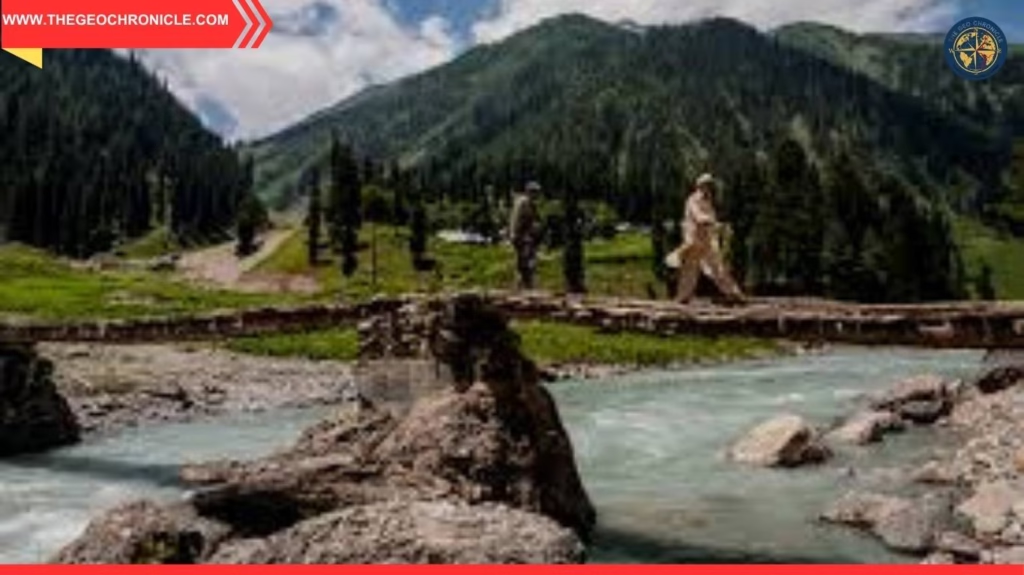
- Swat’s Buddhist heritage, scenic beauty, and historical sites offer immense tourism potential.
- Reviving its connection to Kashmir’s legacy could enhance cross-border cultural tourism.
Geopolitical Stability
- Swat could play a role in regional peacebuilding if India and Pakistan pursue détente.
- Cultural exchanges, joint archaeological projects, and tourism corridors could foster mutual understanding.
Conclusion
Swat Valley’s historical connection to the Kashmir Kingdom is a reminder of South Asia’s shared heritage and fluid borders. From tribal rule to princely governance, and from partition to modern integration, Swat has evolved while retaining its cultural essence. Understanding its past offers insights into the broader dynamics of the India-Pakistan border and the potential for reconciliation through history.
Disclaimer
This article is intended for educational and informational purposes only. It is based on historical records, scholarly interpretations, and publicly available data. The views expressed do not represent any political stance or endorsement. Readers are encouraged to consult official sources and academic research for deeper analysis. The author and publisher are not responsible for any misinterpretation or misuse of the content.








Ankit S
Hey team thegeochronicle.com,
Hope your doing well!
I just following your website and realized that despite having a good design; but it was not ranking high on any of the Search Engines (Google, Yahoo & Bing) for most of the keywords related to your business.
We can place your website on Google’s 1st page.
* Top ranking on Google search!
* Improve website clicks and views!
* Increase Your Leads, clients & Revenue!
Interested? Please provide your name, contact information, and email.
Bests Regards,
Ankit
Best AI SEO Company
Accounts Manager
http://www.bestaiseocompany.com
Phone No: +1 (949) 508-0277