

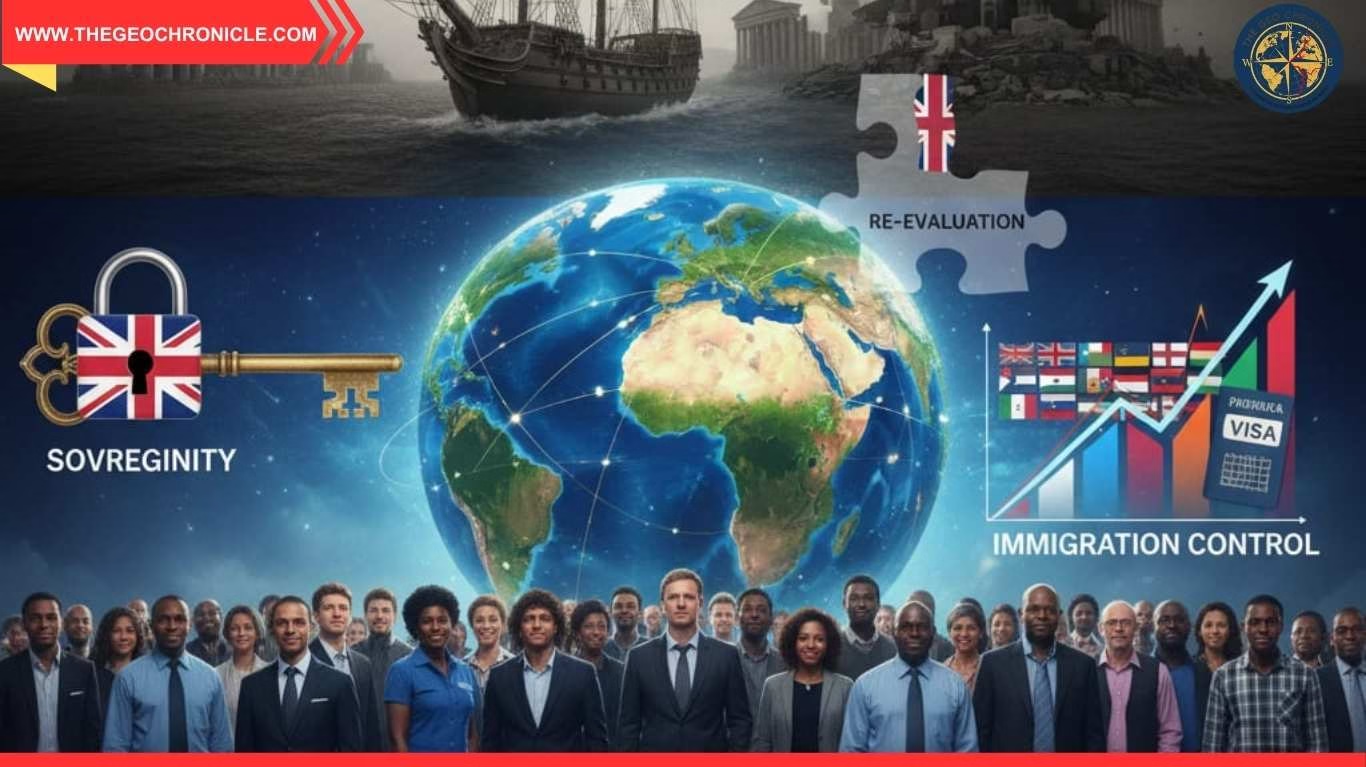
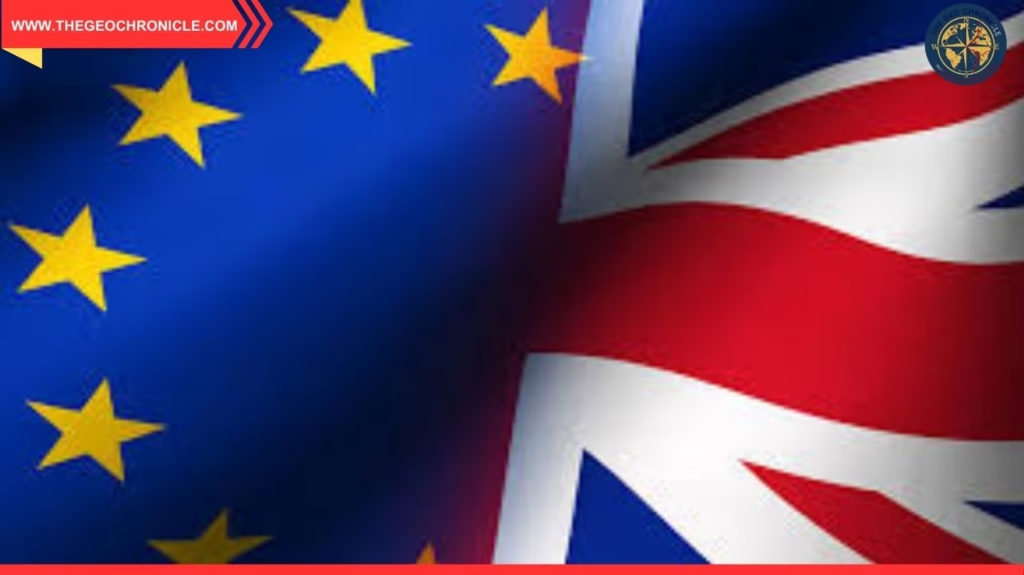
Brexit—the United Kingdom’s withdrawal from the European Union—has been one of the most consequential political and economic decisions in modern British history. Officially enacted on January 31, 2020, Brexit was the culmination of a 2016 referendum where 52% of voters chose to leave the EU. The decision has since reshaped Britain’s trade, governance, immigration, and global standing.
This article explores the logic behind Brexit, the current situation, the gains and losses, and the future outlook. It also includes a comparative table, SEO keywords, and a disclaimer for journalistic transparency.

🧠 The Logic Behind Brexit
Brexit was driven by a mix of political, economic, and cultural motivations. Here are the core arguments that shaped the Leave campaign:
1. Sovereignty and Legislative Autonomy
- Many Britons felt that EU membership compromised national sovereignty.
- EU laws and regulations were binding, even when they conflicted with UK interests.
- Brexit promised the restoration of full legislative control to Westminster.
2. Immigration Control
- EU’s freedom of movement allowed citizens from member states to live and work in the UK.
- Concerns over uncontrolled immigration and pressure on public services fueled support for Brexit.
- Leaving the EU enabled the UK to implement a points-based immigration system.
3. Economic Independence
- Critics argued that EU membership limited Britain’s ability to strike independent trade deals.
- Brexit was seen as a gateway to global trade partnerships beyond the EU.
- The UK could tailor its economic policies without EU constraints.
4. Democratic Accountability
- The EU’s bureaucratic structure was perceived as distant and unaccountable.
- Brexit was framed as a democratic correction, returning power to the British electorate.
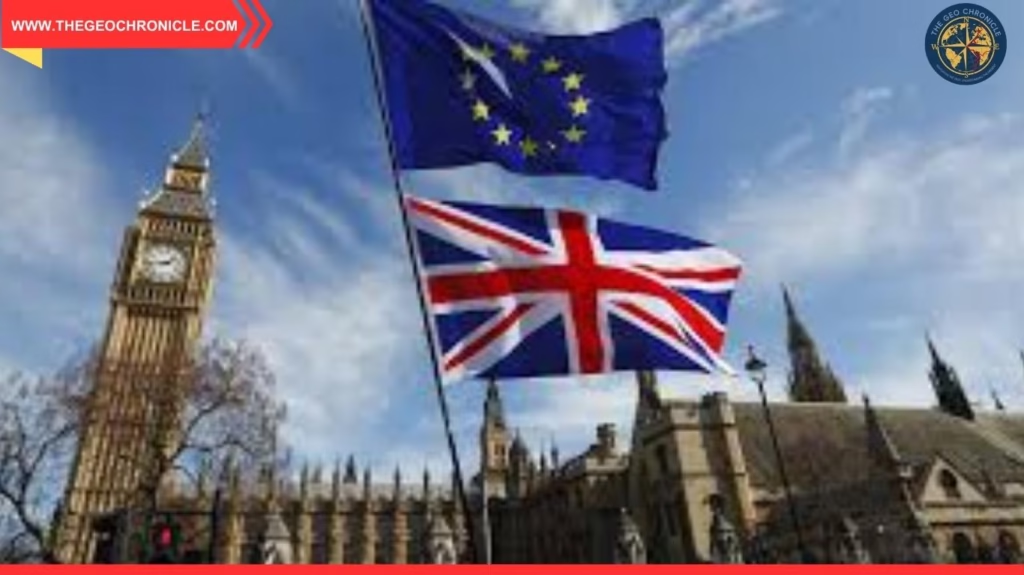
📊 Current Situation: Post-Brexit Britain
Five years after Brexit, the UK continues to grapple with its consequences. The Trade and Cooperation Agreement (TCA) governs current UK-EU relations, but challenges persist.
Key Post-Brexit Indicators
| Indicator | Status (2025) | Notes |
|---|---|---|
| Trade with EU | ↓ 15% (exports & imports) | Non-tariff barriers have increased costs and complexity |
| Productivity | ↓ 4% vs. EU baseline | Long-term decline due to reduced market access |
| Foreign Investment | ↓ | Political uncertainty has deterred investors |
| Immigration | Controlled via points-based system | Reduced EU labor availability in key sectors |
| Public Sentiment | Mixed; majority now view Brexit as economically harmful | Two-thirds of Britons believe Brexit damaged the economy |
| Political Stability | Improved since 2019 | Labour government seeks pragmatic reset |
| New Trade Deals | Limited impact | Most deals replicate previous EU agreements |
Sources: Office for Budget Responsibility, Institute for Government, European Institute for International Relations
📈 Gains from Brexit
Despite economic headwinds, Brexit has delivered some strategic and political gains:
1. Regulatory Freedom
- The UK can now diverge from EU regulations in areas like finance, agriculture, and data protection.
- This flexibility allows for innovation and tailored policy-making.
2. Independent Trade Policy
- Britain has signed trade deals with countries like Australia, Japan, and New Zealand.
- These agreements aim to diversify trade beyond Europe.
3. Immigration Reform
- The new system prioritizes skills over nationality.
- It has reduced low-skilled immigration and increased control over labor inflows.
4. Political Clarity
- Brexit resolved a long-standing debate over EU membership.
- It has allowed political parties to refocus on domestic issues.
📉 Losses and Challenges
Brexit has also introduced significant economic and logistical challenges:
1. Trade Friction
- Customs checks, regulatory divergence, and paperwork have disrupted supply chains.
- Small businesses face disproportionate burdens in exporting to the EU.
2. Labor Shortages
- Sectors like agriculture, hospitality, and healthcare struggle to recruit due to reduced EU labor.
- Wage inflation and service disruptions are common.
3. Investment Decline
- Uncertainty and reduced market access have made the UK less attractive to foreign investors.
- London’s financial sector faces competition from EU cities.
4. Northern Ireland Protocol
- The special status of Northern Ireland has created political tension and trade complications.
- The Windsor Framework seeks to ease these issues but remains contentious.
🔮 Future Outlook: What Lies Ahead?
The future of post-Brexit Britain depends on strategic recalibration, political will, and global dynamics.
1. Economic Rebalancing
- The UK must invest in high-growth sectors like tech, green energy, and advanced manufacturing.
- Rejoining parts of the EU single market (e.g., for services) may be politically feasible.
2. EU Relations Reset
- The Labour government has signaled a pragmatic approach to EU relations.
- Prime Minister Keir Starmer’s attendance at EU summits marks a thaw in diplomatic ties.
3. Global Trade Expansion
- The UK is pursuing membership in the Comprehensive and Progressive Agreement for Trans-Pacific Partnership (CPTPP).
- This could open new markets in Asia-Pacific.
4. Domestic Policy Innovation
- Freed from EU constraints, Britain can experiment with tax reform, digital regulation, and industrial policy.
- Success depends on political stability and public support.
🧾 Disclaimer
This article is intended for informational and journalistic purposes only. It reflects publicly available data and expert commentary as of October 2025. The views expressed herein do not constitute financial, legal, or political advice. Readers are encouraged to consult official government sources and independent analysts for deeper insights.




Leave a Reply