



Misinformation on social media continues to travel rapidly across global digital platforms, frequently distorting facts and context to provoke strong emotional responses. A recent instance involves widely shared digital footage that was falsely connected to natural disaster aftermath in South Asia. Fact-checking organizations have successfully traced the origin of this footage, revealing a completely different reality behind the recorded event.
Understanding the Misleading Claims
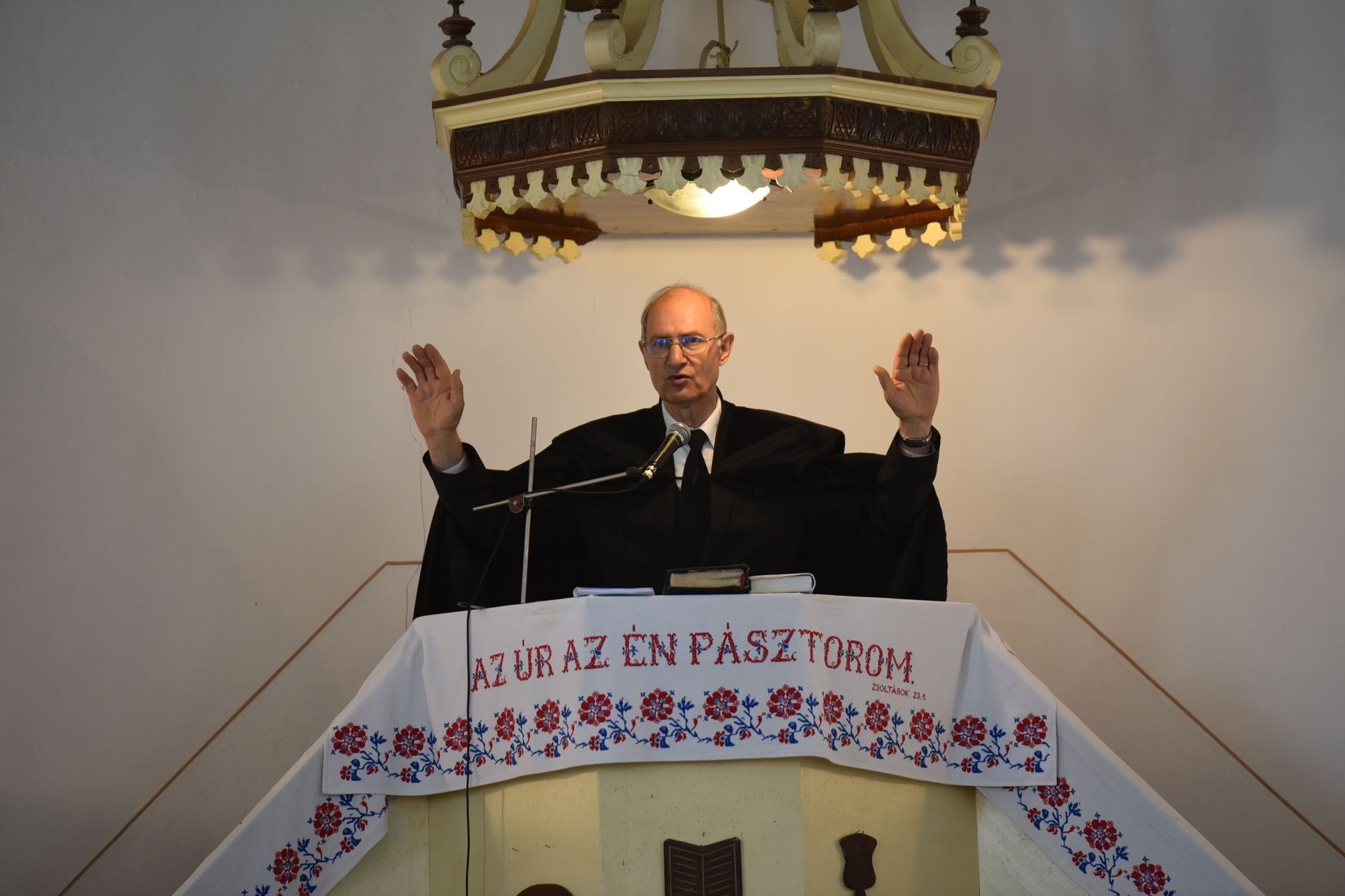
Recent social media posts featured a video recording depicting a large gathering of individuals participating in an organized religious recital. According to captions attached to these viral uploads, the people in the footage were described as flood victims in Nepal who had allegedly chosen to abandon Hinduism following a severe natural calamity. The narrative aimed to suggest that significant demographic shifts in religious affiliation were occurring spontaneously in disaster-hit regions.
As the footage gained momentum across various platforms, it accumulated thousands of views, shares, and comments from users around the world. Many individuals accepted the provided narrative at face value, unaware that the accompanying text had entirely fabricated the context of the visual content. Such misleading claims highlight the ongoing challenge of digital verification in modern information ecosystems.
Uncovering the True Origin of the Footage
Independent digital investigators and fact-checkers utilized reverse image search tools and metadata analysis to determine where and when the video was actually recorded. The investigation revealed that the footage had no connection whatsoever to Nepal, natural disasters, or any mass religious conversion events.
Instead, the recording captures a peaceful religious prayer recital held in the Philippines. The participants seen in the video are local residents engaged in a routine spiritual gathering specific to their community. The architectural details, regional attire, and linguistic cues present in the full-length recording all point directly to a Southeast Asian context rather than a South Asian setting.
The Dangers of Out-of-Context Media
This incident serves as a clear reminder of how easily visual media can be manipulated through deceptive captions and false storytelling. When authentic videos are removed from their original environments and assigned fabricated descriptions, the resulting misinformation can easily mislead the public and create unnecessary tension.
Digital literacy experts consistently advise internet users to verify the source of viral content before sharing it within their networks. Checking reliable news outlets, consulting professional fact-checking databases, and looking for official statements from verified organizations remain essential steps in preventing the spread of digital falsehoods.
Conclusion
The viral claim suggesting that Nepalese flood victims abandoned Hinduism is entirely baseless. The widely circulated video actually depicts a routine prayer recital in the Philippines. As social media continues to influence public perception, maintaining critical awareness of online narratives is more important than ever to ensure that factual accuracy prevails over sensationalized fiction.




















Leave a Reply