


Introduction: Aerial Superiority in a Shifting Geopolitical Landscape
India’s defense architecture is at a critical juncture. As regional tensions intensify and adversaries modernize their air forces with stealth-enabled platforms, the Indian Air Force (IAF) faces a widening capability gap. China’s deployment of the Chengdu J-20 and Pakistan’s pursuit of the Shenyang J-35 have altered the balance of power in South Asia. India’s current reliance on 4th generation fighters like the Su-30MKI and Rafale, while robust, is no longer sufficient to ensure strategic parity.
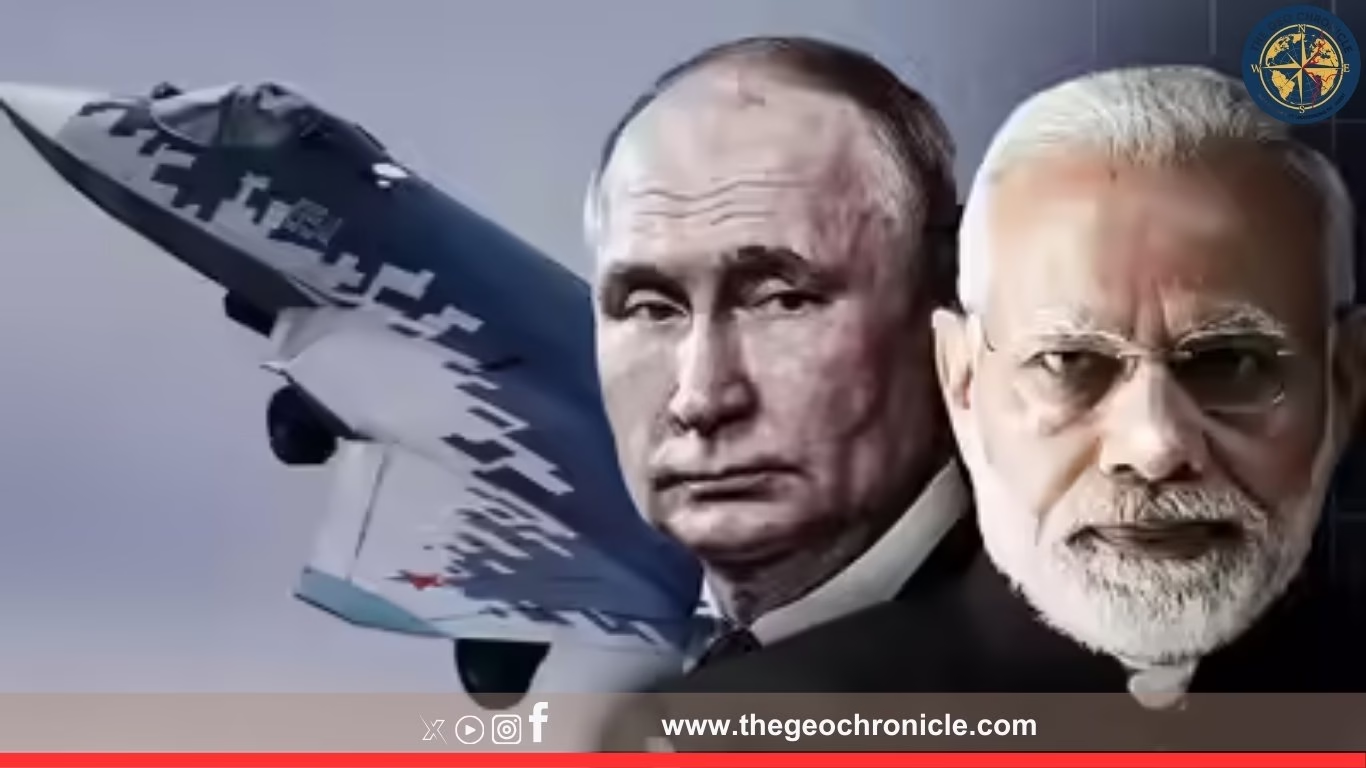
The urgency to induct a 5th generation fighter jet is no longer theoretical—it is a pressing operational necessity. Among the available options, Russia’s Sukhoi SU-57 emerges as a viable and timely solution. With stealth capabilities, supercruise performance, and advanced avionics, the SU-57 offers India a leap in air dominance and deterrence posture.
The Regional Threat Matrix: China and Pakistan’s Airpower Surge
India’s northern and western borders are witnessing unprecedented aerial modernization by rival states:
- China: The Chengdu J-20 “Mighty Dragon” is already operational, with over 200 units reportedly in service. It features low radar cross-section, internal weapons bays, and advanced sensor fusion.
- Pakistan: Islamabad is expected to receive the J-35 stealth fighter from China before the end of the decade, significantly upgrading its strike capabilities.
India’s current fleet composition includes:
- Su-30MKI (4++ generation)
- Dassault Rafale (4.5 generation)
- Mirage 2000 and MiG-29 (legacy platforms)
While formidable, these jets lack stealth and integrated network-centric warfare capabilities that define 5th generation platforms.

SU-57: Russia’s Flagship Fifth-Generation Fighter
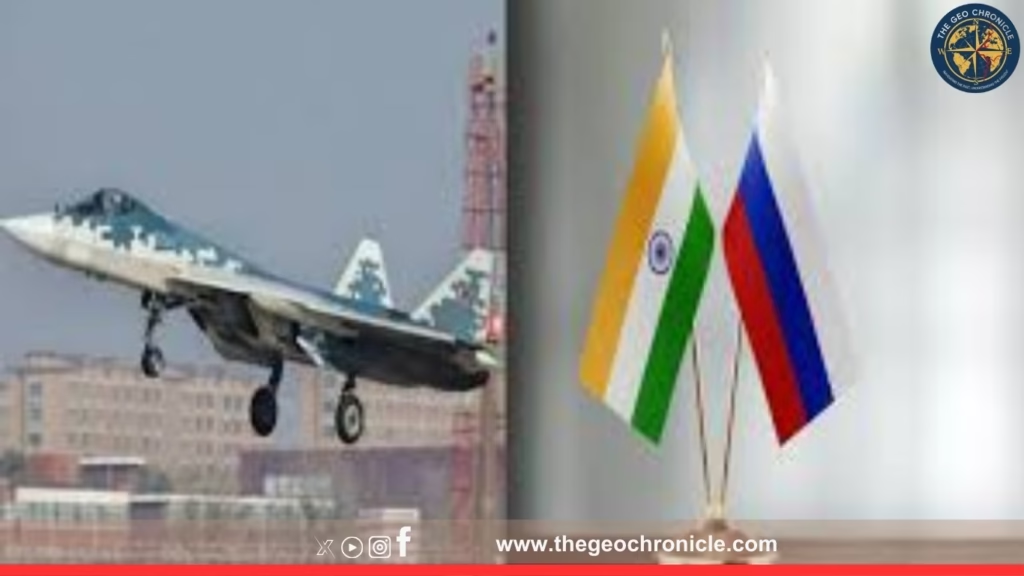
The Sukhoi SU-57 “Felon” is Russia’s answer to the American F-22 and F-35. Designed for air superiority and precision strike missions, it incorporates:
- Stealth shaping and radar-absorbing materials
- Supercruise capability (sustained supersonic flight without afterburners)
- Advanced avionics and sensor fusion
- Internal weapons bays
- Electronic warfare and countermeasures suite
India’s defense analysts view the SU-57 as the only realistic near-term option to bridge the capability gap until the indigenous AMCA (Advanced Medium Combat Aircraft) program matures.
Procurement Pathways: India’s Options for SU-57 Acquisition
India is currently evaluating three distinct procurement models for the SU-57:
| Procurement Model | Details | Advantages | Challenges |
|---|---|---|---|
| Off-the-Shelf Purchase | Direct acquisition of SU-57E units from Russia | Fast delivery, lower cost | Limited customization, export configuration only |
| Co-Production in India | License manufacturing at HAL’s Nashik facility | Technology transfer, local sustainment | Higher initial investment, longer timelines |
| Hybrid Model | Initial fly-away units followed by phased local production | Immediate deployment + long-term industrial benefits | Requires strategic alignment and supply chain integration |
Sources: Military Watch Magazine, Indian Defence News
AMCA Program: Indigenous Ambitions vs. Operational Timelines
India’s AMCA program, led by DRDO and HAL, aims to develop a 5th generation stealth fighter indigenously. However, the first prototype is expected only by the mid-2030s. Given the current threat environment, waiting for AMCA’s deployment could leave India vulnerable.
Defense experts argue that acquiring the SU-57 now would:
- Fill the technological void
- Complement AMCA’s future deployment
- Provide operational experience with stealth platforms
- Strengthen India’s aerospace ecosystem through co-development
Strategic Messaging: Deterrence Through Deployment
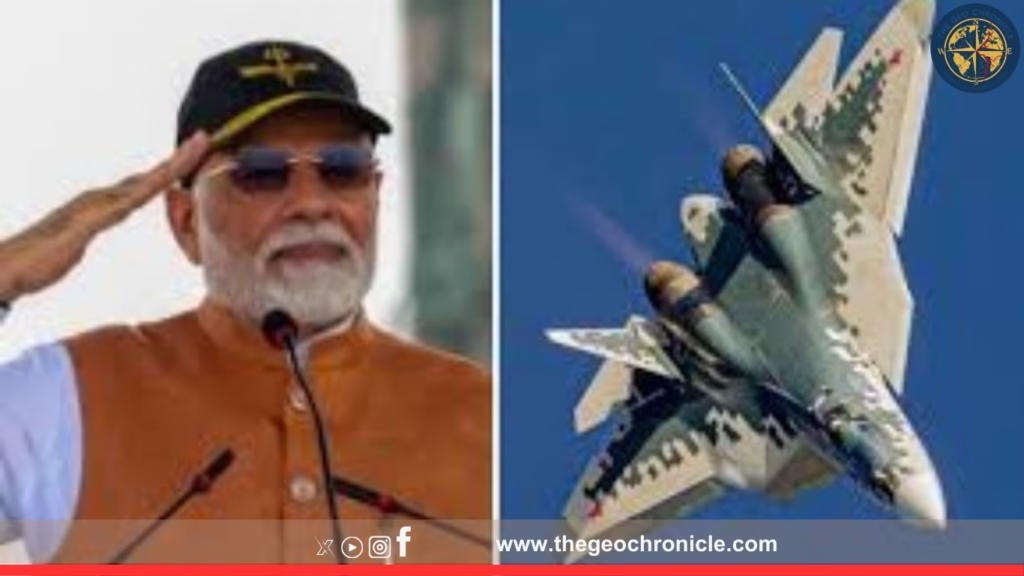
Inducting the SU-57 would send a powerful signal to adversaries. It would demonstrate India’s resolve to maintain air superiority and deter aggression across the Indo-Pacific. With tensions rising in the South China Sea, Taiwan Strait, and Himalayan border, airpower is becoming a decisive factor in strategic calculus.
“The time to debate is over—the time to deploy is now,” said a senior IAF official during Aero India 2025.
Technology Transfer and Sovereignty
Russia’s offer includes full technology transfer, access to source codes, and integration rights for Indian missile systems. This addresses India’s long-standing concerns over:
- Dependence on foreign OEMs
- Difficulty in integrating indigenous weapons
- Lack of autonomy in mission planning
Unlike the F-35, which comes with strict operational restrictions, the SU-57 offers India greater control over its deployment and customization.
Cost and Sanction Resilience
The SU-57 is positioned as a cost-effective alternative to Western platforms. Russia has highlighted:
- Lower operational costs compared to the F-35
- Sanction-resistant supply chains
- Long-term sustainment through local manufacturing
Given past U.S. threats of economic sanctions and delays in finalizing the Rafale MRFA contract, the SU-57 offers a politically unencumbered solution.
Squadron Shortfall and Fleet Modernization
India currently operates around 30 fighter squadrons, far below the sanctioned strength of 42. With MiG-21s and Jaguars retiring, the shortfall is expected to widen. Inducting 5th generation fighters would:
- Enhance stealth penetration
- Improve sensor fusion and situational awareness
- Enable network-centric warfare
The IAF is reportedly considering acquiring 2–3 squadrons of SU-57s initially, with each squadron comprising 18–20 aircraft.
Indo-Russian Defense Collaboration: A New Chapter
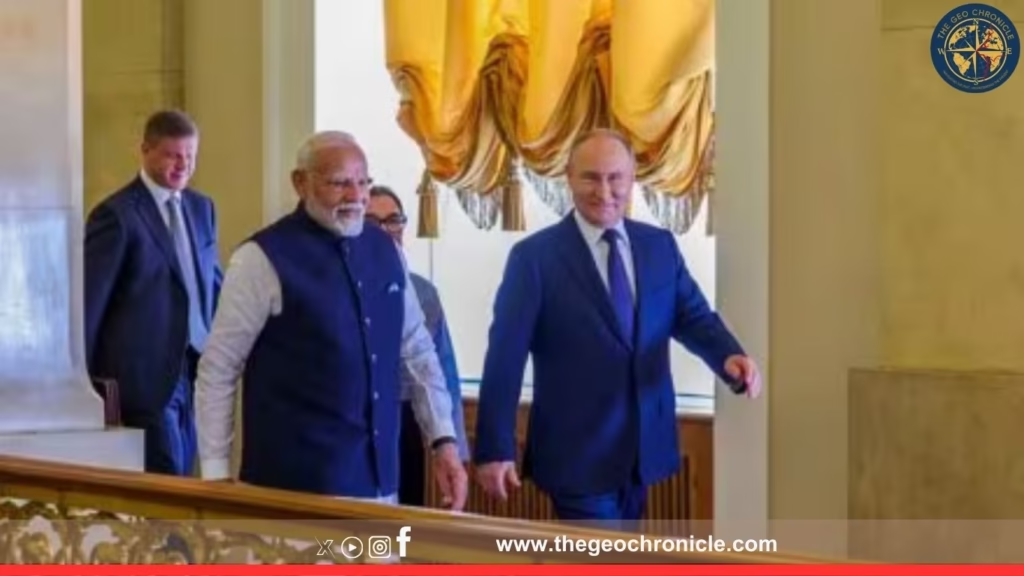
If finalized, the SU-57 deal would mark the most ambitious Indo-Russian defense collaboration since the BrahMos missile project. It would also revive trust after India’s withdrawal from the earlier FGFA program due to concerns over cost and radar cross-section.
Russia views the export of SU-57s to India as critical for scaling production amid sanctions and limited international buyers.
Conclusion: Securing India’s Skies with Strategic Foresight
India’s need for 5th generation fighter jets is urgent and undeniable. The SU-57 offers a credible, customizable, and timely solution to counter regional threats and modernize the IAF. While the AMCA program represents India’s long-term vision, the SU-57 can serve as a strategic bridge—delivering immediate capability and long-term industrial benefits.
In an era of stealth warfare and geopolitical friction, air dominance is not optional—it is existential. India must act decisively to secure its skies, assert its sovereignty, and shape the future of aerial combat in South Asia.
Disclaimer
This article is based on publicly available information and official statements from defense analysts, government sources, and media reports as of September 2025. The views expressed in quoted material are those of the speakers and do not represent the views of this publication. All data and references are cited from credible sources including Military Watch Magazine, Defence Security Asia, and Indian Defence News.























Leave a Reply