


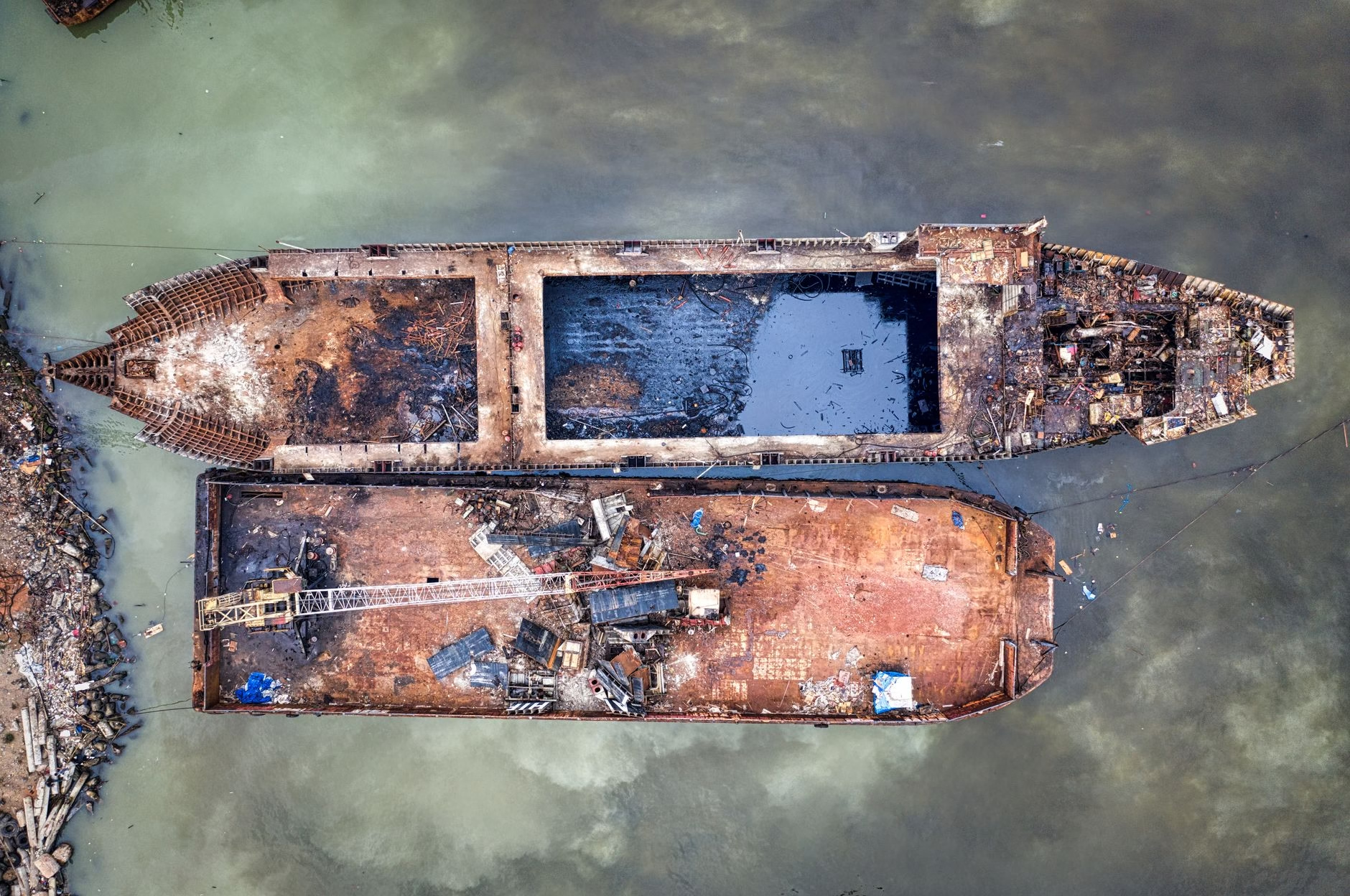
Recent statements from President Vladimir Putin have brought significant attention to the ongoing naval dimension of the conflict in Ukraine. The Russian leader asserted that Ukrainian drone operations have resulted in damage to approximately 100 Russian naval vessels. This declaration, if accurate, would represent a substantial impact on Russia’s maritime capabilities and underscores the evolving nature of modern naval warfare.
Understanding the context of this claim requires an examination of the broader conflict. Since its inception, the conflict has seen various forms of engagement, including significant naval activity in the Black Sea. Russia’s Black Sea Fleet holds a critical strategic position, facilitating logistical support, projecting power, and enforcing a naval blockade. Disruptions to this fleet could have far-reaching operational and strategic consequences for Russia’s military objectives.
The Rise of Naval Drone Warfare
The conflict has notably accelerated the development and deployment of unmanned systems, particularly naval drones. These autonomous surface and underwater vehicles offer a cost-effective and asymmetric means to challenge traditional naval power. Equipped with explosives or surveillance equipment, these drones can operate in contested waters, posing a significant threat to larger, more expensive warships. Their use by Ukrainian forces has been a consistent feature of the maritime conflict, targeting various Russian naval assets and infrastructure.
Ukrainian forces have demonstrated an innovative approach to naval engagements, often utilizing domestically developed unmanned surface vessels (USVs). These drones are designed to be difficult to detect and can carry substantial payloads, enabling them to strike at critical points of enemy ships. The effectiveness of these systems has been a subject of ongoing analysis by military experts globally, highlighting a paradigm shift in naval combat tactics.
Potential Implications for Russian Naval Power
If President Putin’s claim regarding the damage to around 100 ships is substantiated, it would signify a profound blow to Russia’s naval strength. Such extensive damage could severely degrade the operational readiness and capacity of the Black Sea Fleet. This might include a reduction in the number of vessels available for combat patrols, amphibious operations, and logistical resupply missions. The psychological impact on naval personnel and the broader strategic calculus would also be considerable.
Furthermore, the need to repair or replace a significant number of damaged vessels would impose a substantial burden on Russia’s defense industry and budget. Repairing complex naval vessels is a time-consuming and resource-intensive process, potentially diverting critical resources from other military priorities. The long-term implications could affect Russia’s ability to project power in the Black Sea and beyond.
Challenges in Verification and Information Warfare
In an active conflict zone, independent verification of military claims, especially those concerning damage figures, is inherently challenging. Both sides frequently engage in information warfare, where claims and counter-claims are used to influence public opinion, bolster morale, and sow doubt among adversaries. Access to reliable, unbiased information is often limited, making it difficult to ascertain the precise extent of damage or losses.
Analysts typically rely on satellite imagery, open-source intelligence, and corroborating reports to assess such claims. However, even with these tools, definitive confirmation can be elusive, particularly for damage that may not be immediately visible or for vessels that are quickly moved or repaired. Therefore, while the statement from President Putin offers a specific figure, its independent confirmation remains a complex task for external observers.
Strategic and Geopolitical Ramifications
The ongoing effectiveness of Ukrainian drone operations, as highlighted by the recent claim, carries significant strategic and geopolitical ramifications. It demonstrates the vulnerability of even well-equipped navies to asymmetric threats posed by advanced unmanned systems. This could prompt a re-evaluation of naval defense strategies and investments in counter-drone technologies by navies worldwide.
For the immediate conflict, sustained pressure on the Russian Black Sea Fleet could alter the balance of power in the region, potentially impacting Russia’s ability to control maritime routes and exert influence. It also underscores the adaptability and resilience of Ukrainian forces in leveraging technological innovation to counter a numerically superior adversary. The broader international community continues to monitor these developments closely, recognizing their potential to shape future military doctrines and global security dynamics.
Conclusion
President Putin’s assertion of extensive Ukrainian drone damage to Russian ships introduces a significant data point into the narrative of the ongoing conflict. While the precise details and independent verification of this claim remain subjects of ongoing scrutiny, the statement itself highlights the profound impact of naval drone warfare. It underscores the evolving challenges faced by traditional navies and the strategic importance of unmanned systems in contemporary maritime security. The implications for Russia’s naval capabilities and the broader trajectory of the conflict are substantial, warranting continued observation and analysis.






















Leave a Reply