


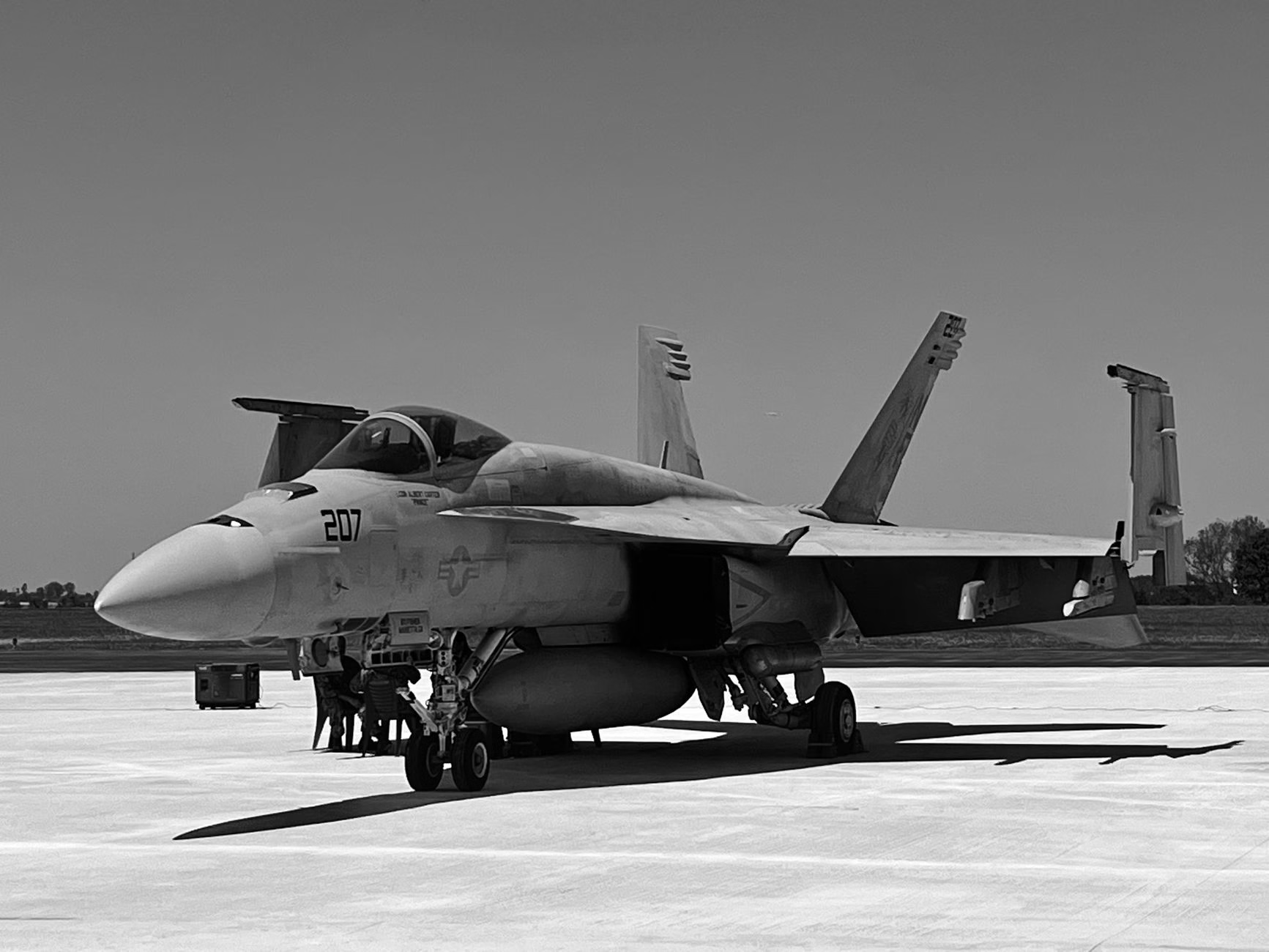
The delicate balance of power in the Middle East has once again been tested as the United States and Iran reportedly engaged in direct military exchanges, marking the first such confrontation in approximately a month. This recent escalation underscores the persistent volatility in the region and the complex dynamics between the two nations. Reports indicate a series of actions and counter-actions, with both sides confirming military engagements targeting assets and personnel. The renewed hostilities draw attention to critical strategic locations and the ongoing vigilance required to maintain regional stability.
The American Military Response
The United States Central Command (CENTCOM) confirmed its involvement in recent military operations, announcing that its forces conducted strikes against rocket launchers situated on an Iranian island within the strategically vital Strait of Hormuz. This action by CENTCOM, responsible for U.S. security interests across 21 nations in the Middle East, Central Asia, and parts of South Asia, signals a direct response to perceived threats or activities. The targeting of rocket launchers suggests a preemptive or retaliatory measure aimed at neutralizing potential offensive capabilities.
The Strait of Hormuz, a narrow sea passage, is globally recognized as a critical chokepoint for international maritime trade, particularly for oil shipments. Any military activity in this area carries significant geopolitical weight due to its immense economic importance. The presence of Iranian military assets, such as rocket launchers, in such a sensitive location is often viewed with concern by international observers and maritime powers.
Iran’s Claim of Retaliation
In response to the American actions, Iran issued its own statement, asserting that its forces had targeted U.S. bases located in Jordan. This claim represents a direct counter-action, indicating a tit-for-tat dynamic in the ongoing tensions. While specific details regarding the nature or extent of these alleged strikes were not immediately available, the assertion itself highlights Iran’s readiness to respond to perceived aggressions.
Jordan, a key U.S. ally in the region, hosts American military personnel and facilities, which are integral to regional security operations and counter-terrorism efforts. The targeting of U.S. assets in Jordan, if confirmed, would signify a broadening of the geographical scope of the conflict, extending beyond traditional flashpoints. Such an action would also raise concerns about the safety of personnel and the stability of allied nations in the Middle East.
Strategic Importance of the Strait of Hormuz
The Strait of Hormuz is more than just a waterway; it is a global economic artery. Approximately one-fifth of the world’s total oil consumption, and a significant portion of liquefied natural gas, passes through this narrow channel daily. Its strategic significance makes it a frequent focal point of international security concerns. Control or disruption of shipping in the Strait could have profound global economic repercussions, affecting energy prices and supply chains worldwide.
Both the United States and Iran maintain a substantial military presence in and around the Strait, reflecting its critical importance to their respective national security interests and regional influence. The recent U.S. strikes on an Iranian island in this area underscore the continuous military posturing and the potential for rapid escalation in this vital maritime corridor.
The Role of U.S. Central Command
U.S. Central Command (CENTCOM) serves as the primary operational command for American military activities in the Middle East. Its mission encompasses deterring aggression, ensuring regional stability, and supporting U.S. interests through various military operations. The decision by CENTCOM to conduct strikes reflects a calculated military response, likely based on intelligence assessments of threats posed by the targeted Iranian assets.
CENTCOM’s actions are often part of a broader strategy to maintain freedom of navigation, protect allied interests, and counter destabilizing activities in a region characterized by complex geopolitical challenges. The command’s public announcement of its strikes also serves as a clear signal of its operational capabilities and its resolve to act when deemed necessary.
A Month-Long Lull Broken
The fact that these exchanges represent the “first time in a month” introduces a crucial temporal element to the narrative. It suggests a period of relative calm or de-escalation that has now been interrupted. Such lulls can be attributed to various factors, including diplomatic efforts, strategic recalculations, or a temporary shift in regional priorities. However, the resumption of direct military engagements indicates that underlying tensions remain unresolved and can flare up with little warning.
The breaking of this month-long pause signals a potential return to a more active phase of military posturing and direct confrontation, raising questions about the sustainability of any prior de-escalation efforts. This pattern of intermittent conflict and calm underscores the unpredictable nature of the relationship between the United States and Iran.
Geopolitical Implications and Regional Stability
The recent exchange of strikes carries significant geopolitical implications for the broader Middle East. Such actions contribute to an environment of heightened alert and uncertainty, potentially impacting regional alliances and security arrangements. Nations in the vicinity closely monitor these developments, as any escalation could have ripple effects across borders, affecting trade, security, and diplomatic relations.
The involvement of assets in Jordan, as claimed by Iran, further complicates the regional security landscape, drawing another sovereign nation into the direct line of fire. Maintaining open lines of communication and de-escalation mechanisms becomes paramount in preventing a wider conflict, particularly when direct military actions are being reported by both sides. The international community often watches these developments with apprehension, advocating for restraint and diplomatic solutions to prevent further destabilization of an already fragile region.
Conclusion
The reported exchange of military strikes between the United States and Iran, marking the first such incident in a month, signifies a concerning renewal of direct hostilities. With the U.S. confirming strikes on Iranian rocket launchers in the Strait of Hormuz and Iran claiming retaliation against U.S. bases in Jordan, the immediate future of regional stability appears uncertain. These events underscore the persistent challenges in the relationship between Washington and Tehran and the critical importance of strategic waterways like the Strait of Hormuz. As both nations navigate these complex dynamics, the international community remains vigilant, hoping for a de-escalation of tensions to prevent further instability in a region already grappling with numerous security challenges.




















Leave a Reply