


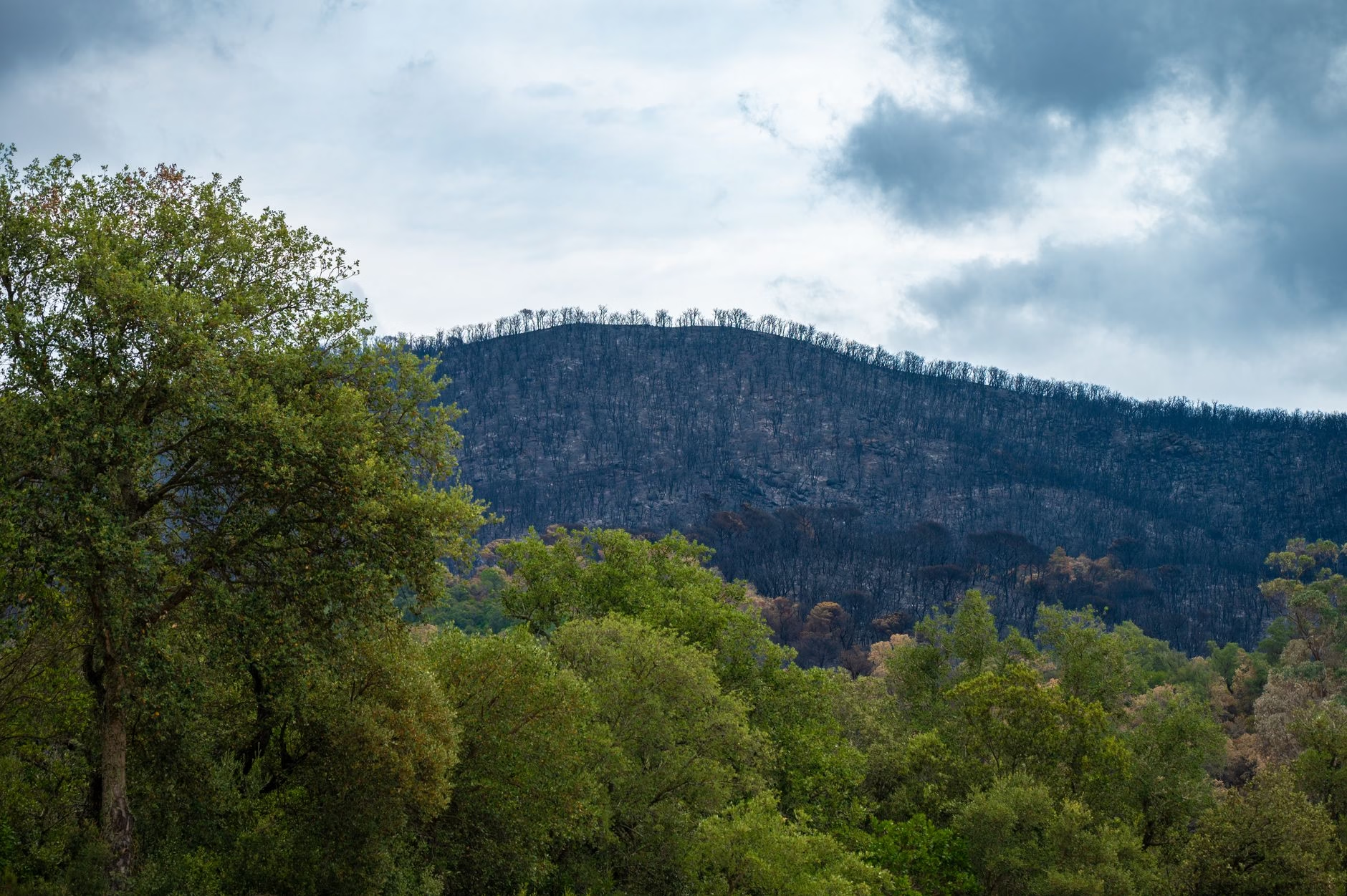
The escalating global challenge of wildfires has reached an unprecedented scale, impacting ecosystems and communities across continents. These destructive blazes, once largely confined to arid regions, are now encroaching upon areas traditionally considered less susceptible, including wetter, temperate zones. This alarming trend underscores an urgent need for adaptive strategies in forest management, with a significant focus on transitioning towards more resilient mixed forest ecosystems.
The frequency and intensity of wildfires have demonstrably increased over recent decades. Scientific consensus points to climate change as a primary driver, contributing to prolonged droughts, elevated temperatures, and altered weather patterns that create ideal conditions for ignition and rapid fire spread. This environmental shift means that even regions historically characterized by ample rainfall and lush vegetation are no longer immune. Forests that once served as natural fire breaks are now experiencing unprecedented levels of dryness, making them vulnerable to large-scale conflagrations.
Traditional forestry practices, often favoring monoculture plantations for timber production, have inadvertently exacerbated this vulnerability. Monocultures, characterized by vast expanses of a single tree species of uniform age and structure, present a homogeneous fuel source. When a fire ignites in such an environment, it can spread with alarming speed and intensity, encountering little resistance. The lack of diversity means that an entire forest stand can be susceptible to the same pests, diseases, and, critically, the same flammability characteristics, creating a perfect storm for catastrophic fires.
Understanding Mixed Forests
In contrast to monocultures, mixed forests are characterized by a rich diversity of tree species, ages, and structural complexity. These ecosystems naturally incorporate a variety of deciduous and coniferous trees, shrubs, and undergrowth. This inherent diversity is not merely an aesthetic preference; it is a fundamental aspect of ecological resilience, offering a robust defense against various environmental threats, including wildfires.
Benefits of Ecological Diversity
Mixed forests enhance wildfire resilience through several key mechanisms. Firstly, the varied flammability of different tree species plays a crucial role. Deciduous trees, for instance, typically have higher moisture content in their leaves and bark, making them less prone to ignition and slower to burn compared to many coniferous species. When interspersed within a forest, these less flammable species can act as natural fire breaks, slowing down or even stopping the progression of a blaze.
Secondly, the structural complexity of mixed forests disrupts the continuous fuel ladder that allows fires to climb from the forest floor into the canopy in monocultures. The varied heights of trees, the presence of different understory plants, and irregular canopy structures create gaps and discontinuities that can impede fire spread. This complexity also contributes to more stable microclimates within the forest, often maintaining higher humidity levels and lower temperatures, further reducing fire risk.
Furthermore, diverse root systems in mixed forests contribute to healthier, more stable soils that retain moisture more effectively. This improved soil health supports a more vigorous and resilient ecosystem overall. The increased biodiversity also means that the forest is better equipped to withstand other disturbances, such as pest outbreaks or disease, which can weaken trees and make them more susceptible to fire.
The Urgency of Transition
The need to transition towards mixed forest management is not a distant goal but an immediate imperative. Climate change is accelerating, and the window for proactive adaptation is narrowing. Establishing mixed forests is a long-term investment, requiring decades for trees to mature and for ecosystems to fully develop their resilient characteristics. Therefore, delaying action will only amplify future risks and potential damages.
Proactive measures, rather than reactive responses to disaster, are essential. This involves strategic planning for reforestation, considering future climate scenarios, and selecting species that are not only fire-resistant but also well-adapted to anticipated environmental conditions. The economic and ecological costs of inaction, manifested in ever-larger and more destructive wildfires, far outweigh the investment required for sustainable forest transformation.
Implementing the Transition
Implementing this large-scale transition requires a multi-faceted approach. Policy frameworks must be developed to incentivize and support landowners, forest managers, and communities in adopting mixed-species planting and sustainable forestry practices. This includes providing access to appropriate saplings, offering financial assistance, and developing educational programs to disseminate best practices.
Careful consideration must be given to species selection, prioritizing native trees that are ecologically appropriate for the specific region and exhibit strong fire-resistant traits. Research and innovation play a critical role in identifying the most effective species combinations and management techniques for different forest types and climatic zones. Economic considerations, while significant, must be balanced against the long-term benefits of reduced wildfire damage, healthier ecosystems, and enhanced carbon sequestration.
A Collaborative Future for Forests
The shift towards mixed forests represents a fundamental paradigm change in how humanity interacts with and manages its natural resources. It requires collaboration among scientists, policymakers, land managers, indigenous communities, and the public. By embracing the principles of ecological diversity and resilience, societies can build more robust forest ecosystems that are better equipped to withstand the escalating threat of wildfires and contribute to overall environmental stability.
This proactive approach to forest management is not merely about preventing fires; it is about fostering healthier, more biodiverse, and sustainable landscapes for future generations. The urgency is clear, and the path forward lies in the strategic and widespread adoption of mixed forest ecosystems as a cornerstone of global wildfire resilience.























Leave a Reply