


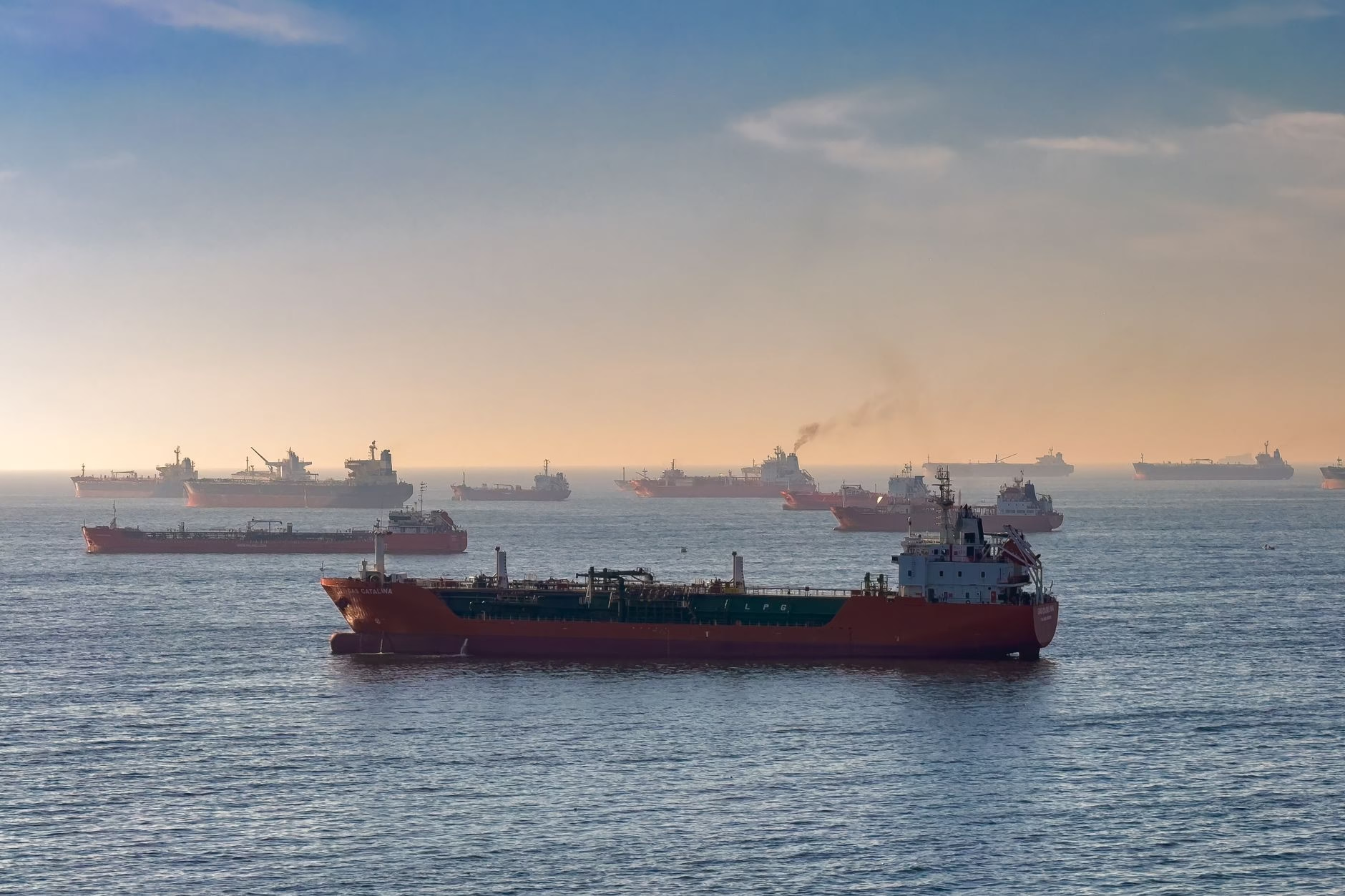
The International Energy Agency (IEA) has issued a significant forecast for the global energy landscape, projecting a substantial reduction in worldwide oil demand by 2026. This anticipated decline, estimated at 1.6 million barrels per day, is attributed to a confluence of factors, primarily sustained high fuel prices and ongoing disruptions affecting the critical Strait of Hormuz. This outlook signals a challenging period for the global economy, as energy market volatility continues to exert pressure on various sectors.
Understanding the IEA’s Projections
The IEA’s forecast of a 1.6 million barrels per day decrease in global oil demand by 2026 represents a notable shift in consumption patterns. Such a significant reduction underscores the profound impact that current economic and geopolitical forces are having on energy markets. This projection is not merely a statistical adjustment; it reflects underlying changes in consumer behavior, industrial activity, and strategic energy planning worldwide. The agency’s analysis suggests that these pressures are creating a scenario where the global appetite for crude oil will diminish considerably over the coming years.
The Role of Elevated Fuel Prices
High fuel prices are a primary catalyst for the projected decline in oil demand. When the cost of gasoline, diesel, and other petroleum products remains elevated, it directly influences both individual consumers and large industries. For consumers, increased fuel expenses can lead to a reduction in discretionary spending, a shift towards more fuel-efficient modes of transport, or even a decrease in overall travel. This phenomenon, often referred to as ‘demand destruction,’ occurs when prices reach a point where consumption is actively curtailed, not just postponed.
Businesses, particularly those in logistics, manufacturing, and transportation, face higher operational costs due to expensive fuel. These increased expenses can erode profit margins, compel companies to optimize supply chains, or even scale back production. The cumulative effect across various sectors contributes significantly to the overall reduction in oil consumption. Governments and policymakers may also respond to persistently high prices by promoting energy efficiency initiatives or investing in alternative energy sources, further influencing demand dynamics.
Geopolitical Pressures: The Strait of Hormuz
Another critical factor driving the IEA’s forecast is the ongoing instability and disruptions associated with the Strait of Hormuz. This narrow waterway, situated between the Persian Gulf and the Gulf of Oman, is one of the world’s most vital maritime choke points for oil transit. A substantial portion of the world’s seaborne oil supply passes through this strait daily, making it incredibly sensitive to geopolitical tensions and potential disruptions.
Any threat or actual incident in the Strait of Hormuz can trigger immediate concerns about global oil supply security. Such events can lead to sharp increases in crude oil prices as markets react to perceived or real supply shortages. The IEA’s mention of ‘disruptions’ suggests that the agency is factoring in the persistent risk and potential for interruptions in this crucial shipping lane, which can have cascading effects on global energy markets and the broader economy.
Economic Repercussions of Supply Chain Vulnerabilities
The vulnerabilities inherent in critical supply routes like the Strait of Hormuz extend beyond immediate oil price spikes. They introduce significant uncertainty into global trade and economic planning. Businesses relying on stable energy supplies and predictable shipping routes face increased risks, potentially leading to higher insurance costs, longer transit times, or the need to explore more expensive alternative routes. This can translate into higher costs for goods and services, contributing to inflationary pressures across economies.
Furthermore, the specter of supply chain disruptions can deter investment and dampen business confidence. Companies may become more cautious about long-term planning and expansion when faced with unpredictable energy costs and potential logistical bottlenecks. This ripple effect can slow economic growth, impact employment, and reduce overall economic stability, particularly in nations heavily reliant on imported energy resources.
Broader Economic Headwinds and Adaptation
The projected decline in oil demand, driven by these factors, also reflects broader economic headwinds. High energy costs can act as a drag on economic growth, squeezing household budgets and increasing operational expenses for businesses. This can lead to reduced consumer spending and slower industrial output, contributing to a more challenging global economic environment. The IEA’s forecast implicitly suggests that the global economy is grappling with significant pressures that are compelling a reduction in energy intensity.
In response to these evolving dynamics, there is an increasing imperative for nations and industries to adapt. This includes accelerating the transition towards diversified energy portfolios, investing in renewable energy sources, and enhancing energy efficiency across all sectors. While the immediate forecast points to challenges, it also underscores the long-term trend towards greater energy resilience and sustainability. Strategic planning and international cooperation will be essential to navigate the complexities of a changing global energy landscape.
Conclusion: A Challenging Outlook
The IEA’s forecast for a 1.6 million barrels per day reduction in global oil demand by 2026 paints a clear picture of the challenges ahead. The dual pressures of persistently high fuel prices and the inherent vulnerabilities of critical transit points like the Strait of Hormuz are reshaping the global energy market. This outlook necessitates careful monitoring by policymakers, industry leaders, and consumers alike, as the implications for economic stability, energy security, and environmental sustainability are profound. Adapting to this evolving energy paradigm will be crucial for fostering resilient economies in the years to come.




















Leave a Reply