


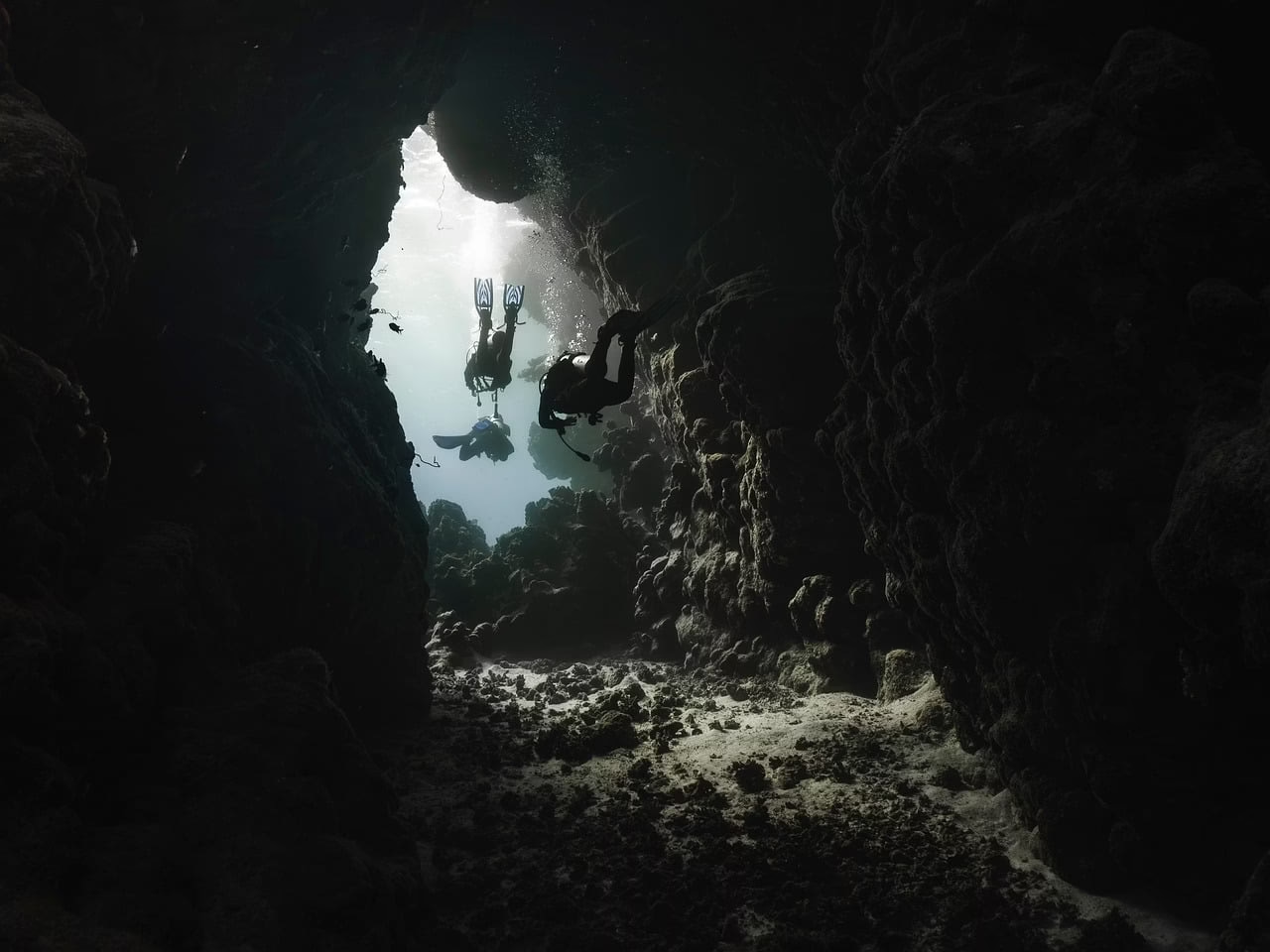
The bodies of two Italian divers were tragically recovered on Monday from deep within an underwater cave system in the Maldives, following a high-stakes search and retrieval operation that had been temporarily suspended after a local military diver lost his life during an earlier attempt. The perilous recovery mission, conducted by specialized teams, brings a somber close to a harrowing incident that highlights the extreme risks associated with deep cave diving in the region.
The Allure and Peril of Maldivian Depths
The Maldives, renowned globally for its pristine coral reefs and vibrant marine life, attracts thousands of divers annually. While most experiences are safe and recreational, the archipelago also harbors complex underwater cave systems that draw highly experienced technical divers seeking extreme challenges.
These intricate subterranean environments, characterized by narrow passages, varying currents, and extreme depths, demand specialized training, advanced equipment, and meticulous planning. Even for seasoned professionals, unforeseen circumstances can quickly escalate into life-threatening situations, turning exploration into a desperate fight for survival.
The incident began when the two Italian nationals, reportedly experienced cave divers, failed to resurface from an extensive underwater cave network. Their disappearance prompted an immediate, multi-agency search effort that quickly revealed the extraordinary difficulties involved in accessing their last known location.
Tragically, during an initial retrieval attempt, a Maldivian military diver succumbed to the extreme conditions. This devastating loss underscored the immense dangers faced by rescuers and led to a temporary halt in operations to reassess strategies and ensure the safety of the remaining teams.
A Mission Against Time and Depth
The successful recovery on Monday involved a meticulously planned operation, reportedly utilizing advanced underwater robotics and highly trained international and local dive experts. Teams navigated treacherous conditions, including limited visibility and powerful currents, to reach the significant depth where the divers’ bodies were located.
Sources close to the operation indicated that the complexity of the cave system and the extreme depth presented unprecedented challenges. “Every meter deeper amplified the risks,” commented a dive safety expert, speaking anonymously due to the sensitive nature of the incident. “These are environments where even a minor equipment malfunction or misjudgment can have fatal consequences, especially during a recovery where the pressure to succeed is immense.”
The operation required specialized rebreather technology and extensive decompression protocols for the recovery divers, ensuring their safety while working in an environment that pushed human limits. The recovery was a testament to the resilience and expertise of the combined teams, who worked tirelessly under immense pressure.
The Human Cost: Sacrifice and Grief
The tragic death of the Maldivian military diver during the initial phase of the recovery cast a somber shadow over the entire operation. His sacrifice served as a stark reminder of the inherent dangers faced by first responders in such extreme environments. Tributes poured in from across the nation and the international diving community, honoring his bravery and dedication.
The incident has also sent shockwaves through the global technical diving community, prompting discussions on risk assessment, emergency protocols, and the ethical considerations of undertaking such high-risk expeditions. While the allure of exploring uncharted depths remains strong, the human cost of such ventures is undeniable.
While details regarding the exact cause of the Italian divers’ deaths have not yet been released, investigations are expected to focus on equipment integrity, dive plan adherence, and environmental factors within the cave. Such investigations are crucial for understanding what went wrong and for implementing preventative measures in the future.
Navigating Extreme Environments: Expert Warnings
“Deep cave diving is inherently one of the most demanding and dangerous forms of exploration,” states Dr. Anya Sharma, a renowned marine safety consultant. “It combines the physical stresses of deep-sea diving with the psychological pressures of confined, dark spaces. Even with the best training and gear, the ocean can present unpredictable challenges.”
Statistics from organizations like the Divers Alert Network (DAN) consistently show that while diving is generally safe, technical and cave diving carry significantly higher risk profiles due to their complexity and the unforgiving nature of the environments. A 2022 report indicated that fatalities in overhead environments, such as caves, often account for a disproportionate number of diving-related deaths, despite representing a small fraction of overall dives.
These incidents underscore the critical importance of rigorous training, redundancy in life-support systems, and conservative dive planning. Experts emphasize the “rule of thirds” for gas management—one-third for entry, one-third for exit, and one-third for emergencies—a principle that becomes even more vital in complex cave systems.
The recovery of the Italian divers’ bodies marks the end of a harrowing chapter, but its implications for the Maldives’ vibrant diving tourism sector and global dive safety protocols are just beginning to unfold. Authorities are expected to conduct a thorough review of the incident, potentially leading to revised regulations or enhanced safety advisories for extreme diving activities within the archipelago’s waters.
For the Maldivian tourism industry, which heavily relies on its reputation as a premier diving destination, this tragedy serves as a poignant reminder of the need to balance adventurous exploration with robust safety measures. While the incident involved highly specialized diving, it could prompt broader discussions on oversight for all forms of recreational and technical diving.
The international diving community will undoubtedly scrutinize the findings, refining training programs, equipment standards, and emergency response strategies. This tragic event reinforces calls for greater collaboration between local authorities and international dive safety organizations to mitigate risks in challenging underwater environments. The focus now shifts to understanding the specific circumstances that led to this double fatality and the preceding loss of a dedicated rescuer, aiming to ensure their sacrifices contribute to a safer future for all who explore the ocean’s hidden depths.





















Leave a Reply