


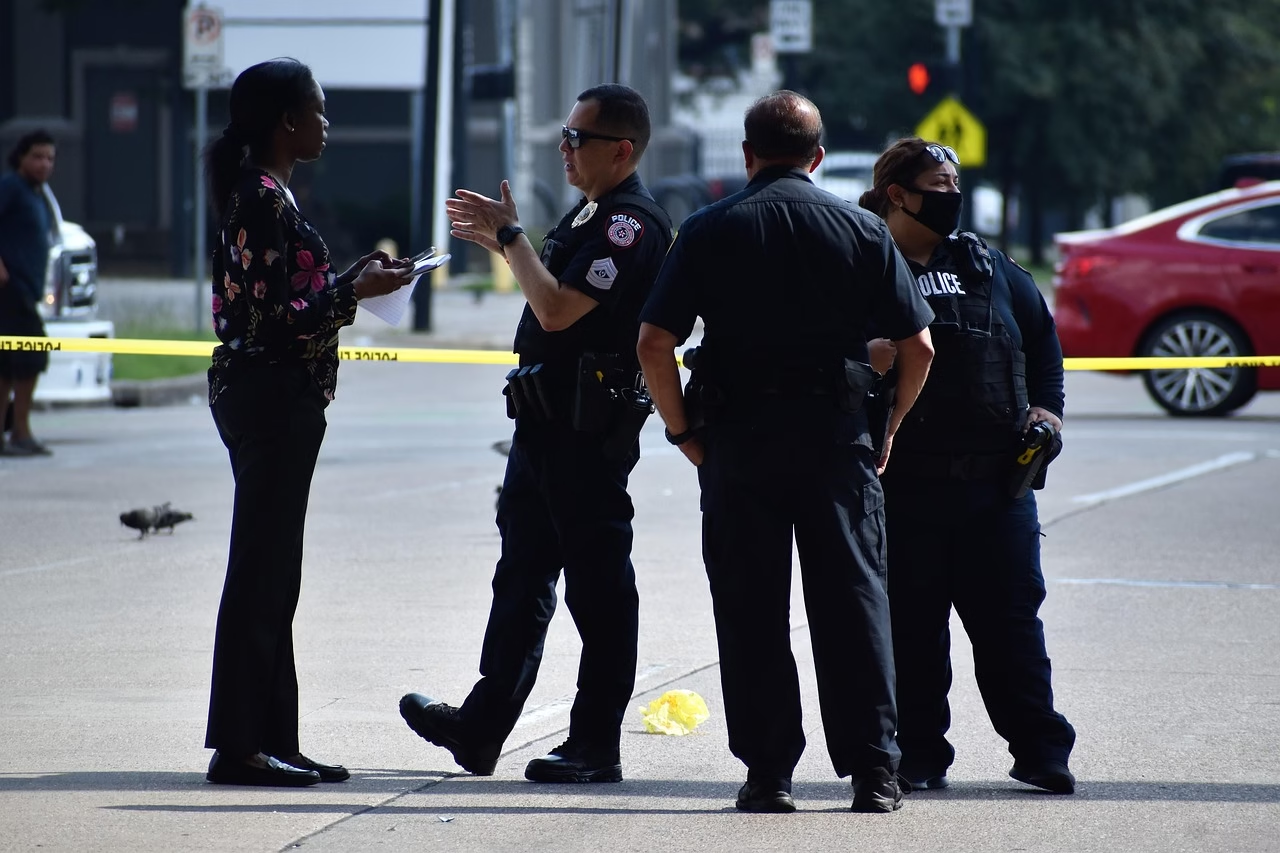
State investigators in Madison, Wisconsin, are reviewing widely shared bystander videos following the fatal police shooting of an unhoused man this week, an inquiry complicated by the complete absence of officer body-worn camera footage.
Background on Madison’s Camera Policies
The lack of official recording underscores a long-standing debate within the Madison Police Department regarding officer-worn equipment.
While law enforcement agencies nationwide rapidly adopted body-worn cameras over the past decade, Madison remained among the few medium-sized Midwestern cities to delay citywide deployment.
City officials and local oversight boards historically voiced concerns over citizen privacy rights, data storage costs, and the potential over-policing of vulnerable residents.
Consequently, officers responding to the high-stakes encounter were not equipped with bodycams, leaving state investigators reliant on third-party mobile phone footage and eyewitness accounts.
Bystander Footage and the Transparency Gap
Bystander recordings captured fragments of the lethal confrontation, quickly circulating across social media platforms and driving immediate community outcry.
Civil rights advocates emphasize that third-party video, while crucial, often lacks the vantage point and audio clarity required to establish a definitive timeline.
Without bodycam footage, state investigators face heightened challenges in verifying officer accounts regarding threat levels and de-escalation attempts.
The incident underscores ongoing national tension surrounding police interactions with unhoused populations, who experience disproportionately high rates of law enforcement contact.
Federal studies show that individuals experiencing homelessness encounter police at rates up to ten times higher than housed residents, frequently during mental health crises.
Expert Views and Statistical Data
Data from the U.S. Department of Justice indicates that approximately 80 percent of general-purpose local police departments with 50 or more officers utilize body-worn cameras.
Criminal justice researchers stress that body-worn technology serves as an indispensable tool for public transparency and evidentiary clarity.
“When key video evidence is missing, public trust erodes rapidly during critical incidents,” said Dr. Marcus Thorne, a senior researcher at the Law and Justice Policy Institute. “Objective video provides a neutral baseline that protects both community members and law enforcement officers.”
Legal analysts note that jurisdictions without mandatory recording policies face increased legal exposure and protracted administrative reviews following fatal incidents.
Under Wisconsin state law, officer-involved fatal shootings mandate an independent investigation led by an outside agency, a process now underway by the Wisconsin Department of Justice.
Repercussions for Public Policy and Oversight
The absence of internal video in Madison reopens intense municipal debates regarding law enforcement funding and technological mandates.
Community organizers are pressing local council members to immediately allocate municipal funds for departmental camera implementation.
Neighboring police departments across the state are re-evaluating their own recording protocols to avoid similar evidentiary vacuums.
Police reform advocates argue that technology alone is insufficient without accompanying strict policies regarding recording mandates and public release timelines.
What to Watch Next
The Wisconsin Department of Justice Division of Criminal Investigation continues to analyze citizen-submitted video files and collect forensic evidence from the scene.
The Madison City Council plans to hold an emergency public session next week to address community demands for immediate police equipment updates.
State lawmakers are also expected to consider legislative proposals that would mandate body-worn camera usage for all active-duty patrol officers statewide.























Leave a Reply