


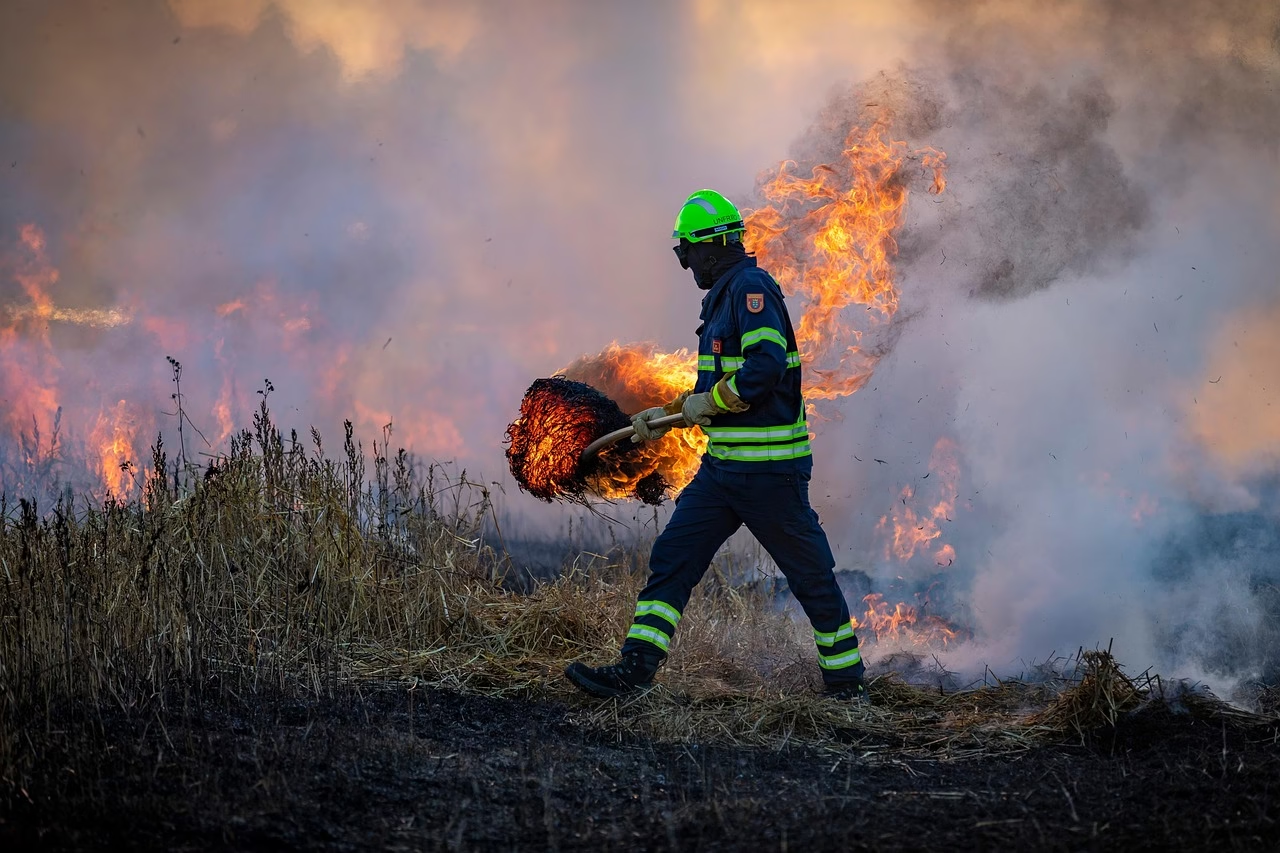
Emergency services evacuated more than 40,000 tourists and residents from a popular French peninsula this week as fierce, fast-moving wildfires swept through dry coastal pine forests, part of a broader crisis of deadly blazes currently punishing France, Spain, and Italy.
The sudden mass evacuation unfolded during the peak of the European summer holiday season, turning serene Mediterranean vacation hotspots into scenes of intense panic and billowing smoke. Prolonged summer drought, record-breaking heat, and strong winds across Southern Europe have rendered vast tracts of land highly flammable, severely straining regional emergency response resources.
Unprecedented Scale Across Southern Europe
While France bears a heavy burden in the current wave, neighboring Mediterranean nations face equally severe conditions. In Spain, wildfires have scorched tens of thousands of hectares of forest and agricultural land, forcing rural communities and resort towns to evacuate as temperatures repeatedly breached historic highs. Simultaneously, southern regions of Italy and its major islands are battling dozens of active fronts, where dry wind gusts have pushed flames toward heavily populated coastal zones.
The operational strain on emergency services has reached critical levels across all three nations. Thousands of fire crews, supported by military units and water-dropping aircraft, are working around the clock in treacherous conditions marked by extreme heat, zero-visibility smoke, and unpredictable wind shifts that frequently trap ground personnel.
Fatalities and the Toll on First Responders
The tragedy has already claimed the lives of several firefighters deployed across France, Spain, and Italy, underscoring the lethal dangers faced by emergency responders in this outbreak. Officials confirmed that multiple first responders succumbed to rapidly shifting firelines while attempting to establish defensive perimeters around endangered residential structures, campsites, and critical infrastructure.
Emergency operations commanders emphasize that the combination of erratic wind patterns and extreme fire intensity makes standard containment tactics exceptionally dangerous. Fire crews are increasingly forced into defensive maneuvers to protect human life rather than attempting direct engagement with the fire fronts.
Data Points and Expert Perspectives
According to data from the European Forest Fire Information System (EFFIS), the total land area burned across Southern Europe this season has significantly surpassed the ten-year historical average for this point in the summer. Climate scientists point out that the Mediterranean basin is warming at a rate 20 percent faster than the global average, transforming seasonal fire risks into compounding annual disasters.
Meteorologists note that prolonged high-pressure systems have trapped hot, dry air masses over the region for weeks, removing moisture from soil and vegetation. Climate research institutions warn that the duration and intensity of European heatwaves have increased substantially over the past three decades, creating environmental conditions where wildfire ignition requires only a single spark.
Economic Impact and Tourism Disruptions
The forced displacement of 40,000 people from a single French peninsula highlights the immediate vulnerability of Southern Europe’s lucrative summer tourism economy. Local businesses, hotels, campsites, and commercial transport networks face catastrophic financial losses during what is traditionally their most profitable operational window.
Transport infrastructure has suffered severe disruption, with major coastal highways closed, regional train services suspended, and local power grids damaged by intense heat and falling debris. Governments are preparing emergency relief funds for affected municipalities, but regional economists warn that recurring fire seasons could permanently shift European holiday travel patterns toward cooler northern destinations.
What to Watch Next
In response to the escalating crisis, the European Union has activated its Civil Protection Mechanism, coordinating the deployment of specialized firefighting aircraft, all-terrain vehicles, and expert teams from member states to reinforce exhausted local crews in France, Spain, and Italy. Observers are watching whether these shared regional assets can stabilize the active fire fronts before predicted dry wind shifts hit the coast later this week.
In the longer term, lawmakers and urban planners face mounting pressure to overhaul land-management policies, enforce stricter defensible space mandates around coastal resorts, and fund permanent expansions of Europe’s joint disaster management infrastructure as extreme fire weather becomes a permanent summer reality.





















Leave a Reply