



Yemeni farmers and rural communities across the agricultural valleys of Hadhramaut, Sana’a, and Al-Hodeidah are facing an escalating environmental catastrophe as millions of tons of discarded plastic waste choke vital farmland, grazing pastures, and irrigation wadis in early 2024. Driven by a total collapse of municipal waste management during a decade of civil conflict, the accumulation of non-biodegradable synthetic material is severely degrading soil fertility, killing valuable livestock, and compounding an already desperate national food security crisis.
Crucial Farmlands Caught in an Environmental Breakdown
Prior to the intensification of Yemen’s conflict in 2014, municipal services in major cities maintained basic waste collection routines, though rural coverage remained sparse. However, eight years of war destroyed basic civil infrastructure, shattered local governance budgets, and halted public sanitation programs across rural agricultural belts.
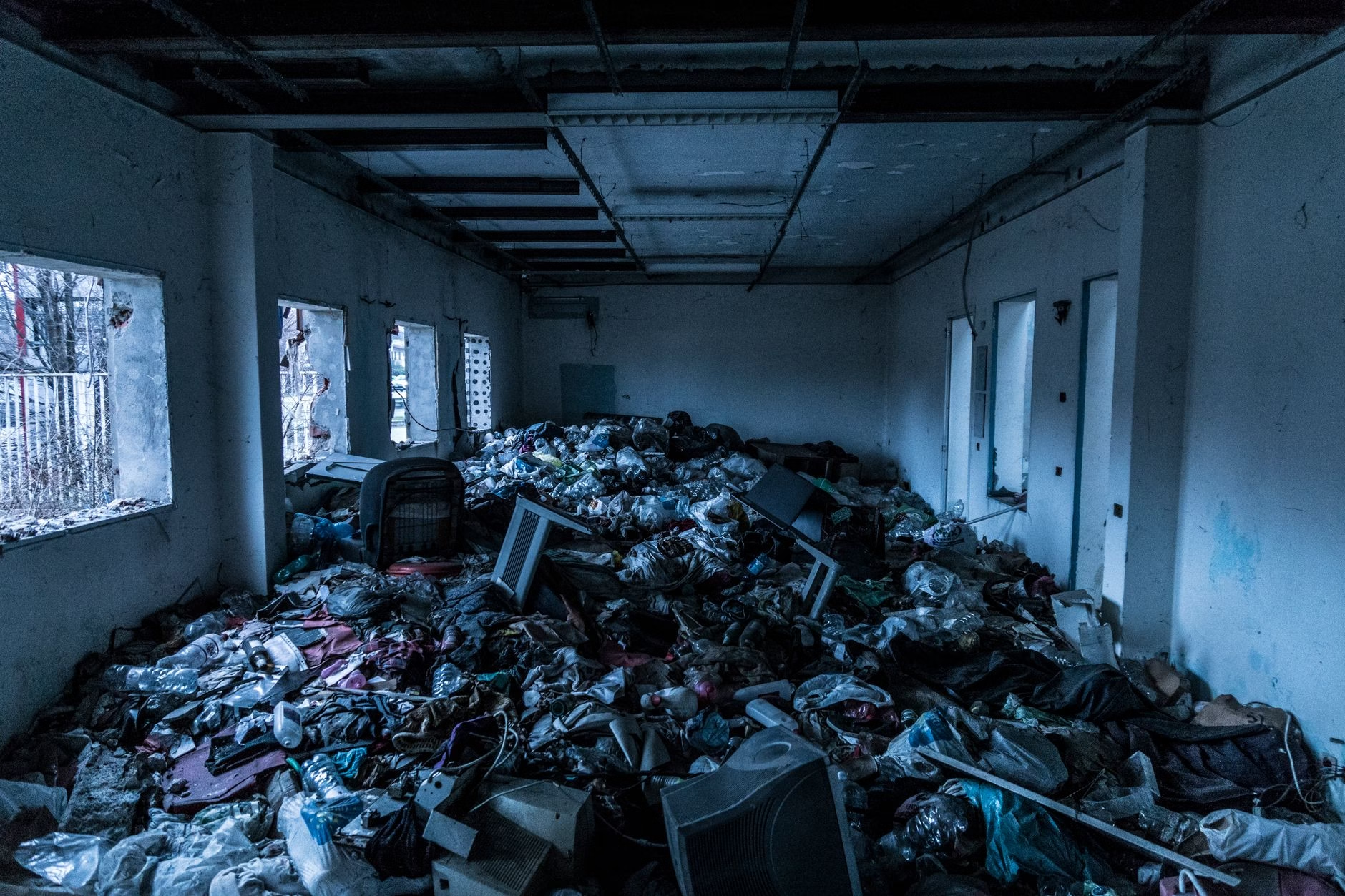
With no organized collection systems or functional sanitary landfills, single-use plastics—primarily thin polyethylene shopping bags, single-serve water bottles, and agricultural ground sheeting—accumulate unabated near human settlements. Seasonal rainstorms and mountain runoff act as massive conveyance systems, sweeping urban waste down through natural riverbeds, or wadis, and spreading tons of synthetic debris across lower-lying agricultural basins.
The geographic reality of Yemen’s terrain exacerbates the problem. The country relies heavily on terrace farming and fertile seasonal valleys that collect nutrient-rich silt. Today, these exact watercourses act as funnels for synthetic refuse, transforming historical breadbaskets into widespread, unregulated dumping grounds.
Agricultural Degradation and Livestock Mortality
The agricultural sector, which provides livelihoods for roughly half of Yemen’s population, is suffering profound long-term damage due to plastic contamination. Plastic debris buried in cultivated fields prevents rainwater from infiltrating the soil, disrupts root systems, and creates physical barriers that hamper the growth of essential food crops such as sorghum, wheat, and vegetables.
Equally devastating is the impact on rural livestock production, which serves as a financial safety net for impoverished rural households. Free-roaming goats, sheep, and cattle routinely ingest plastic bags while grazing in fields and wadi channels contaminated by household trash.
Veterinarians working with international relief agencies report a dramatic rise in fatal gastrointestinal impactions among rural herds. When animals consume thin plastic film mixed with dry forage, the synthetic materials coalesce inside their digestive systems, causing slow starvation, reduced milk production, and high mortality rates among livestock that families depend on for basic survival.
Data Points and Expert Ecological Analysis
Data gathered by local environmental organizations and university researchers highlights the unprecedented scale of the crisis. Studies conducted by environmental scientists at the University of Sana’a estimate that over 350,000 metric tons of unmanaged plastic waste currently pollute Yemen’s rural valleys and agricultural zones, with less than five percent of all plastic imported into the country being recycled.
According to assessments by the United Nations Environment Programme (UNEP), improper disposal of solid waste in conflict zones poses an existential threat to long-term land restoration efforts. Furthermore, because formal disposal options do not exist, farmers frequently burn plastic piles directly adjacent to their fields to clear space for planting.
“The open-air burning of halogenated plastics releases persistent organic pollutants, including dioxins and furans, directly into the air and topsoil,” noted Dr. Sarah Al-Kibsi, a regional environmental health specialist. “These airborne carcinogens settle on crops, contaminate local groundwater tables during monsoon events, and pose severe respiratory risks to agrarian communities.”
Analyses of soil samples from the Al-Batinah wadi system revealed elevated concentrations of microplastics, which agricultural scientists warn can alter soil microbiota, reduce nitrogen fixation capacity, and enter the agricultural food chain through staple crop uptake.
Long-Term Risks and Forward-Looking Indicators
The plastic pollution crisis in Yemen’s rural valleys threatens to create long-lasting ecological damage that will complicate post-conflict recovery and agricultural rehabilitation for decades. If farmlands remain choked with persistent pollutants, returning displaced populations will find their land unusable, driving further rural-to-urban migration and worsening national dependency on imported food aid.
In response to the crisis, a small number of international aid organizations have begun integrating cash-for-work plastic collection schemes into their humanitarian stabilization initiatives. These programs compensate local residents for clearing plastics from irrigation canals and agricultural terraces, though current funding covers only a fraction of the affected territories.
Observers and policy experts stress that long-term mitigation will require international donors to fund decentralized waste processing infrastructure, support community-led recycling enterprises, and introduce biodegradable agricultural materials into aid packages. The immediate future will depend on whether international development agencies prioritize soil remediation alongside traditional food aid to protect Yemen’s remaining agricultural capacity.




















Leave a Reply