


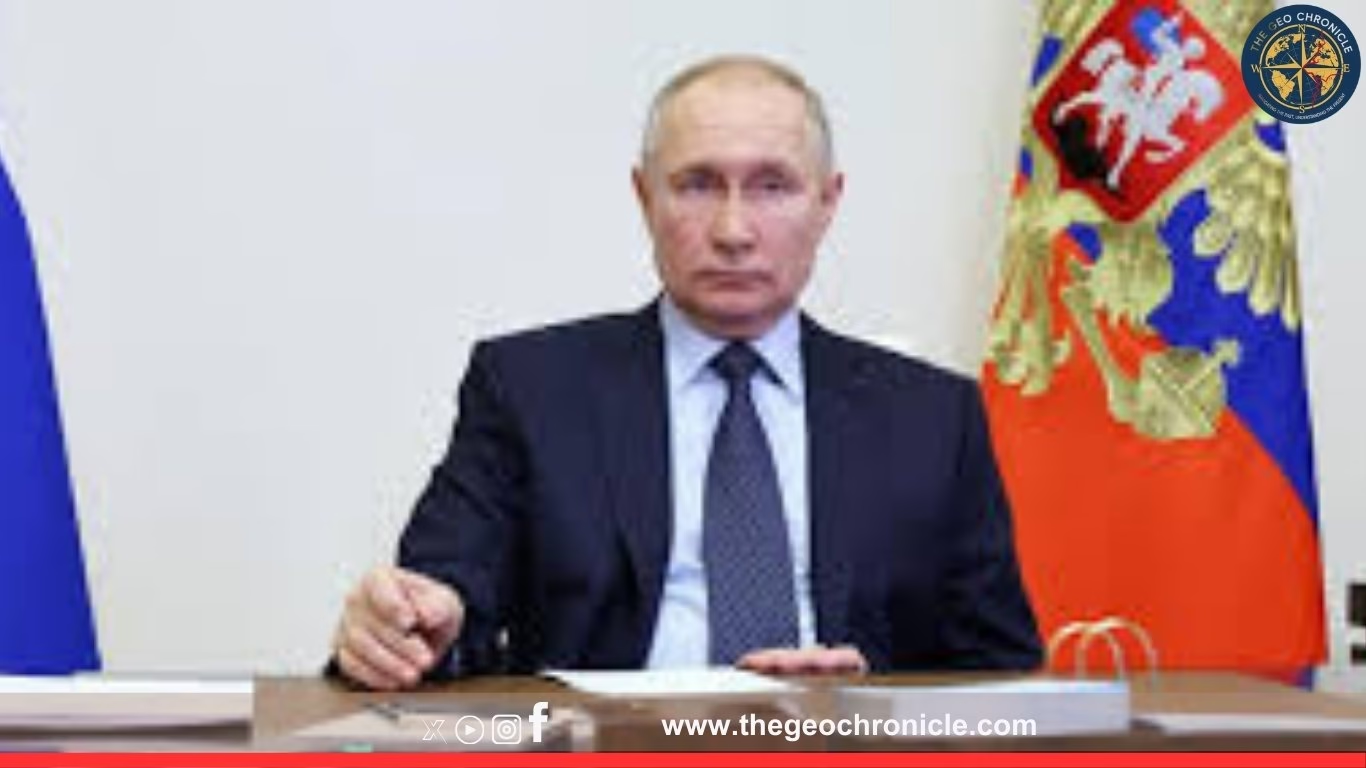
Introduction: A War Without End
The Russian invasion of Ukraine, now in its fourth year, continues to devastate lives, cities, and economies across the globe. Despite mounting casualties, widespread displacement, and a deepening humanitarian crisis, diplomatic efforts remain stalled. Russian President Vladimir Putin has signaled openness to negotiations, yet NATO countries maintain a hardline stance: no talks until Russia fully withdraws from Ukrainian territory.
This impasse has created a diplomatic deadlock, leaving Ukraine caught in the crossfire. While military aid flows steadily to Kyiv, the absence of a political roadmap raises serious concerns about the long-term trajectory of the conflict and its global repercussions.
Putin’s Position: Conditional Peace Offers
Putin’s demands for peace are far from modest. According to multiple sources, including Reuters and The Moscow Times, the Kremlin insists on:
- A written pledge from Western powers to halt NATO’s eastward expansion.
- Recognition of Russian control over occupied Ukrainian territories.
- Lifting of key sanctions.
- Protection for Russian-speaking populations in Ukraine.
Putin has reportedly agreed to work with Ukraine on a memorandum outlining the contours of a ceasefire, but Kyiv and European governments accuse Moscow of stalling while its forces continue to advance in eastern Ukraine.
“Putin is ready to make peace but not at any price,” said a senior Russian source familiar with Kremlin strategy.
NATO’s Stance: No Talks Without Withdrawal
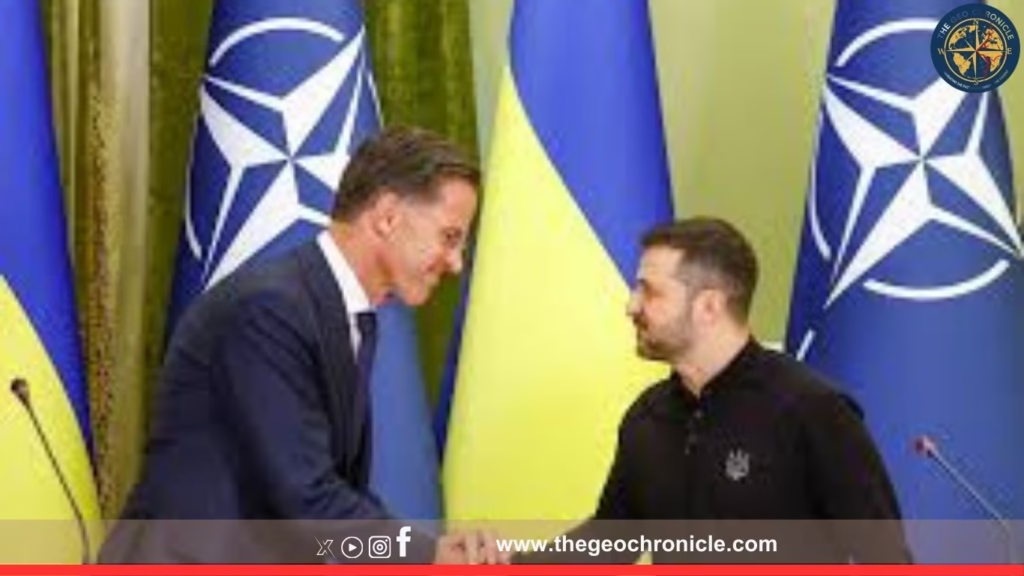
NATO countries, led by the United States, have refused to engage in direct negotiations with Moscow unless Russia agrees to a full military withdrawal. This position, while principled, has led to a diplomatic stalemate.
European leaders argue that any compromise with Russia would legitimize aggression and undermine international law. Ukraine, backed by NATO, demands:
- Complete withdrawal of Russian troops.
- Return of prisoners and kidnapped Ukrainian children.
- Prosecution of Russian leaders for war crimes.
- Security guarantees to prevent future invasions.
Military Aid vs. Diplomatic Silence
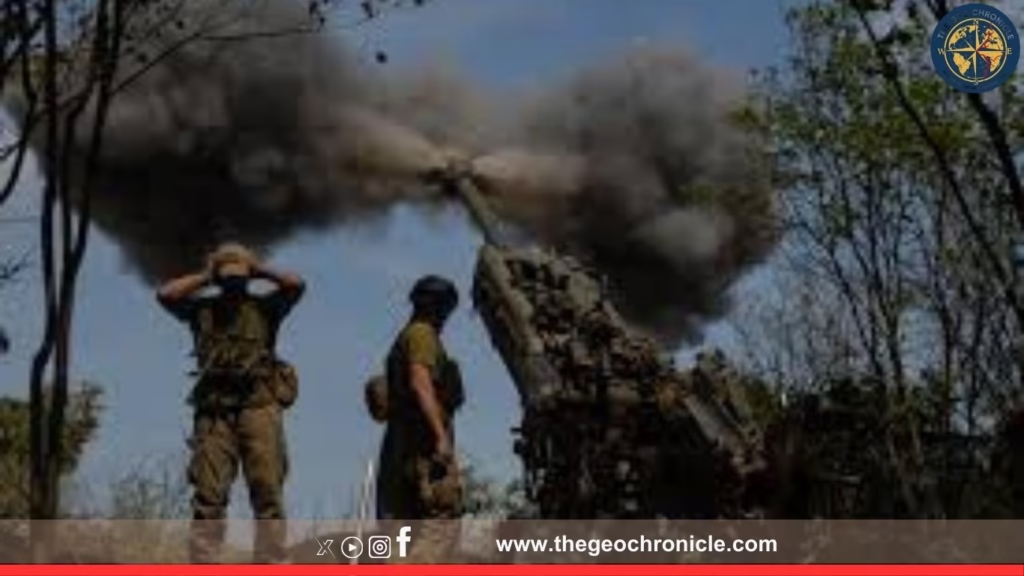
While diplomacy remains frozen, military support for Ukraine has intensified. The U.S. is considering supplying long-range Tomahawk missiles to Kyiv, a move that could escalate the conflict further. European nations continue to send weapons, intelligence, and humanitarian aid, but critics argue that this militarized approach lacks a long-term strategy for peace.
“The absence of a political roadmap is deeply troubling,” said a European diplomat on condition of anonymity.
Humanitarian Crisis: A War of Attrition
The human cost of the war is staggering:
- Over 300,000 dead and wounded.
- More than 12 million displaced.
- Entire cities like Mariupol and Bakhmut reduced to rubble.
The war has triggered a refugee crisis across Europe, strained healthcare systems, and disrupted education for millions of children. Aid agencies warn that the humanitarian situation is worsening, with winter approaching and infrastructure in ruins.
Economic Shockwaves: Global Repercussions
The war’s impact extends far beyond Ukraine’s borders. Energy markets have been destabilized, with gas prices soaring across Europe. Food supply chains have been disrupted, especially grain exports from Ukraine, once a global breadbasket.
| Sector | Impact | Region Most Affected |
|---|---|---|
| Energy | Gas shortages, price hikes | Europe, especially Germany |
| Agriculture | Grain export disruption | Africa, Middle East |
| Manufacturing | Supply chain delays | Global |
| Refugee Resettlement | Housing and welfare strain | Poland, Romania, Germany |
| Defense Spending | Increased military budgets | NATO countries |
Sources: UNHCR, IMF, European Commission Reports

Drone Warfare and Hybrid Threats
Recent months have seen an escalation in drone warfare. Ukraine has shot down dozens of Russian drones, while Russia has launched attacks deep into Ukrainian territory using Shahed and Gerbera UAVs. NATO nations like Denmark have reported unexplained drone activity near military bases, raising fears of hybrid attacks.
“We cannot accept that foreign drones create uncertainty and disruption,” said Denmark’s Transport Minister Thomas Danielsen.
Frozen Conflicts and NATO Expansion: The Historical Context
Russia’s opposition to NATO expansion is rooted in decades of geopolitical tension. Since the dissolution of the Soviet Union, Moscow has engineered frozen conflicts in Georgia, Moldova, and Ukraine to block NATO and EU integration.
Putin’s current demands echo past grievances, including:
- The 1994 Budapest Memorandum, which provided security assurances to Ukraine.
- The Minsk Agreements of 2014 and 2015, which failed to resolve the Donbas conflict.
- Russia’s annexation of Crimea in 2014, widely condemned but never reversed.
Trump’s Role: A Shift in U.S. Policy?
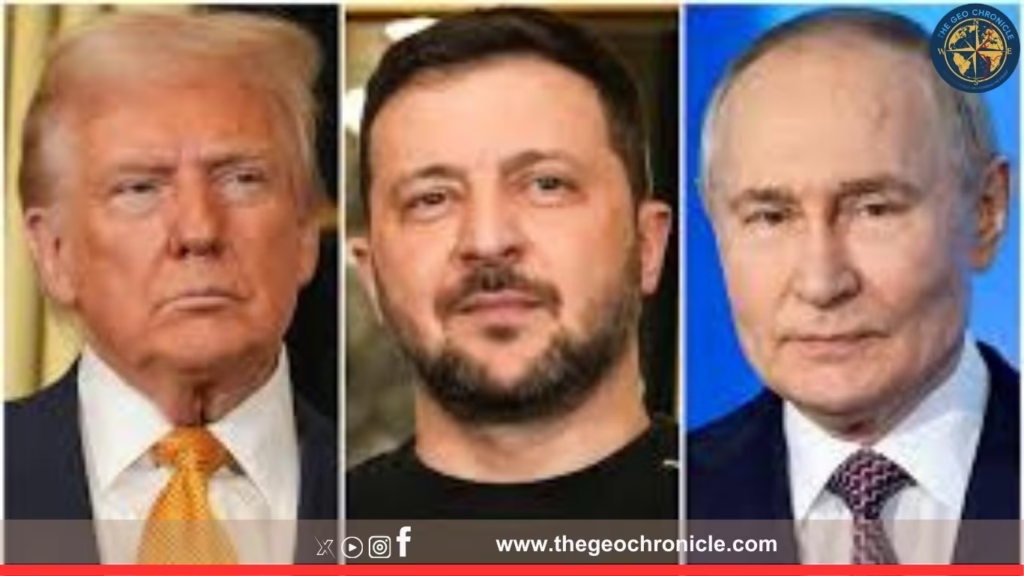
President Donald Trump has expressed frustration with Putin’s refusal to engage in ceasefire talks. After meeting with Ukrainian President Volodymyr Zelensky at the UNGA, Trump reportedly agreed that NATO should shoot down Russian aircraft if they violate airspace.
Trump’s administration has shown openness to Russian proposals for ending the war, including neutrality for Ukraine and limited NATO expansion. However, European nations remain skeptical, fearing that such concessions would embolden Moscow.
The Ceasefire Debate: Strategic Containment vs. Peace
Critics argue that NATO’s reluctance to negotiate may be prolonging the war. They question whether strategic containment is being prioritized over humanitarian concerns.
“Is the West more interested in weakening Russia than in saving lives?” asked a former UN peace negotiator.
Others warn that premature negotiations could reward aggression and set a dangerous precedent.
Conclusion: A War That Demands Diplomacy
The silence at the negotiation table speaks volumes. As the war drags on, the need for a diplomatic breakthrough becomes more urgent. The world watches as Ukraine bleeds, economies falter, and geopolitical tensions rise.
Whether through backchannel diplomacy, multilateral pressure, or bold leadership, the path to peace must be found. The alternative—a prolonged war with no end in sight—is a tragedy the world cannot afford.
Disclaimer
This article is based on publicly available information and official statements from government sources, media reports, and diplomatic briefings as of September 2025. The views expressed in quoted material are those of the speakers and do not represent the views of this publication. All data and references are cited from credible sources including Reuters, The Moscow Times, Wikipedia, and MSN News.

















Leave a Reply