



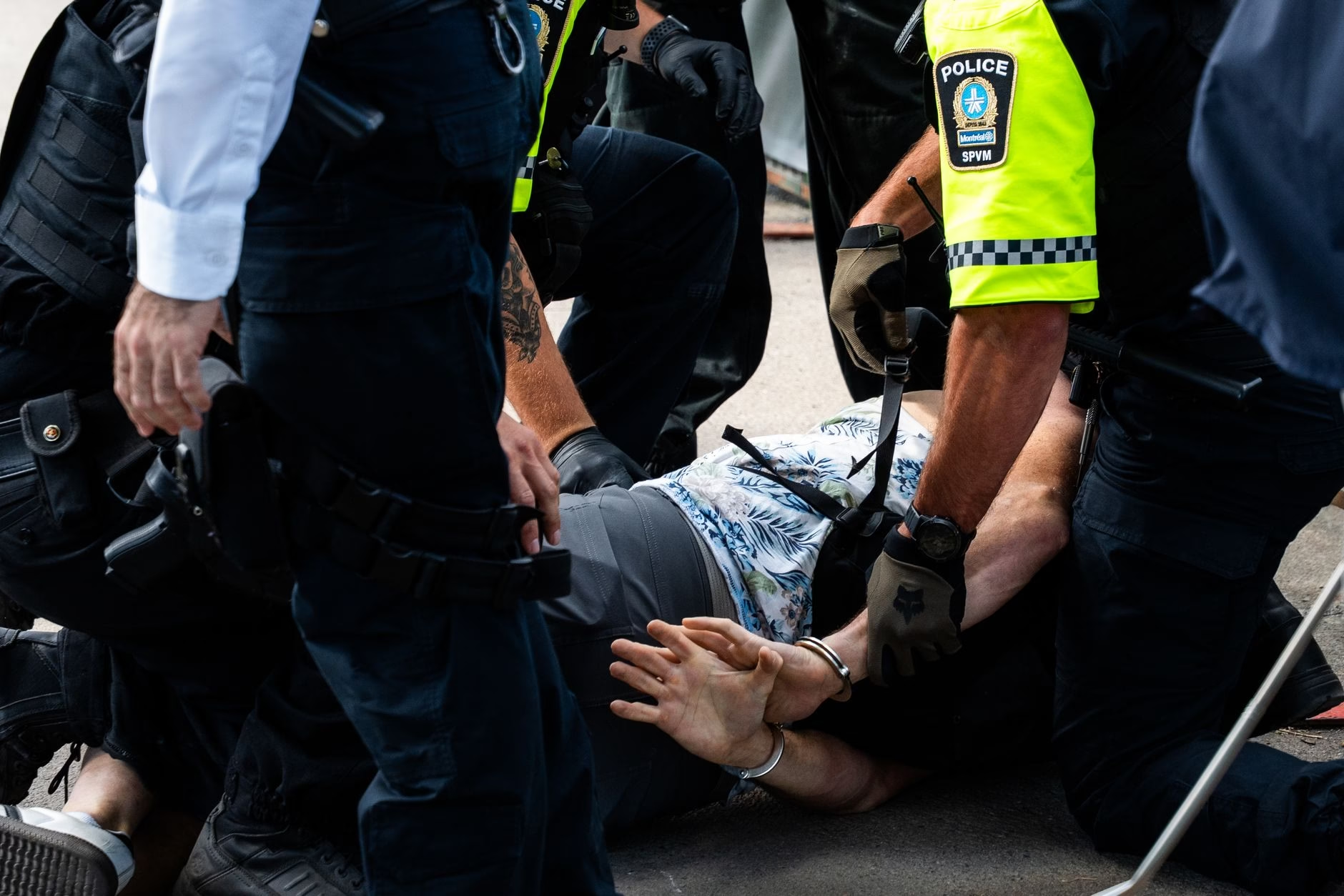
Canadian law enforcement officials in Toronto have arrested and charged 33-year-old Ahmad Hassan Hajahmad with terrorism-related offenses following an extensive investigation into alleged ties to Hamas, a designated terrorist organization. The arrest was executed through a joint operation involving the Toronto Police Service’s Hate Crime Unit and the Royal Canadian Mounted Police (RCMP) Integrated National Security Enforcement Team (INSET). Authorities confirmed the charges stem from allegations that Hajahmad actively supported and facilitated activities linked to the listed entity while participating in local demonstrations.
Background and Escalating Security Scrutiny
Canada officially designated Hamas as a listed terrorist entity under the Criminal Code in December 2002. Under Canadian law, knowingly participating in, contributing to, or facilitating any activity of a listed terrorist group carries severe legal penalties, including multi-year prison sentences.
The arrest comes amid a period of heightened geopolitical tensions and frequent public demonstrations across major Canadian urban centers. Toronto, Canada’s largest city, has witnessed hundreds of rallies and counter-protests over the past year, prompting increased monitoring by both local municipal police and federal security agencies.
Law enforcement agencies have steadily intensified their surveillance of public gatherings where rhetoric may cross the line into illegal support for terrorist entities. The direct involvement of RCMP INSET highlights the national security implications of the case, as the specialized unit specifically handles counter-terrorism investigations, foreign interference, and national security threats.
Details of the Joint Investigation
The multi-agency investigation into Hajahmad gathered momentum as investigators from the Toronto Police Hate Crime Unit began analyzing activities linked to public demonstrations across the Greater Toronto Area. Sources familiar with the matter indicate that federal national security investigators stepped in when evidence suggested connections reaching beyond domestic protest activity.
While specific evidence presented in court filings remains subject to judicial review, charges under Section 83 of the Criminal Code typically require law enforcement to demonstrate a high degree of intent and concrete action. Prosecutors must prove that the accused engaged in conduct intended to materially assist a listed terrorist entity, rather than merely expressing political views protected under the Canadian Charter of Rights and Freedoms.
Toronto Police Chief Myron Demkiw has repeatedly stated that while the right to peaceful assembly is constitutionally protected, criminal behavior and advocacy for violence will be met with full legal accountability. Municipal police forces across Ontario have allocated additional funding and specialized officers to address the complex overlap between public order management and hate crime enforcement.
Data Points and Expert Analysis
According to official statistics released by the Toronto Police Service, hate crime reports in the city increased by over 50 percent in 2023 compared to the previous year, with antisemitic and anti-Muslim incidents accounting for the vast majority of reported occurrences. The surge has put unprecedented operational pressure on local law enforcement resources and municipal policy frameworks.
Legal analysts emphasize that terrorism prosecutions in Canada are relatively rare due to the stringent evidentiary thresholds required for conviction. National security experts note that INSET teams require extensive digital, financial, and physical surveillance evidence before laying charges under national security provisions to ensure cases hold up under constitutional scrutiny.
Civil liberties advocates are also closely observing the proceedings to monitor the boundary between lawful political dissent and national security offenses. The Canadian Civil Liberties Association has consistently maintained that law enforcement must carefully distinguish between offensive or radical speech and actual threats to national security to safeguard democratic rights.
Future Legal Proceedings and Industry Impact
Hajahmad is scheduled to appear in a Toronto courtroom for a preliminary bail hearing, where federal prosecutors are expected to oppose his release on public safety grounds. The case will serve as a crucial test of how Canadian courts interpret digital evidence and public demonstration conduct under national security frameworks.
Law enforcement practices during large-scale public demonstrations are likely to undergo increased scrutiny and refinement as this case moves through the judicial system. Municipal police services nationwide are watching the outcome closely to refine their operational protocols regarding hate crime identification and national security referrals.
Observers will be looking to see whether additional charges or co-conspirators emerge as federal investigators continue reviewing digital assets seized during the arrest. The outcome of the upcoming court hearings will set important legal precedents for future terrorism prosecutions involving domestic activists in Canada.

























Leave a Reply