


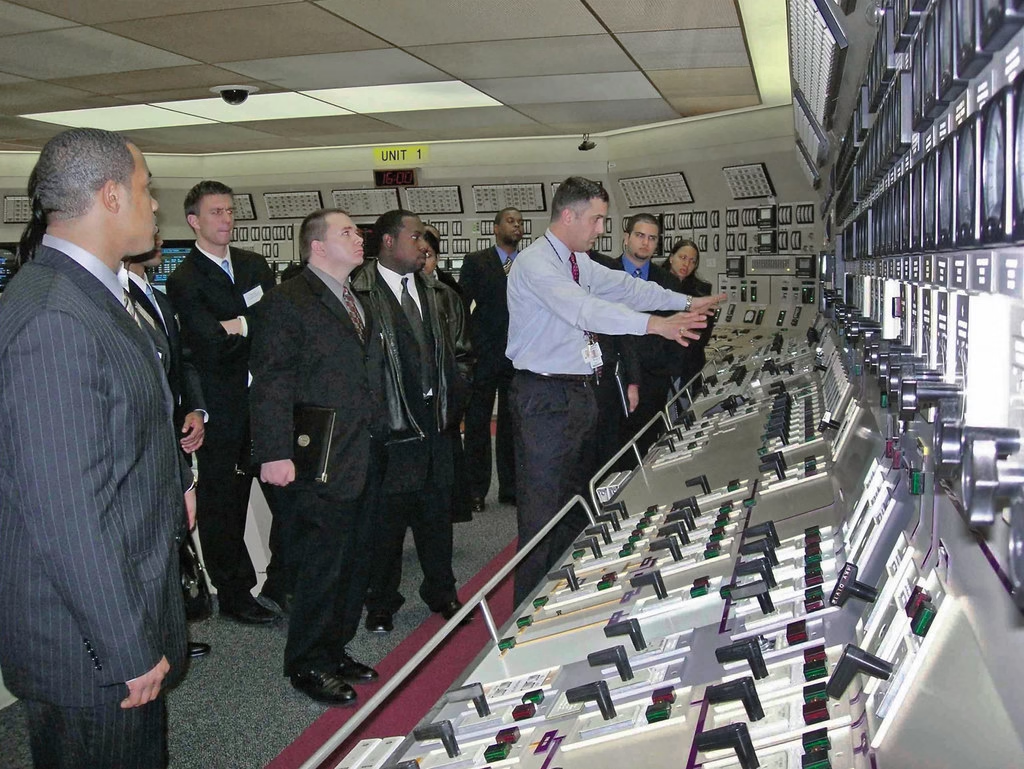
The United States government has reached a landmark nuclear cooperation pact with Saudi Arabia, establishing a framework that paves the way for the construction of the kingdom’s first domestic uranium enrichment facility. The announcement, released with limited official details by the administration, signals a major shift in American diplomatic strategy in the Middle East.
Contextualizing Middle Eastern Energy Ambitions
For over a decade, Saudi Arabia has sought to diversify its energy grid away from fossil fuels through its Vision 2030 initiative. Nuclear power stands at the center of this transition, aimed at freeing up crude oil for export while meeting surging domestic electricity demands.
Historically, Washington has required Middle Eastern nations to sign a strict nonproliferation commitment known as the “gold standard.” Applied to the 2009 U.S.-UAE nuclear deal, this policy explicitly prohibited the domestic enrichment of uranium and the reprocessing of spent nuclear fuel.
Riyadh has consistently resisted such restrictions, maintaining that domestic enrichment is a sovereign right. The kingdom possesses significant unexploited deposits of uranium ore, which officials plan to mine and refine locally to build a self-sustaining nuclear supply chain.
Details of the Emerging Nuclear Pact
While official public documentation regarding the deal remains sparse, sources close to the negotiations confirm that the agreement permits technical framework development for fuel-cycle facilities on Saudi soil. The arrangement aims to partner American civil nuclear engineering firms with Saudi state entities to construct commercial nuclear reactors.
Under the proposed agreement, Washington would supply advanced reactor designs, specialized equipment, and operational training. In exchange, Saudi Arabia would commit to broad international oversight to ensure materials remain dedicated to peaceful energy production.
Proponents of the deal argue that American involvement is vital to establishing strict safety standards in the region. Without U.S. participation, Saudi officials had repeatedly threatened to partner with state-backed nuclear companies in China or Russia.
Security and Proliferation Concerns
The prospect of Saudi uranium enrichment has reignited intense debate among nonproliferation experts and lawmakers on Capitol Hill. Critics contend that providing a path to domestic enrichment weakens global nonproliferation standards and sets a dangerous precedent.
Nuclear scientists point out that the technological infrastructure required to enrich uranium for civil power reactors can be reconfigured to produce military-grade material. Low-enriched uranium for commercial electricity typically requires a concentration of 3 to 5 percent Uranium-235, whereas weapons-grade fuel requires enrichment levels above 90 percent.
Centrifuge technology remains identical for both processes. Once a nation masters the operational mechanics of gas centrifuge cascades, the transition to higher enrichment levels becomes a matter of political intent rather than technological capability.
Expert Perspectives and Regional Dynamics
Data from the International Atomic Energy Agency (IAEA) highlights that regional energy transitions are accelerating, with multiple Middle Eastern nations exploring small modular reactors and traditional nuclear plants. However, the introduction of enrichment infrastructure adds a distinct geopolitical layer to the regional balance of power.
“Establishing a complete nuclear fuel cycle within the region fundamentally alters regional security calculations,” noted Dr. Aris Thorne, a senior nonproliferation fellow at the Global Security Institute. “Once the centrifuges begin spinning, the theoretical breakout timeline to produce fissile material shrinks significantly.”
Supporters of the pact emphasize that strong U.S. stewardship remains the best safeguard against rapid militarization. They note that the bilateral agreement will incorporate advanced real-time monitoring technology and mandatory compliance with IAEA inspections.
Geopolitical and Industry Implications
The deal presents major commercial opportunities for the global nuclear industry, opening potentially tens of billions of dollars in procurement contracts for reactors, technology transfers, and long-term facility maintenance. American nuclear vendors stand to gain a competitive foothold in a rapidly growing Middle Eastern market.
In the coming months, the agreement will face rigorous scrutiny in the U.S. Congress under Section 123 of the Atomic Energy Act. Lawmakers possess a 90-day window to review the terms and could potentially introduce a joint resolution of disapproval to block or modify the pact.
Industry observers and international diplomats will closely watch how regional neighbors respond to Riyadh’s emerging nuclear capabilities. Particular focus will remain on whether Israel seeks additional defense guarantees from Washington, and how Iran adjusts its own ongoing nuclear enrichment activities in response to Saudi Arabia’s expanded civil program.


























Leave a Reply