


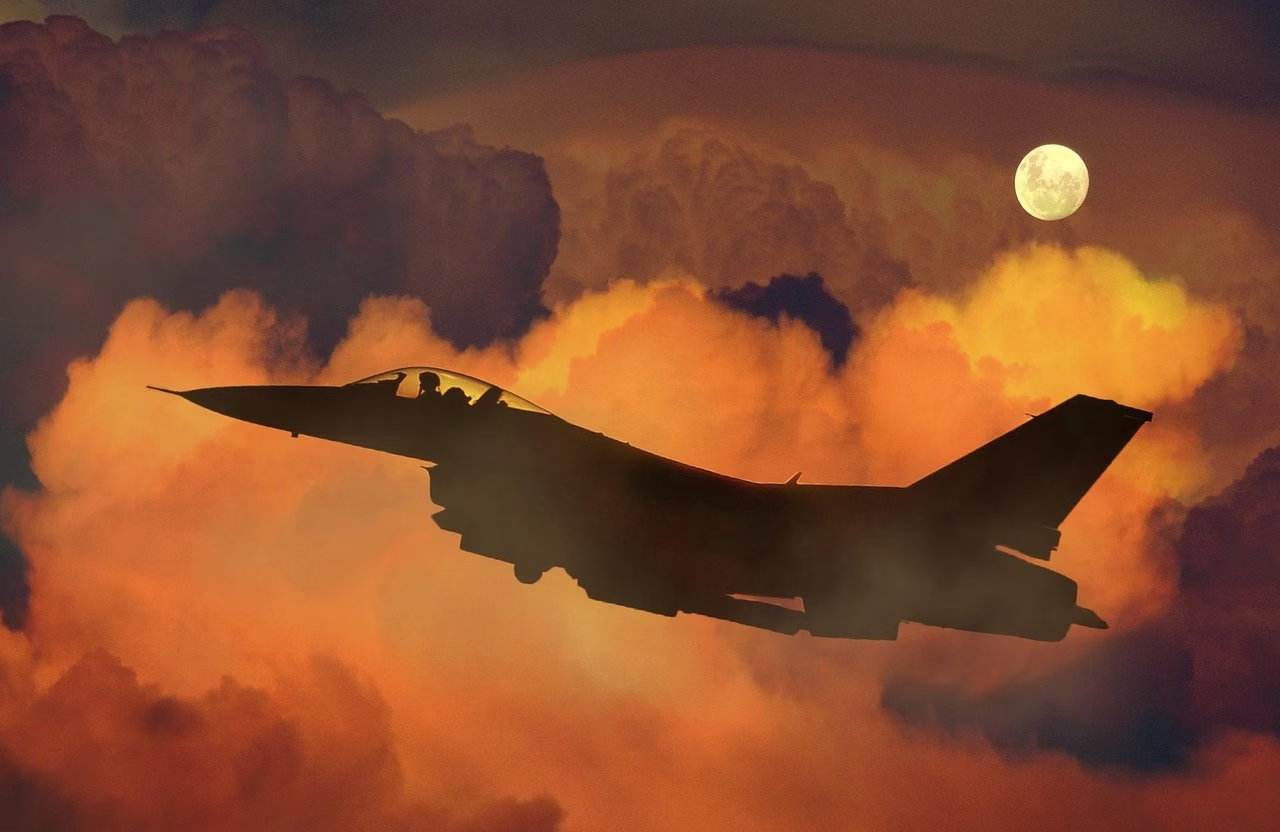
The United States military launched a 12th consecutive night of high-precision airstrikes against strategic Iranian installations on Wednesday, taking decisive action following weeks of heightened proxy attacks across Persian Gulf nations and retaliatory missile exchanges in the region.
The sustained air campaign represents one of the most intense military operations conducted by American forces in the Middle East in recent years, escalating rapidly as President Donald Trump issued a stern warning to Tehran while receiving the dignified transfer of fallen American service members returning home to Dover Air Force Base.
Broader Context of the Escalating Regional Crisis
The operational pivot follows weeks of compounding security incidents across the Persian Gulf, where Iranian-aligned militias and state forces targeted critical maritime trade routes, regional diplomatic infrastructure, and allied defense positions. In response to these persistent incursions, the Pentagon deployed multiple carrier strike groups and heavy strategic bombers to project force and establish tactical deterrence.
Persian Gulf states—pivotal partners in both global energy production and international maritime security—find themselves directly within the operational theater. Regional defense grids, reinforced by United States Patriot and THAAD missile defense batteries, have actively intercepted dozens of low-altitude drone formations and medium-range ballistic missiles aimed at commercial and military infrastructure.
The loss of American service personnel earlier this week transformed what was previously a localized defensive posture into a broad, multi-domain air initiative directed at dismantling Iran’s forward offensive capabilities before further escalation occurs.
Detailed Operations and Tactical Engagement
Defense Department sources confirm that Wednesday’s strikes deployed a mix of land-based tactical fighters, sea-launched Tomahawk land-attack missiles, and long-range stealth bombers. The primary targets included hardened underground command facilities, integrated air defense radars, and coastal mobile missile launchers positioned along the strategic Strait of Hormuz.
Throughout the early hours of Thursday morning, air defense sirens sounded across key maritime logistics centers in the Gulf as allied interceptors engaged incoming retaliatory drone strikes launched from regional facilities. While coalition forces successfully neutralized most vectors, localized fragmentation caused minor structural impacts near industrial supply depots.
U.S. Central Command briefings emphasize that the primary objective of this sustained 12-night operation is the systematic degradation of launch networks, targeting key logistics lines that resupply unmanned aerial vehicle (UAV) arsenals throughout the region.
Expert Analysis and Global Economic Impact
Security analysts at the Center for Strategic and International Studies note that while twelve days of uninterrupted precision bombardment severely strains Iran’s immediate inventory, the decentralized nature of proxy networks presents ongoing defensive challenges. Military strategists point out that mobile launch platforms retain the capability to execute swift, localized harassment strikes despite losing major command hubs.
The military escalation is generating significant volatility across international markets. Brent crude futures jumped nearly 4.5 percent following news of the 12th night of strikes, driven by growing concern among energy traders regarding potential operational bottlenecks along vital oil transit lanes.
Maritime intelligence data indicates that global shipping companies are increasingly diverting vessels away from high-risk sea corridors, leading to sharp increases in marine war risk insurance premiums and longer transit schedules around the African continent.
Geopolitical Implications and Forward Outlook
The sustained operations present serious domestic and international policy considerations for Washington. Congressional leaders are requesting comprehensive briefings regarding the precise operational scope, legal authorizations, and long-term exit criteria as the public observes the solemn return of fallen military personnel.
For Persian Gulf nations, the crisis highlights the critical necessity of integrated early-warning defense networks alongside complex diplomatic balancing to safeguard economic hubs against asymmetrical warfare tactics.
With traditional diplomatic channels currently stalled, international observers are closely monitoring whether Tehran will attempt to intensify maritime disruption in vital transit corridors or if the ongoing degradation of offensive infrastructure will force a pivot toward third-party diplomatic mediation in the coming days.






















Leave a Reply