


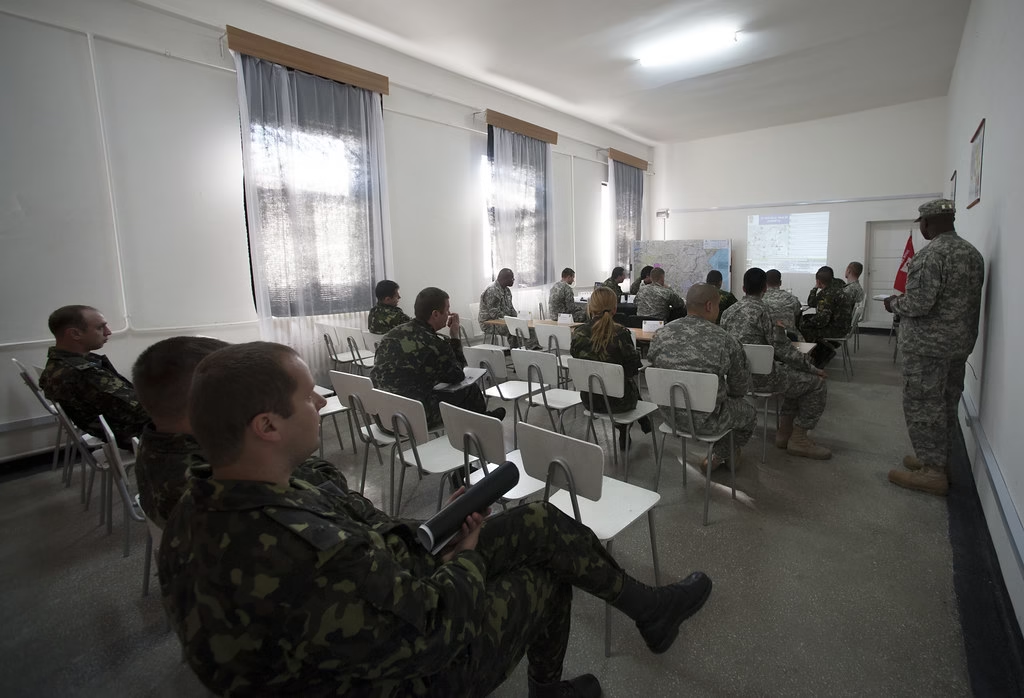
KYIV, Ukraine — Ukrainian President Volodymyr Zelenskyy appointed Major General Mykhailo Drapatyi as the new commander-in-chief of the Armed Forces of Ukraine, following intense public protests in the capital demanding a sweeping overhaul of the nation’s military leadership. The decision, announced late Friday from the presidential office in Kyiv, aims to restore public trust and stabilize the front lines during a period of mounting strategic pressure from Russian forces.
The sudden reshuffle comes at a critical juncture for Ukraine as it grapples with intensifying Russian offensives along the eastern front and growing domestic debates over mobilization policies. Drapatyi, a highly respected commander known for his pivotal role in the successful liberation of Kherson, succeeds the previous army chief amid calls for greater accountability, tactical innovation, and the reinstatement of the former defense minister.
Context of the Military Leadership Shakeup
The decision to replace the top military commander follows a series of demonstrations in Kyiv’s Independence Square, where families of active-duty soldiers, veterans, and civic activists gathered to voice frustration over the prosecution of the war. Protesters specifically demanded the removal of the previous military leadership, citing high casualty rates, tactical stagnation in the Donbas region, and perceived communication gaps between the high command and frontline units.
Additionally, demonstrators called for the reinstatement of the former defense minister, whose departure earlier this year had sparked concerns over political infighting and administrative instability within the defense establishment. The mounting public pressure forced Zelenskyy to balance military continuity with democratic accountability, leading to this decisive administrative shift.
This transition marks the latest high-profile change in Ukraine’s military hierarchy since the full-scale invasion began in February 2022. Observers note that Zelenskyy has increasingly demonstrated a willingness to replace top officials to maintain national unity, bolster public morale, and revitalize battlefield strategies as the war enters a prolonged phase of attrition.
Who is Mykhailo Drapatyi?
Major General Mykhailo Drapatyi is a highly decorated officer who has served on the front lines since the outbreak of hostilities in eastern Ukraine in 2014. He first gained national prominence for leading the dramatic breakthrough of Ukrainian armored units in Mariupol during the early stages of the conflict, an action that cemented his reputation as a decisive field commander.
More recently, Drapatyi commanded the operational-tactical group “Kherson,” successfully planning and executing the complex counteroffensive that liberated the southern city of Kherson in late 2022. His reputation as a “soldier’s general” who prioritizes troop welfare, logistics, and modern tactical planning has made him an exceptionally popular figure among the rank-and-file forces.
Military analysts suggest that Drapatyi’s appointment is specifically designed to restore trust between the high command and the frontline units. His immediate task will be to stabilize the defensive lines in Donetsk and Kharkiv oblasts, where Russian forces have made incremental but costly territorial gains in recent months.
Analyzing the Strategic Shift
The leadership change has drawn mixed reactions from international observers and defense experts, highlighting the delicate balance Ukraine must maintain. While some view the move as a necessary step to inject new energy into the military command, others warn of the risks associated with changing commanders during a high-intensity war.
“A change in leadership during an active offensive phase carries inherent risks of operational disruption,” said Maria Avdeeva, a security analyst based in Kharkiv. “However, Drapatyi’s extensive combat experience and credibility among the troops could help mitigate these risks and boost morale at a critical time when the army needs cohesive leadership.”
Data from recent polling by the Kyiv International Institute of Sociology (KIIS) indicated a gradual decline in public satisfaction toward the overall direction of the military campaign, though trust in the armed forces as an institution remains exceptionally high. The appointment of a popular commander like Drapatyi appears directly aimed at addressing this public anxiety and reinforcing national cohesion.
Implications for the Front Line and International Partners
For Ukraine’s Western allies, the primary concern remains the continuity of military operations and the efficient integration of foreign military aid. The United States and European partners have reiterated their commitment to supporting Ukraine, emphasizing that personnel decisions are sovereign matters for the Ukrainian government.
Drapatyi is expected to prioritize the integration of advanced Western technologies, including F-16 fighter jets and long-range precision missile systems, into Ukraine’s defensive and offensive doctrines. His approach to mobilization will also be closely watched, as the country seeks to replenish its forces without alienating the civilian population or straining the domestic economy.
What to Watch Next
In the coming weeks, military observers will closely monitor Drapatyi’s initial command decisions, particularly how he addresses the critical shortage of ammunition and personnel along the eastern front. Any shifts in defensive positioning or local counteroffensives will offer the first real test of his strategic vision and operational capability.
The reaction of the Ukrainian parliament and civil society to the ongoing demands for broader governmental reforms will also shape the political landscape in Kyiv. Whether this leadership change pacifies public discontent or leads to further demands for political accountability remains a key variable in Ukraine’s wartime governance.















Leave a Reply