


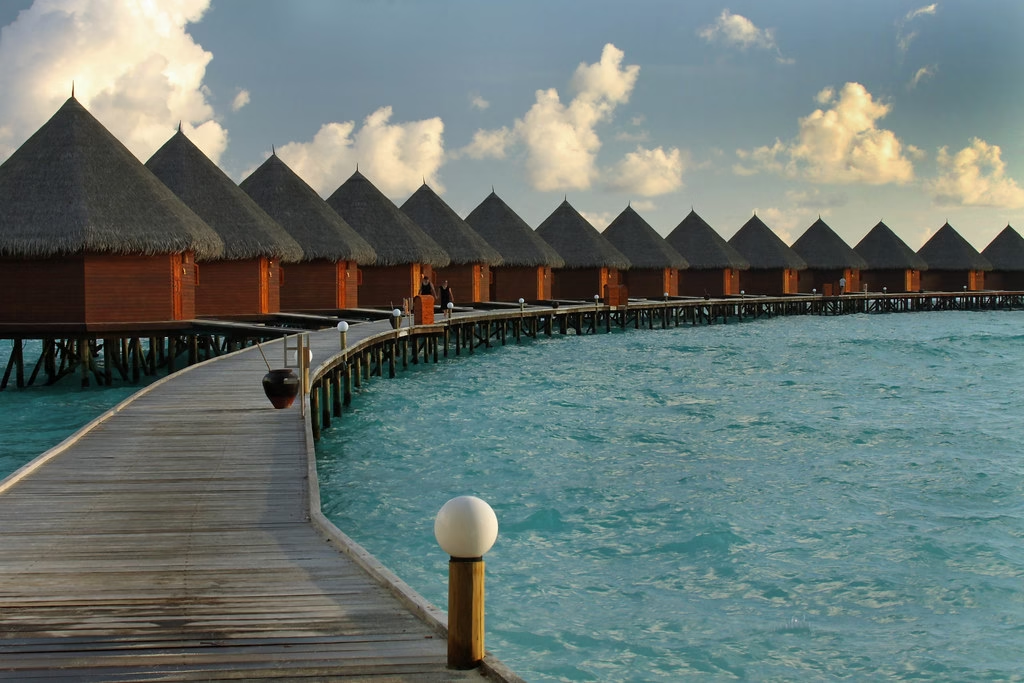
Saudi Arabia is rapidly transforming its Red Sea coastline into a premier global luxury tourism destination, aiming to redefine the kingdom’s economic landscape by 2030. As part of the Vision 2030 initiative, the Red Sea Project—now officially known as Red Sea Global—is opening a series of ultra-luxury resorts and international infrastructure projects along the nation’s western coast. This multi-billion dollar development seeks to position the region as the ‘Maldives of the Middle East,’ leveraging pristine coral reefs, untouched islands, and a year-round climate to attract high-net-worth travelers from across the globe.
A Strategic Shift in Economic Focus
For decades, Saudi Arabia’s economy remained heavily tethered to oil exports. Recognizing the volatility of global energy markets, the Saudi government launched Vision 2030 to diversify revenue streams, with tourism identified as a primary pillar for growth. The Red Sea project is central to this pivot, designed to contribute approximately 22 billion riyals ($5.86 billion) annually to the nation’s GDP once fully operational.
The development spans over 28,000 square kilometers, encompassing an archipelago of more than 90 islands. Unlike traditional tourism models, this project emphasizes regenerative tourism, aiming to achieve a 30 percent net conservation benefit by 2040. By integrating renewable energy and strict environmental protections, the kingdom hopes to set a new global standard for sustainable luxury travel.
The Infrastructure of Luxury
The operational phase of the project is currently accelerating, with the Red Sea International Airport now receiving commercial flights. This critical piece of infrastructure allows travelers to bypass major metropolitan hubs and land directly within the resort zone, significantly reducing travel friction. Several flagship resorts, including properties operated by luxury brands like St. Regis and Ritz-Carlton, have already welcomed their first guests, marking the transition from construction site to active destination.
Experts note that the scale of this project is unprecedented in modern hospitality. According to data from the Saudi Ministry of Tourism, the country aims to attract 150 million visitors annually by 2030, a massive increase from previous benchmarks. The Red Sea Project serves as the crown jewel of this effort, providing the high-end appeal necessary to compete with established markets like the Maldives, Seychelles, and the French Riviera.
Challenges and Industry Impact
Despite the rapid progress, the project faces the inherent challenge of establishing a new identity in a competitive global market. Critics and analysts point to the necessity of maintaining consistent service standards and high-quality experiences to justify the premium pricing associated with these remote resorts. Additionally, the project must balance its rapid expansion with the delicate marine ecosystems that act as its primary marketing asset.
Industry observers emphasize that the success of the Red Sea project will likely influence broader regional trends. By demonstrating that luxury tourism can be successfully scaled in the Middle East, Saudi Arabia is prompting neighboring nations to accelerate their own tourism infrastructure investments. This competition is expected to increase the overall quality of hospitality offerings across the Gulf Cooperation Council (GCC) states.
Looking Ahead
As the project moves into its next phase, focus will shift toward the completion of the Amaala development, a sister project centered on wellness and arts. Investors and travelers alike should monitor the integration of new sustainable technologies, such as large-scale desalination plants and off-grid power solutions, which are expected to define the future of desert-based luxury. The coming years will determine if the kingdom can successfully sustain its momentum and cement the Red Sea’s status as a top-tier destination in the international tourism hierarchy.













Leave a Reply