


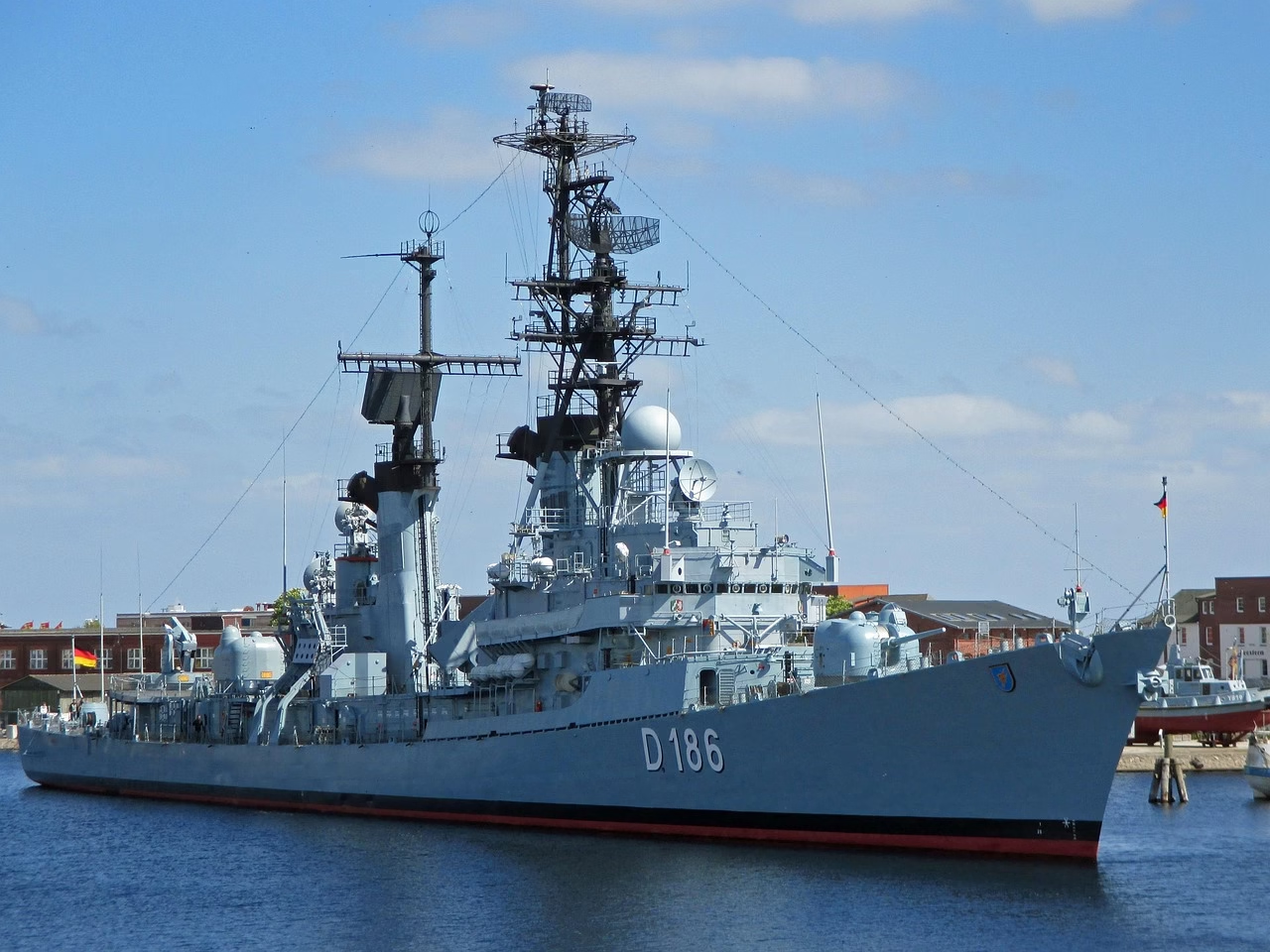
Military Operations Intensify in the Middle East
U.S. Central Command (Centcom) confirmed the execution of dozens of precision strikes against Iranian military infrastructure and naval assets on Wednesday, marking a significant escalation in regional hostilities. The operation, conducted across multiple sites, targeted key logistics hubs and small boat fleets, as President Donald Trump signaled that further military action remains an immediate possibility.
The strikes come at a time of heightened volatility in the Persian Gulf, where maritime security has become a primary point of friction. President Trump, addressing the media shortly after the operation, stated he is currently “not sure” he wants a new deal with Tehran, effectively cooling hopes for a diplomatic breakthrough in the near term.
The Context of Rising Regional Tensions
The current military posture follows a series of incidents involving commercial shipping and regional proxy skirmishes that have challenged U.S. influence in the Middle East. For months, the Biden administration—and now the transition into the new administration—has struggled to balance a policy of “maximum pressure” with the desire to avoid a full-scale regional war.
Analysts note that Iranian-backed groups have increased their activity, leading to a tit-for-tat dynamic that has strained international shipping lanes. The U.S. military presence in the region has been reinforced to deter further provocations, yet the frequency of these engagements suggests that traditional containment strategies are facing unprecedented stress tests.
Strategic Objectives and Operational Scope
The latest strikes were reportedly designed to degrade Iran’s ability to deploy fast-attack craft and disable radar installations used to track coalition vessels. By targeting these specific assets, the Pentagon aims to limit the asymmetric warfare capabilities that Iran has leveraged to project power in the Strait of Hormuz.
Military experts suggest that these strikes represent a shift from purely defensive measures to a more proactive offensive posture. Dr. Elena Rodriguez, a senior fellow at the Institute for Global Security, notes that “the U.S. is signaling a clear threshold for what it considers acceptable behavior in the maritime domain, moving beyond warnings to kinetic enforcement.”
However, the risks of miscalculation remain high. Critics of the current strategy argue that without a clear diplomatic off-ramp, military pressure risks trapping the U.S. in a perpetual cycle of escalation. Recent data from the Armed Conflict Location & Event Data Project (ACLED) indicates a 20% uptick in regional skirmishes over the last quarter, underscoring the deteriorating security environment.
Implications for Global Stability
For the shipping and energy industries, the ongoing conflict presents a volatile outlook for global oil prices and maritime logistics. Insurance premiums for vessels passing through the region have already begun to climb, reflecting the increased risk of collateral damage.
Market analysts warn that if these strikes continue to expand, the disruption to global supply chains could be significant. Investors are closely monitoring the rhetoric coming from the White House, as any signal of a “last resort” military intervention would likely trigger immediate market instability.
Looking ahead, observers should monitor the reaction from Tehran and the extent to which regional proxies retaliate against U.S. positions. The immediate future will likely be defined by whether the U.S. continues this targeted campaign or pivots back toward back-channel negotiations to establish a new, albeit fragile, status quo in the region.


















Leave a Reply