


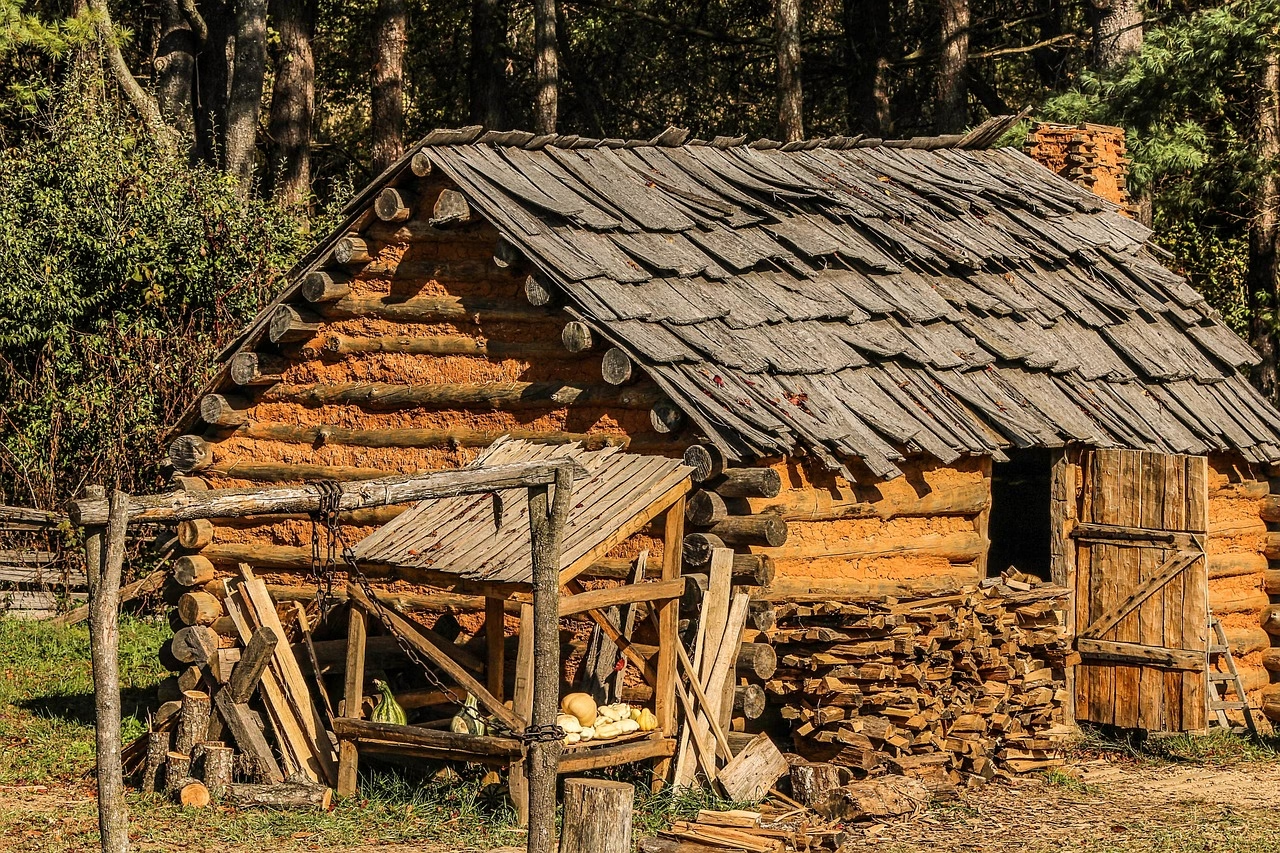
In the rugged landscapes of late 18th-century Kentucky, a unique brand of American liberty took root, fundamentally shaping the character of a nascent nation. As settlers pushed westward across the Appalachian Mountains following the Revolutionary War, they established a society defined by self-reliance, agrarian independence, and a fierce skepticism of centralized authority.
The Crucible of Western Expansion
Following the Treaty of Paris in 1783, the American frontier became a pressure cooker for democratic ideals. Kentucky, then the westernmost district of Virginia, attracted thousands of veterans and land-hungry pioneers who viewed the wilderness as a blank slate for personal sovereignty.
Historians note that the geographic isolation of the region forced settlers to rely on their own ingenuity rather than distant legislative bodies in Richmond or Philadelphia. This physical distance from the seat of power fostered a political culture that prioritized individual autonomy over colonial hierarchy.
A Legacy of Independent-Mindedness
The Kentuckian reputation for independence was not merely a cultural quirk but a necessity of survival. Clearing dense forests, establishing homesteads, and navigating the constant threat of conflict required a high degree of communal cooperation coupled with personal initiative.
According to research from the Filson Historical Society, this period saw the emergence of the ‘Kentucky character’—a blend of egalitarianism and rugged individualism. These settlers were among the first to demand broader voting rights, arguing that those who shed blood to defend the frontier should have a direct hand in governance.
Economic and Political Implications
The drive for opportunity led many to reject the traditional plantation structures found in the Tidewater regions of the East. Instead, they favored small-scale farming and local trade, which allowed for a more flexible economic model that emphasized land ownership as the foundation of freedom.
Data from the U.S. Census Bureau’s historical archives highlight that Kentucky’s population growth during this era was among the fastest in the country. This demographic surge turned the region into a political battleground, where debates over the role of government directly influenced the drafting of state and national constitutions.
Looking Toward the Future
Modern historians continue to study this era to understand the origins of American populist movements and the enduring tension between federal oversight and state-level autonomy. As the United States navigates contemporary debates regarding regional identity and political polarization, the Kentucky frontier serves as a primary case study for how geographic isolation can solidify national values.
Observers should watch for new archaeological findings at Kentucky’s early station sites, which are expected to reveal more about the daily lives and social structures of these pioneers. Understanding these foundational years remains critical to decoding the persistent American impulse to move west, start anew, and define one’s own path.























Leave a Reply