



Finnish President Alexander Stubb declared on Tuesday that Ukraine has already achieved a strategic victory in its ongoing war against Russia, emphasizing the nation’s resilience and its deepening integration with Western alliances. Speaking to CNBC from the sidelines of the World Economic Forum, Stubb asserted that while the conflict remains physically active, the political and moral outcome has already solidified in Kyiv’s favor.
The Shifting Geopolitical Landscape
The conflict, which began with a full-scale Russian invasion in February 2022, has fundamentally altered the security architecture of Europe. Finland, which shares a 1,340-kilometer border with Russia, recently abandoned decades of military neutrality to join NATO in April 2023. This move marked a historic departure from the country’s post-World War II policy, signaling a broader regional concern over Russian territorial aggression.
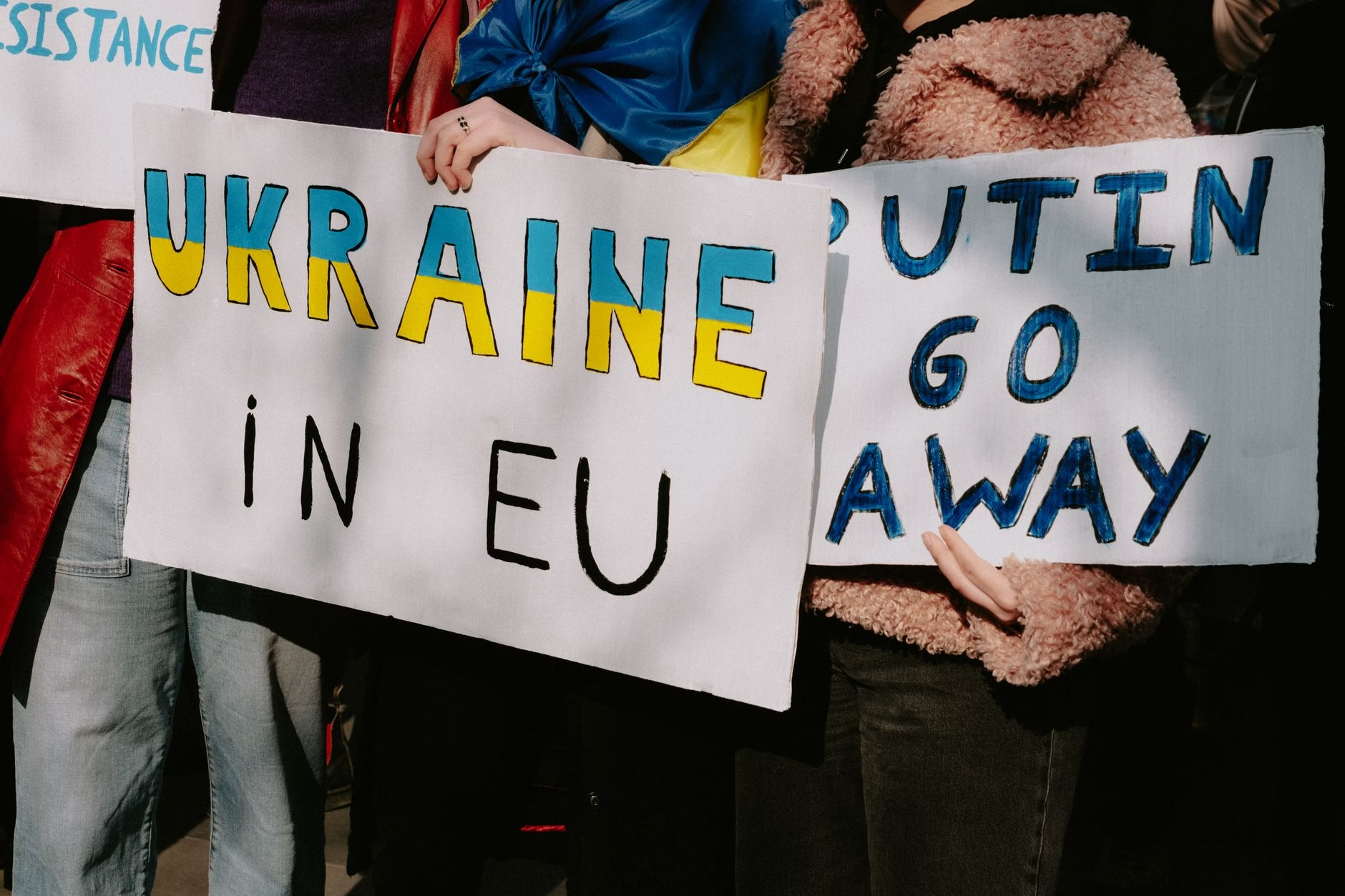
Stubb’s assessment of Ukraine’s victory rests on the premise that Russia failed to achieve its primary objective of subjugating the Ukrainian state. By successfully defending its sovereignty and maintaining its democratic institutions, Ukraine has effectively thwarted the Kremlin’s goal of regime change. The Finnish leader further noted that the war has accelerated Ukraine’s trajectory toward eventual European Union and NATO membership.
Interdependence of Alliance Security
Addressing the future of transatlantic security, President Stubb highlighted the mutual necessity between the North Atlantic Treaty Organization and Ukraine. While Ukraine seeks the security guarantees provided by NATO membership, Stubb argued that the alliance stands to gain significantly from the partnership. He pointed to the Ukrainian military’s experience and operational capabilities as a vital asset for the collective defense of Europe.
Military analysts support this perspective, noting that the Ukrainian armed forces have become one of the most battle-tested militaries in the world. According to data from the Kiel Institute for the World Economy, Western military aid to Ukraine has exceeded $200 billion since the invasion began. This massive influx of support has allowed Kyiv to maintain parity with a much larger adversary, effectively degrading Russian military capacity over the long term.
Economic and Military Implications
The implications of this stance are profound for Western policymakers who are currently navigating internal debates regarding the sustainability of long-term aid. If the prevailing view among key European leaders is that Ukraine has already secured a strategic victory, it may shift the focus of diplomatic efforts from emergency survival to long-term reconstruction and integration.
However, the transition from a defensive war to a stabilized, post-conflict state remains fraught with challenges. Russia continues to maintain significant artillery advantages and has pivoted its economy toward a war footing. This creates a protracted stalemate that tests the logistical endurance of the European industrial base and the political will of Western capitals.
Future Trajectories and Strategic Watchpoints
Observers are closely monitoring upcoming diplomatic summits to determine if the rhetoric of “strategic victory” translates into concrete security guarantees outside of formal NATO membership. The primary focus for the coming months will be the sustainability of ammunition production within the EU and the potential for a formal integration roadmap for Kyiv. As the conflict enters its next phase, the stability of the European security framework will depend largely on whether the current momentum of Ukrainian integration can be maintained despite shifting political landscapes in member states.















Leave a Reply