


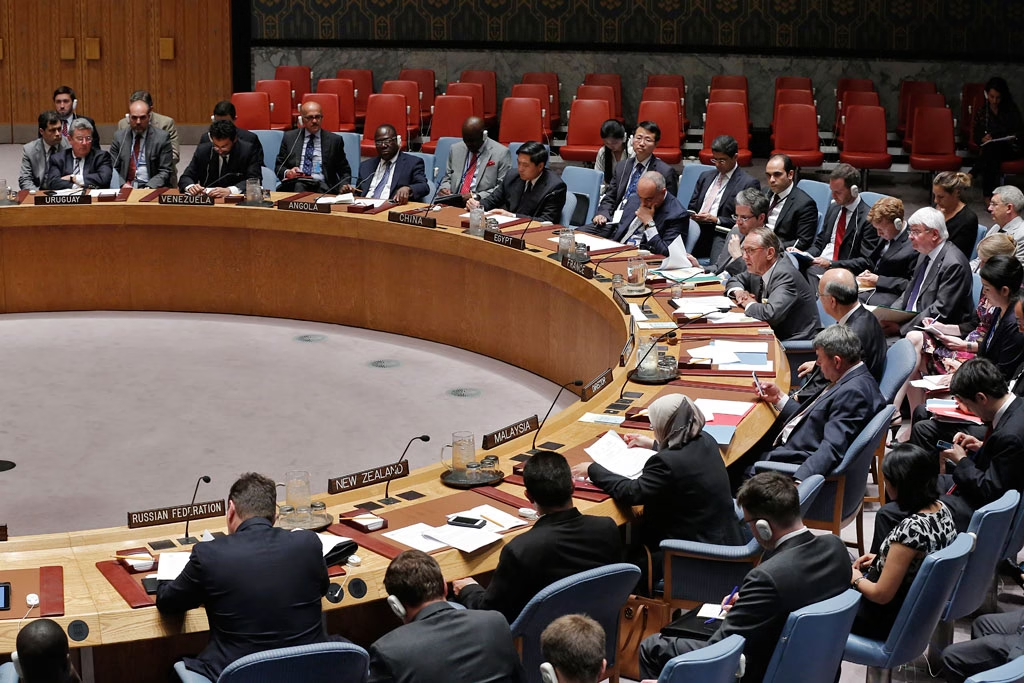
United Nations Presses for Policy Shift
The United Nations Security Council unanimously adopted a formal resolution this week in New York, demanding that Afghanistan’s Taliban leadership immediately rescind restrictive policies that have effectively barred women from public life, education, and employment. The international body issued this urgent call to action following reports of escalating systemic discrimination that has left millions of Afghan women and girls isolated within their homes.
The Erosion of Rights Since 2021
Since returning to power in August 2021, the Taliban has systematically dismantled the legal and social protections previously afforded to women. Despite initial promises to uphold a more moderate form of governance, the de facto authorities have implemented a series of draconian edicts. These include the closure of secondary schools for girls, the prohibition of women from university education, and the enforcement of strict dress codes and travel restrictions.
Global Consensus on Humanitarian Impact
The resolution represents a rare moment of unity among the 15-member Security Council, including permanent members who often find themselves at odds on global policy. Diplomats emphasized that the exclusion of women from the workforce is not merely a human rights issue but a severe economic impediment. According to data from the United Nations Development Programme (UNDP), the restriction of women’s participation in the economy could cost the Afghan economy up to $1 billion annually, further deepening a humanitarian crisis where over 28 million people currently require assistance.
Expert Perspectives on Diplomatic Pressure
International human rights advocates argue that while the UN resolution is a significant symbolic gesture, its practical efficacy remains uncertain. “The Security Council has established a clear international standard, but the Taliban has shown a consistent disregard for external pressure,” noted Sarah Williams, a senior researcher at the International Crisis Group. Experts suggest that the resolution serves to bolster the position of local activists who continue to protest at great personal risk, providing them with a formal framework to demand their rights.
Economic and Humanitarian Consequences
The Taliban’s refusal to reverse these decrees has resulted in the suspension of various international aid programs, as many donor nations refuse to fund regimes that violate fundamental human rights. This creates a vicious cycle: as the economy contracts, the vulnerability of the population increases, particularly for female-headed households who are now unable to earn an income. Humanitarian agencies on the ground report that the lack of female staff in aid organizations is significantly hampering their ability to deliver life-saving services to the women who need them most.
Future Outlook and Monitoring
The international community will now shift its focus toward monitoring the Taliban’s adherence to the resolution’s demands. Observers are watching for any signs of internal dissent within the Taliban’s leadership, as reports suggest there are varying factions regarding the severity of gender-based policies. Future diplomatic engagements will likely hinge on whether the authorities in Kabul demonstrate any willingness to negotiate on these fundamental human rights issues, or if the isolation of the regime will further intensify in the coming months.

















Leave a Reply