


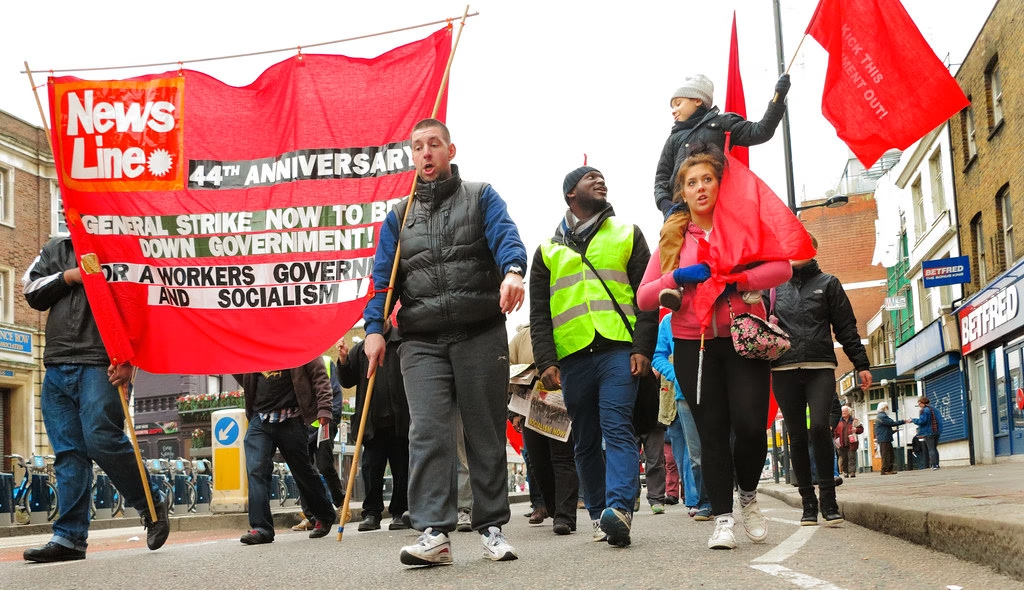
Civil Unrest in Jerusalem
Israeli police officers deployed in central Jerusalem on Tuesday afternoon, utilizing water cannons and physical barriers to disperse a large-scale protest organized by Haredi demonstrators. The confrontation, which halted traffic on major thoroughfares, stemmed from ongoing opposition to mandatory military conscription policies currently being debated by the Israeli government.
The Context of Conscription
For decades, Haredi Jews—Israel’s ultra-Orthodox community—have largely received exemptions from compulsory military service to focus on full-time religious study. This arrangement, rooted in the early years of the state, has become an increasingly contentious political issue.
The Supreme Court of Israel recently ruled that the state must end the blanket exemptions, citing the principle of equal burden sharing among all citizens. This judicial intervention has placed immense pressure on the governing coalition, which relies on the support of ultra-Orthodox political parties to maintain its majority.
Escalating Confrontations
As the deadline for new legislative frameworks approaches, protests have grown more frequent and intense throughout urban centers. Demonstrators argue that military service threatens their distinct religious lifestyle and the sanctity of Torah study.
Police officials stated that the intervention was necessary to restore public order and ensure the flow of emergency services. Video footage from the scene showed officers maneuvering to clear intersections, while protesters chanted slogans decrying the state’s interference in their religious practices.
Expert Perspectives
Political analysts suggest that the conflict represents a fundamental clash between secular and religious visions of the state. Dr. Ariella Katz, a sociologist specializing in Israeli demographics, notes that the issue is no longer just about military manpower.
“This is a battle over the soul of the Israeli social contract,” Katz explains. “The tension reflects deep-seated anxieties regarding the integration of the ultra-Orthodox community into a modern, democratic state structure.”
Economic data from the Israel Democracy Institute indicates that the lack of workforce participation among Haredi men, partly linked to their exclusion from the military and higher education pipelines, poses long-term risks to the national economy. However, community leaders maintain that their contribution through prayer and study is essential to the nation’s survival.
Implications for the Future
The immediate fallout from these protests suggests a period of prolonged political instability. With the government facing a narrow window to draft a compromise that satisfies both the courts and its coalition partners, observers expect further civil disobedience.
Watch for upcoming legislative sessions in the Knesset, where proposed amendments to the conscription law will likely trigger renewed waves of protest. The ability of the police to maintain public order without further inflaming communal tensions remains a critical test for domestic security in the coming months.
















Leave a Reply