


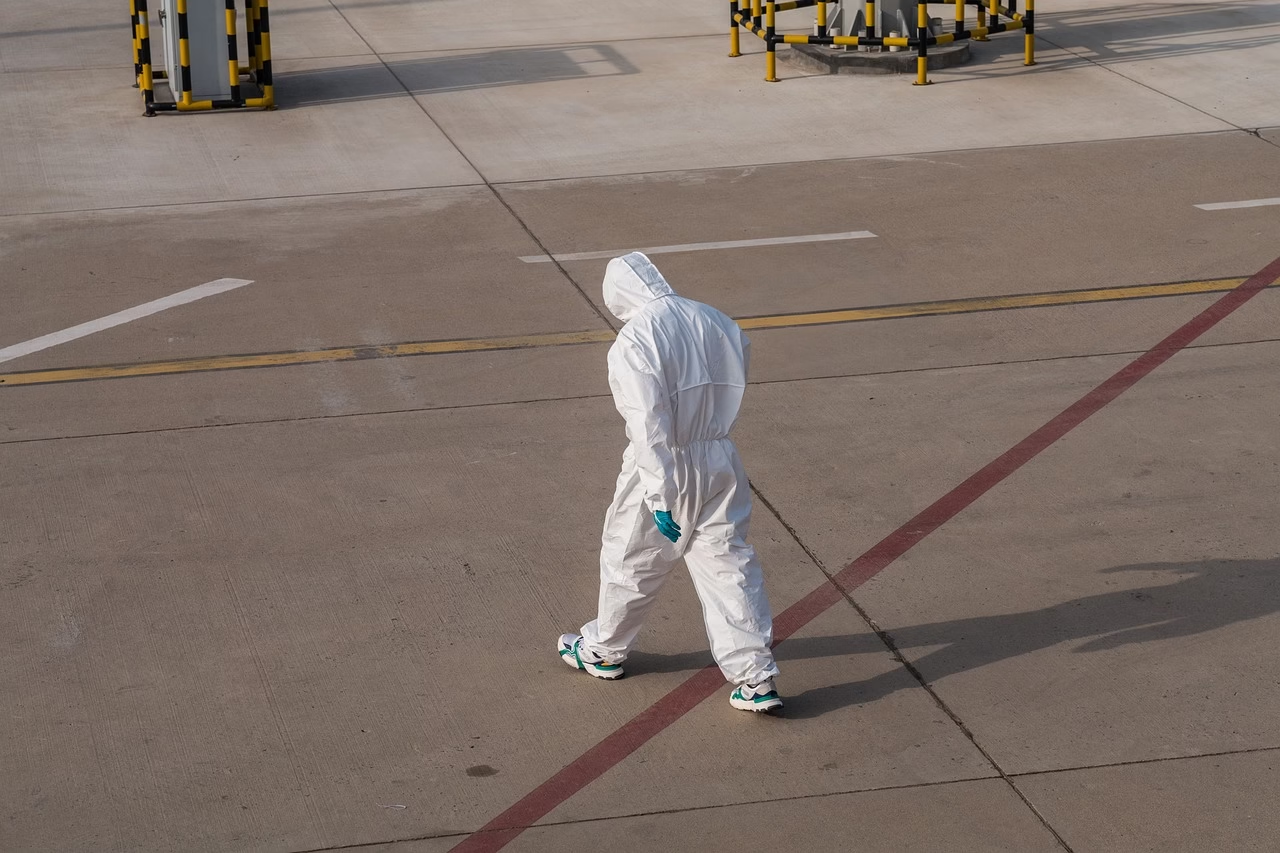
Public health authorities across Central and West Africa are currently intensifying containment efforts as a rapidly evolving Ebola virus outbreak continues to spread through densely populated urban centers throughout 2026. According to the latest situational reports from the World Health Organization (WHO), the virus has reached a critical threshold, with confirmed cases rising significantly over the last quarter, forcing governments to implement emergency border screenings and localized quarantine protocols to curb transmission.
Understanding the Current Pathogen Strain
Ebola virus disease (EVD) remains one of the world’s most virulent hemorrhagic fevers, characterized by high mortality rates and rapid human-to-human transmission through direct contact with infected bodily fluids. This 2026 outbreak is being closely monitored by genomic sequencing teams to determine if mutations have altered the virus’s incubation period or symptomatic presentation.
Historical data underscores the severity of such events, as seen during the 2014-2016 West African epidemic which claimed over 11,000 lives. Health officials note that while modern medical infrastructure and vaccine availability have improved, the current strain presents unique logistical challenges due to the geographical mobility of the affected populations.
Mapping the Spread and Response
The epicenter of the current crisis spans several interconnected regions, where healthcare systems are struggling to balance routine medical services with the urgent demands of isolation wards. International aid organizations have deployed mobile laboratories and specialized medical teams to provide rapid testing and supportive care, which remains the primary treatment protocol.
Data points from regional health ministries suggest that the infection rate is currently highest in areas with limited access to clean water and sanitation. Epidemiologists emphasize that early detection is the single most effective tool in preventing the virus from becoming endemic in metropolitan areas.
Expert Insights on Containment
Dr. Elena Vance, a lead infectious disease researcher, notes that the success of the current response relies heavily on community engagement. “The challenge is not just clinical; it is sociological,” Vance stated, emphasizing that trust-building with local communities is essential for successful contact tracing and vaccination campaigns.
Recent statistics indicate that while the case fatality rate remains high, the introduction of experimental therapeutic treatments is showing promise in clinical settings. However, the efficacy of these treatments is often hindered by delayed hospital presentations and the ongoing struggle to reach remote, conflict-affected zones.
Implications for Global Health Security
For the healthcare industry, the 2026 outbreak acts as a stress test for global supply chains and diagnostic manufacturing capacity. As the virus continues to circulate, pharmaceutical companies are under pressure to accelerate the production of vaccine doses and personal protective equipment (PPE) for frontline workers.
Looking ahead, global health agencies are shifting their focus toward long-term surveillance and the development of universal antiviral therapies that could neutralize multiple strains of the virus. Observers should continue to monitor the WHO’s weekly epidemiological updates, as the next three months are considered critical in determining whether the outbreak can be suppressed or if it will require a more comprehensive, multi-year international intervention strategy.



















Leave a Reply