


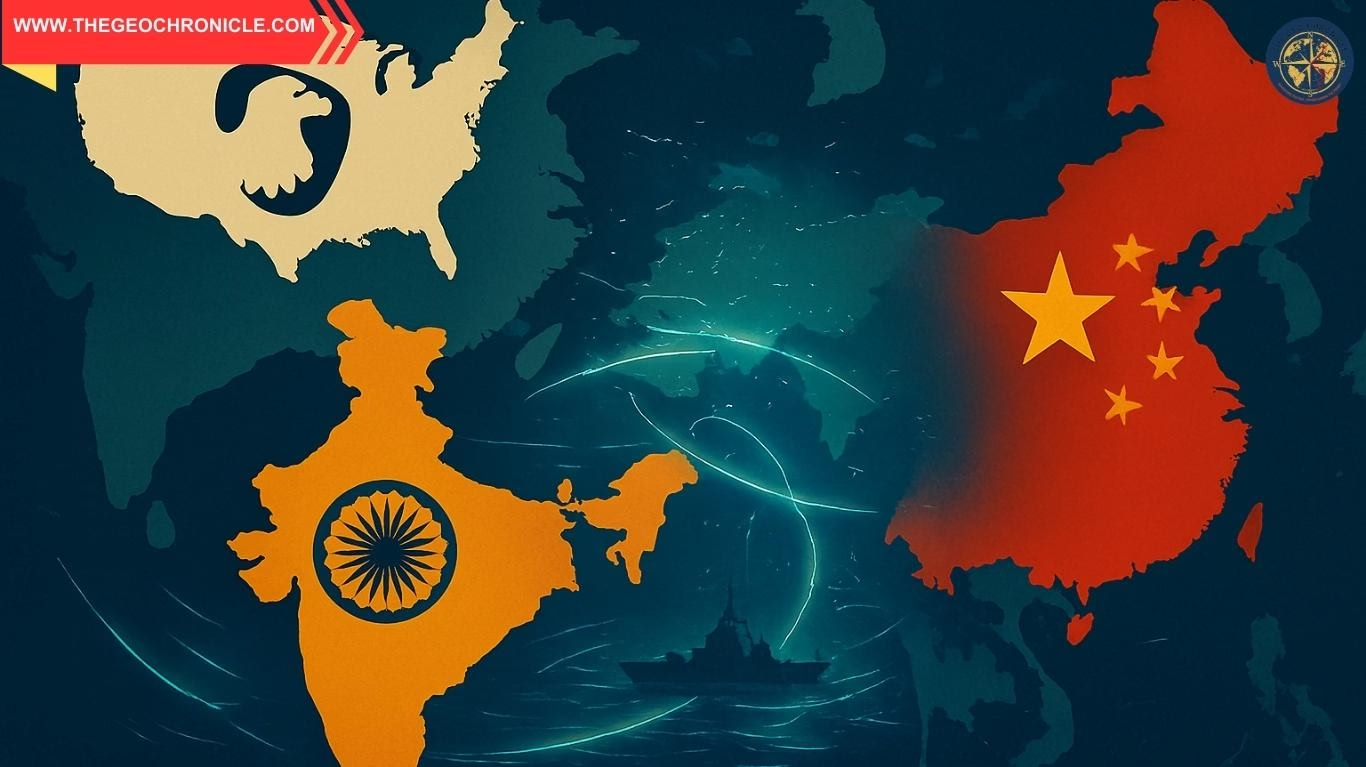
The Indo-Pacific has emerged as the most consequential geopolitical theater of the 21st century. Stretching from the eastern shores of Africa to the western coast of the Americas, this vast maritime expanse is home to half of the world’s population, two-thirds of global GDP, and some of the busiest sea lanes. The strategic interplay between India, China, and the United States is redefining the balance of power in this region, with implications for global security, trade, and diplomacy.
Recent developments—including China’s dual-track strategy of easing tensions with India while deepening ties with Pakistan, the U.S. recalibration of its Indo-Pacific doctrine, and India’s strengthening defense partnership with Washington—underscore the dynamic shifts underway.
Historical Context
- China’s Rise: Since the early 2000s, Beijing has expanded its economic and military footprint, leveraging initiatives like the Belt and Road (BRI) and aggressive naval modernization.
- India’s Emergence: India has transitioned from a continental power to a maritime stakeholder, investing in naval capabilities and regional partnerships.
- U.S. Strategy: The U.S. pivot to Asia, initiated under Obama, has evolved into a full-fledged Indo-Pacific strategy under Trump, emphasizing deterrence and alliances.
Current Strategic Developments
- China’s Dual-Track Approach: The Pentagon’s 2025 report warns India of Beijing’s simultaneous easing of tensions along the Line of Actual Control (LAC) while arming Pakistan.
- U.S.-India Defense Pact: A new 10-year framework agreement strengthens military cooperation, including arms sales and joint exercises.
- U.S. Doctrine Shift: Washington now emphasizes material deterrence over political messaging, focusing on preparedness against escalation in Taiwan.
Comparative Strategic Postures
| Country | Strategic Focus | Key Moves | Regional Impact |
|---|---|---|---|
| China | Expansion & Dual-Track Diplomacy | BRI, Pakistan ties, naval modernization | Heightened pressure on India, challenge to U.S. |
| India | Balancing & Partnerships | Defense pact with U.S., Quad participation | Strengthened deterrence, regional credibility |
| U.S. | Deterrence & Alliances | Indo-Pacific recalibration, arms sales to India | Reinforced presence, counterbalance to China |
India’s Role
India is positioning itself as a net security provider in the Indo-Pacific. Its participation in the Quad (with U.S., Japan, Australia), naval modernization, and strategic bases in the Andaman & Nicobar Islands enhance its maritime leverage. The U.S.-India defense pact further cements India’s role as a counterweight to China.
China’s Strategy
China’s approach is multifaceted:
- Economic leverage: Infrastructure investments across South Asia and Africa.
- Military assertiveness: Expansion of naval bases and modernization of the PLA Navy.
- Diplomatic maneuvering: Deepening ties with Pakistan to keep India strategically boxed.
U.S. Strategy
The U.S. Indo-Pacific recalibration emphasizes:
- Deterrence over persuasion: Material readiness against escalation in Taiwan.
- Partnerships: Strengthening ties with India, Japan, Australia, and ASEAN.
- Freedom of Navigation: Ensuring open sea lanes critical for global trade.
Challenges Ahead
- India-China Border Tensions: Despite temporary calm, the LAC remains volatile.
- U.S.-China Rivalry: Taiwan and South China Sea flashpoints risk escalation.
- Regional Fragmentation: Smaller states balancing economic dependence on China with security reliance on the U.S. and India.
Conclusion
The Indo-Pacific is witnessing a triangular contest where India, China, and the U.S. are redefining strategic influence. India’s growing partnership with Washington, China’s dual-track diplomacy, and America’s recalibrated doctrine are shaping a new balance of power. The outcome will determine not only regional stability but also the trajectory of global geopolitics in the coming decades.
Disclaimer
This article is intended for informational and analytical purposes only. It does not represent official policy positions of any government or institution. The views expressed are based on publicly available sources and should not be construed as definitive strategic advice.

























Leave a Reply