


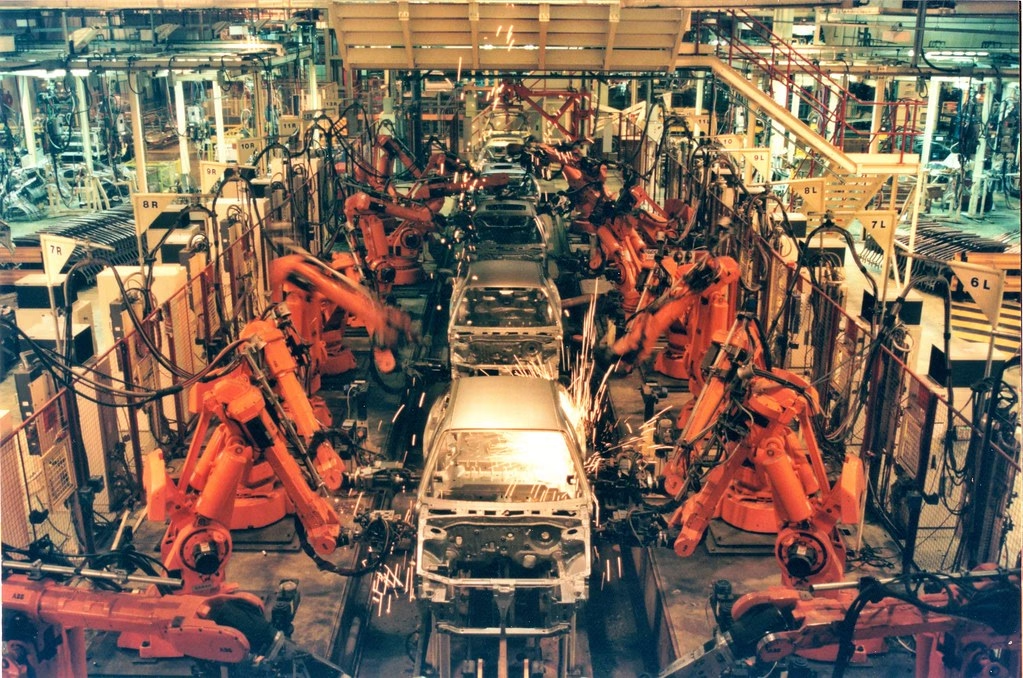
More than two years after the initial invasion of Ukraine, the global automotive industry continues to grapple with severe supply chain instability linked to the conflict, as manufacturers struggle to source critical raw materials and components previously produced in the region. European automakers, in particular, remain the most affected, facing persistent shortages of wire harnesses, neon gas, and palladium that have forced production slowdowns and increased operational costs across the continent.
The Anatomy of a Disrupted Supply Chain
Before February 2022, Ukraine served as a vital hub for the production of automotive wire harnesses—complex bundles of cables that act as the nervous system of a vehicle. Because these components are labor-intensive to manufacture and difficult to relocate, the sudden halt of production in Ukrainian facilities created an immediate bottleneck for major brands like Volkswagen, BMW, and Mercedes-Benz.
Beyond wire harnesses, the conflict exacerbated existing vulnerabilities in the semiconductor supply chain. Ukraine is a primary global supplier of high-purity neon gas, a critical element used in the lithography process for chip manufacturing. Although manufacturers have since diversified their sources, the volatility in pricing and availability remains a significant drag on production efficiency.
Strategic Shifts and Regional Realignment
The industry has responded by moving away from the “just-in-time” manufacturing model that defined the previous decade. Automakers are now pivoting toward “just-in-case” strategies, which prioritize larger stockpiles of essential components and a broader geographic distribution of suppliers to mitigate regional risks.
Data from the European Automobile Manufacturers’ Association (ACEA) highlights that while vehicle production has recovered from the initial shock of 2022, it remains below pre-pandemic levels. The transition to electric vehicles (EVs) has further complicated this landscape, as the industry now faces a dual challenge: maintaining traditional supply chains while simultaneously building new, resilient networks for battery minerals and power electronics.
Expert Perspectives on Industrial Resilience
Industry analysts point out that the war acted as a catalyst for a broader restructuring of global trade. “The era of hyper-globalization for the automotive sector has effectively ended,” says Marcus Thorne, a senior supply chain strategist. “Manufacturers are no longer choosing suppliers based solely on cost-efficiency; they are now prioritizing geopolitical stability and proximity, leading to a massive wave of near-shoring investments in Eastern Europe and North Africa.”
Financial reports from major automotive groups confirm this shift, with capital expenditure budgets increasingly allocated to domestic manufacturing hubs. This move is designed to insulate firms from future geopolitical volatility, though it comes at the expense of higher unit costs for consumers.
The Long-Term Outlook
The automotive sector faces a period of sustained adjustment as it balances the high cost of near-shoring with the necessity of maintaining profitability. As manufacturers continue to localize production, the focus will shift toward automation to offset the higher labor costs associated with European and North American manufacturing sites.
Looking ahead, industry observers are monitoring the stability of energy prices and the potential for further trade barriers. The next phase for the industry involves a race to secure stable, conflict-free mineral supplies for EV batteries, a move that will likely define the competitive hierarchy of global automakers for the next decade.




















Leave a Reply