


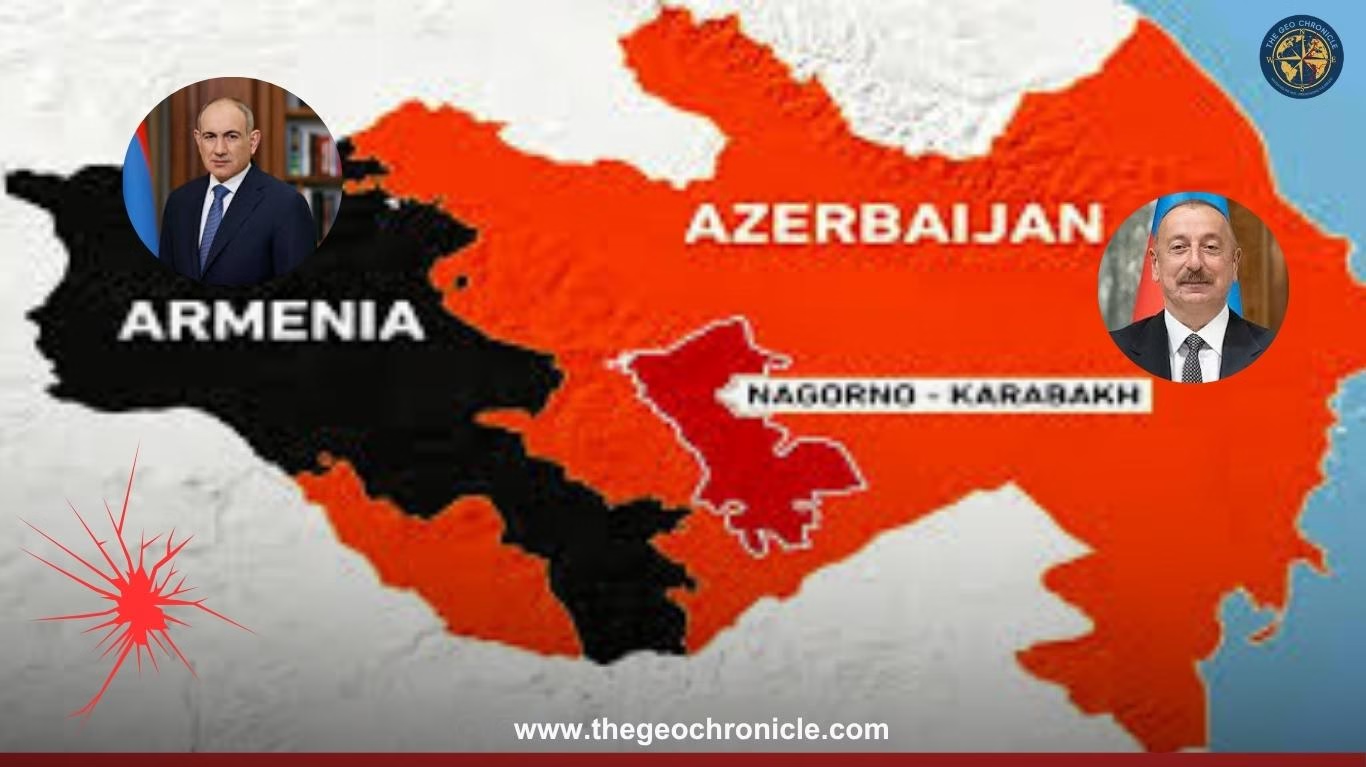
🗺️ Historical Background: The Roots of the Nagorno-Karabakh Dispute
The Armenia–Azerbaijan conflict, centered around the disputed Nagorno-Karabakh region, is one of the most enduring and complex territorial disputes in the post-Soviet space. The roots of the conflict trace back to the early 20th century, but tensions escalated dramatically in the late 1980s.
- Nagorno-Karabakh Autonomous Oblast (NKAO) was established within Soviet Azerbaijan in 1923, despite its majority ethnic Armenian population.
- In 1988, as the Soviet Union weakened, the NKAO parliament voted to unify with Armenia. This sparked ethnic violence and mass displacements.
- By 1991, both Armenia and Azerbaijan had declared independence, and full-scale war erupted over Nagorno-Karabakh.
The First Nagorno-Karabakh War (1992–1994) resulted in:
- Over 30,000 deaths.
- More than 1 million displaced persons.
- Armenian forces gaining control of Nagorno-Karabakh and seven surrounding Azerbaijani districts.
A Russian-brokered ceasefire in 1994 froze the conflict but did not resolve it. Nagorno-Karabakh declared independence, but it remained internationally recognized as part of Azerbaijan.
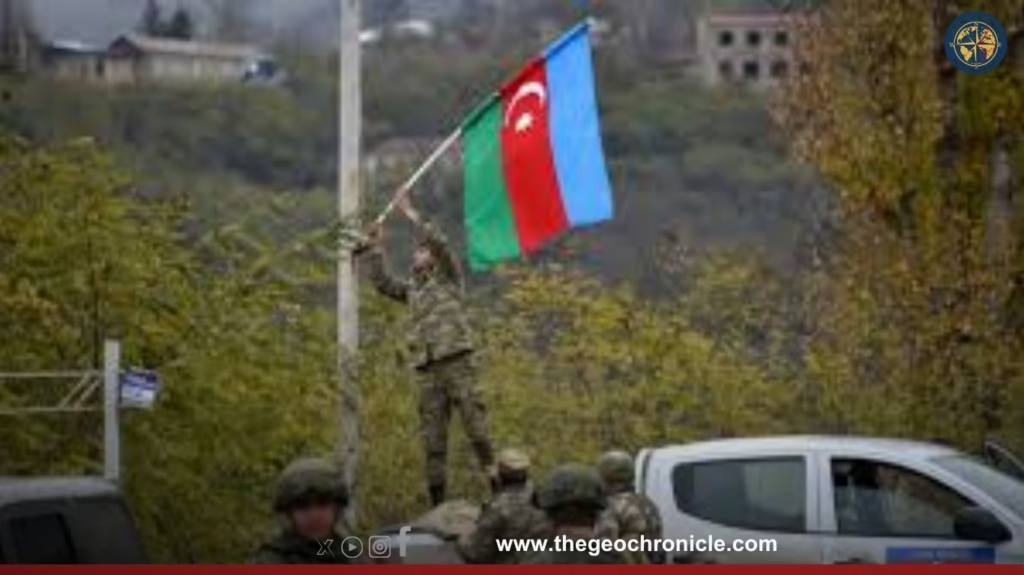
🔥 Renewed Hostilities: The 2020 War and Shifting Control
After decades of sporadic clashes, tensions reignited in September 2020, leading to the Second Nagorno-Karabakh War.
- Azerbaijan launched a large-scale military offensive to reclaim territories lost in the 1990s.
- The war lasted 44 days, ending with a Russia-brokered ceasefire on November 10, 2020.
- Azerbaijan regained control of:
- Shusha (strategic city near Stepanakert).
- Several districts including Jabrayil, Fuzuli, Zangilan, and Qubadli.
The ceasefire agreement included:
- Deployment of Russian peacekeepers in the Lachin corridor.
- Armenia’s withdrawal from occupied territories.
- Establishment of a transport corridor between Azerbaijan and its exclave, Nakhchivan.
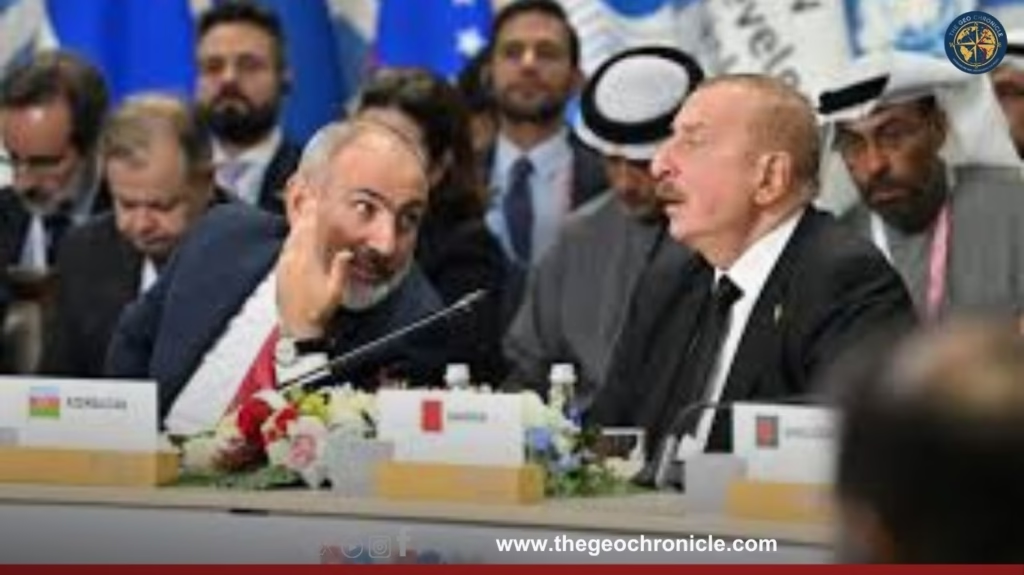
🕊️ The 2023 Exodus and Collapse of the Republic of Artsakh
In September 2023, Azerbaijan launched a swift military operation to assert full control over Nagorno-Karabakh. Within 24 hours:
- Ethnic Armenian forces surrendered.
- The self-declared Republic of Artsakh announced its dissolution by January 1, 2024.
- Over 100,000 ethnic Armenians fled to Armenia, triggering a humanitarian crisis.
Russia began withdrawing its peacekeepers in May 2024, signaling a shift in regional power dynamics.
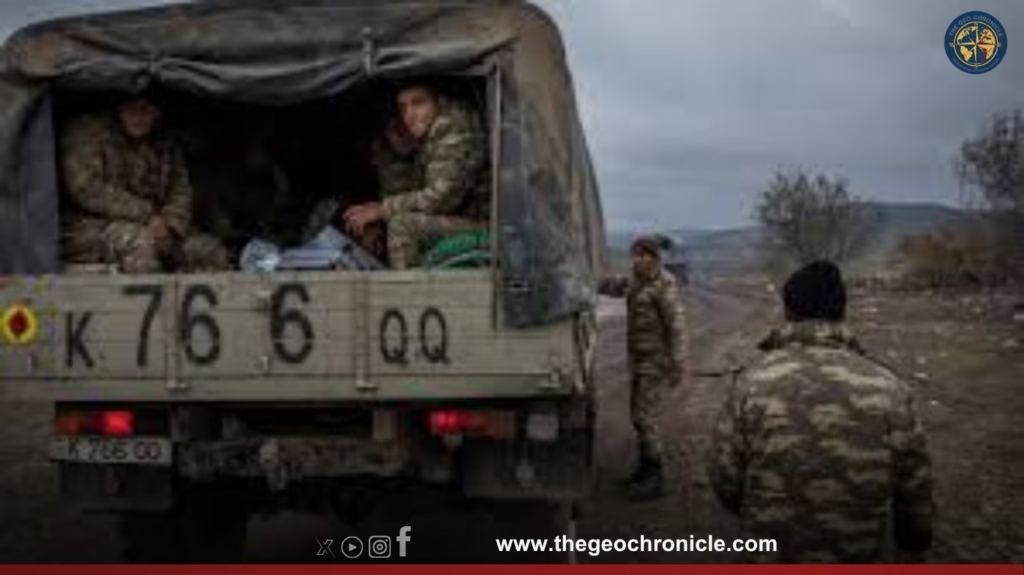
🤝 The 2025 Peace Agreement: A Diplomatic Breakthrough
On August 8, 2025, a landmark peace agreement was initialed at the White House between:
- Armenian Prime Minister Nikol Pashinyan
- Azerbaijani President Ilham Aliyev
- Mediated by US President Donald Trump
Key provisions of the agreement:
- Recognition of each other’s territorial integrity.
- Construction of the Trump Route for International Peace and Prosperity (TRIPP) — a corridor linking mainland Azerbaijan to Nakhchivan via Armenian territory.
- US development rights over the corridor for 99 years.
- Establishment of diplomatic relations and economic cooperation.
Despite the agreement, Iran and Russia condemned the US role, viewing it as geopolitical encroachment.
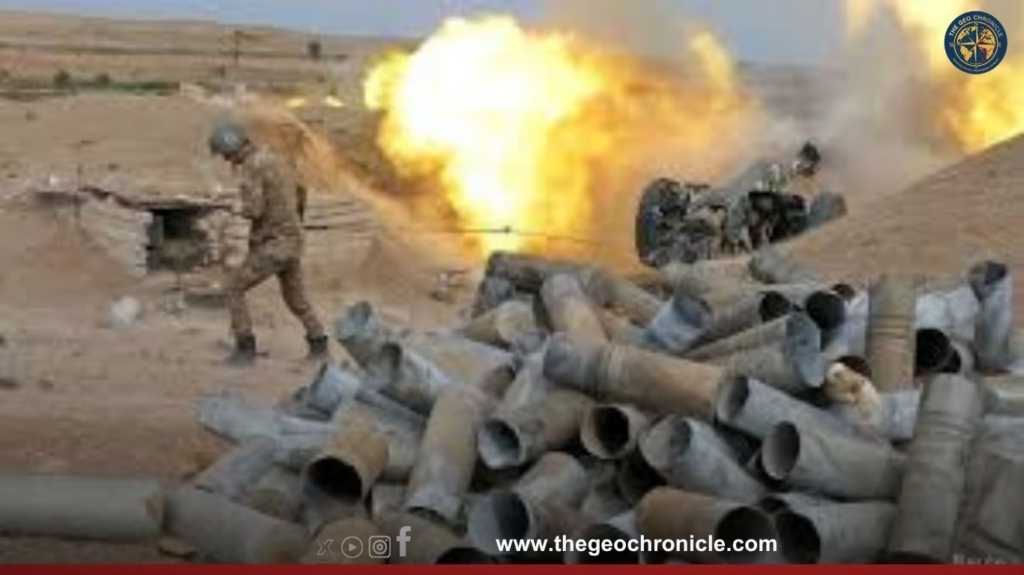
🛡️ Military Comparison: Armenia vs Azerbaijan (2025)
🇦🇲 Armenia Armed Forces
| Category | Details |
|---|---|
| Active Personnel | ~45,000 |
| Reserve Forces | ~200,000 |
| Defense Budget | ~$750 million |
| Main Battle Tanks | ~120 (T-72 variants) |
| Artillery Units | ~250 |
| Air Defense Systems | S-300, Osa, Strela |
| Combat Aircraft | ~15 (Su-25, MiG-29) |
| Helicopters | ~30 (Mi-8, Mi-24) |
| Drone Capability | Limited indigenous drones, some Russian imports |
🇦🇿 Azerbaijan Armed Forces
| Category | Details |
|---|---|
| Active Personnel | ~66,000 |
| Reserve Forces | ~300,000 |
| Defense Budget | ~$2.6 billion |
| Main Battle Tanks | ~570 (T-72, T-90) |
| Artillery Units | ~700 |
| Air Defense Systems | S-300PMU2, Barak-8, Tor-M2 |
| Combat Aircraft | ~30 (MiG-29, Su-25) |
| Helicopters | ~50 (Mi-17, Mi-24) |
| Drone Capability | Advanced fleet including Turkish Bayraktar TB2, Israeli Harop loitering munitions |
Azerbaijan’s edge lies in:
- Superior drone warfare capabilities.
- Turkish and Israeli military support.
- Higher defense spending and modernized equipment.
Armenia’s challenges include:
- Aging Soviet-era hardware.
- Limited air force and drone assets.
- Dependence on Russia, which has scaled back its regional presence.
Sources: Global Conflict Tracker, SIPRI, Defense Ministry reports.
🔮 Future Outlook: Peace or Peril?
Optimistic Scenario
- The TRIPP corridor boosts regional trade and connectivity.
- Armenia and Azerbaijan normalize relations, opening embassies and trade routes.
- International investment flows into the South Caucasus.
- Ethnic reconciliation efforts begin, supported by NGOs and diaspora communities.
Pessimistic Scenario
- Internal opposition in Armenia challenges the peace deal.
- Border skirmishes resume over demarcation disputes.
- Iran and Russia escalate proxy tensions to counter US influence.
- Nagorno-Karabakh refugees face integration challenges, fueling unrest.
Strategic Forecast
- Azerbaijan will likely continue military modernization, focusing on air defense and cyber warfare.
- Armenia may pivot toward Western alliances, seeking EU and US support to balance Turkish-Azeri pressure.
- The US presence via TRIPP could reshape energy transit routes, bypassing Russia and Iran.
📜 Conclusion
The Armenia–Azerbaijan conflict has transitioned from a frozen war to a dynamic geopolitical contest. With the 2025 peace agreement, both nations stand at a crossroads — between reconciliation and renewed rivalry. The coming years will test the durability of diplomacy, the resilience of displaced communities, and the strategic ambitions of regional powers.
⚠️ Disclaimer
This article is based on publicly available sources and current geopolitical developments as of October 2025. Military data is approximate and subject to change. The views expressed are for informational purposes and do not constitute official policy or endorsement.


















Leave a Reply