


Introduction
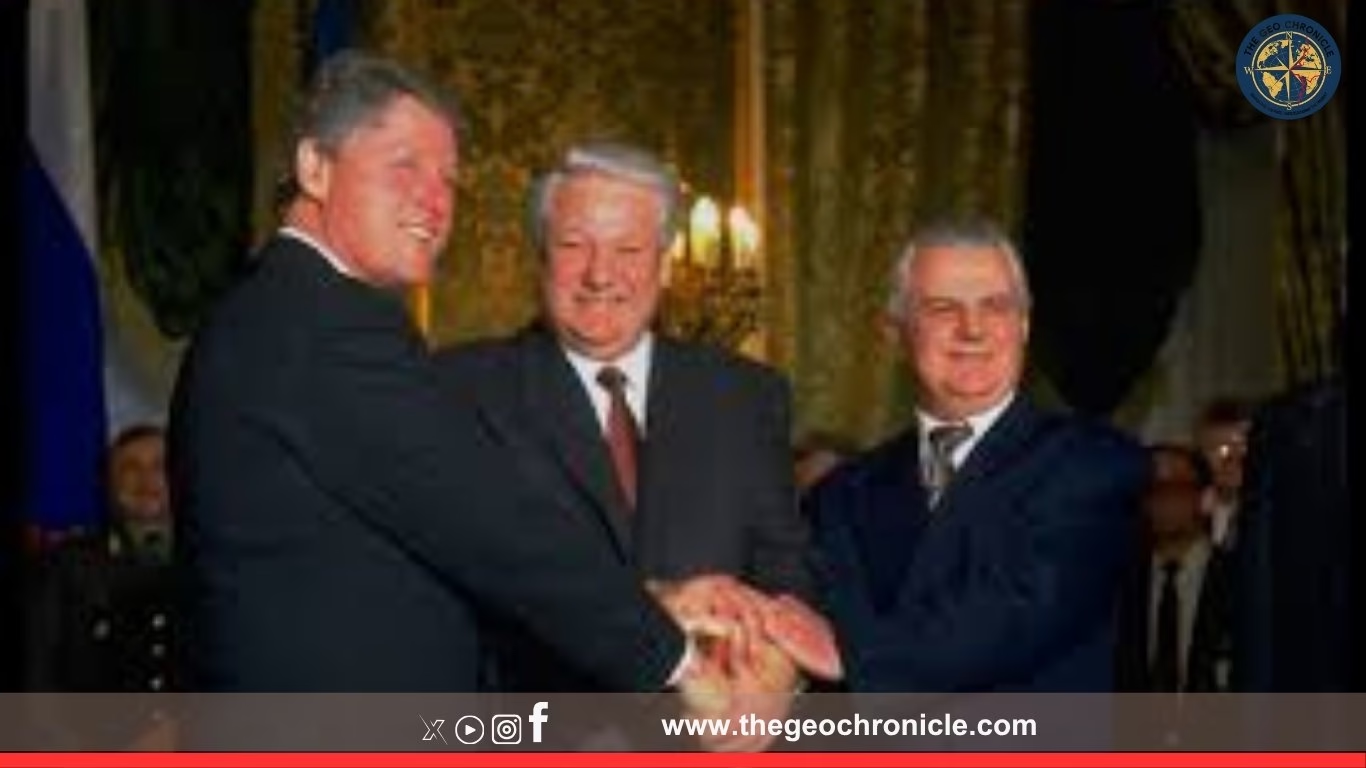
In the annals of post-Cold War diplomacy, few agreements have had as profound and tragic a legacy as the 1994 Budapest Memorandum. This political accord, signed by Ukraine, Russia, the United States, and the United Kingdom, marked a pivotal moment in global nuclear disarmament. Ukraine, inheriting the world’s third-largest nuclear arsenal after the collapse of the Soviet Union, agreed to surrender all its nuclear weapons to Russia in exchange for security assurances. What followed, however, was a stark violation of those promises—culminating in Russia’s annexation of Crimea in 2014 and full-scale invasion of Ukraine in 2022.
This article explores the background, motivations, and consequences of Ukraine’s nuclear disarmament, the geopolitical dynamics that shaped the Budapest Memorandum, and the unraveling of trust that led to one of the most devastating conflicts in modern Europe.
The Post-Soviet Nuclear Legacy
Ukraine’s Inheritance
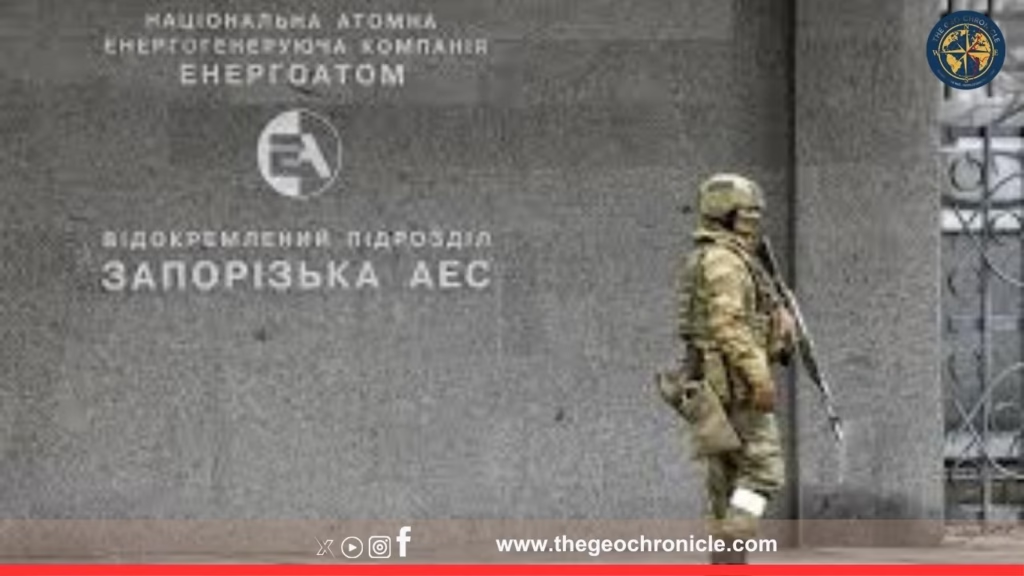
When the Soviet Union dissolved in 1991, Ukraine emerged as an independent state with a formidable nuclear arsenal. Approximately 1,900 strategic nuclear warheads were stationed on Ukrainian soil, along with delivery systems such as intercontinental ballistic missiles (ICBMs) and strategic bombers. Technically, these weapons remained under Russian control, but Ukraine had physical custody and the infrastructure to potentially assert operational control.
This made Ukraine the third-largest nuclear power in the world—behind only the United States and Russia. However, Ukraine lacked the command-and-control systems and the technical codes required to launch these weapons independently. Still, the mere presence of such an arsenal posed a significant strategic dilemma for global powers.
The Global Push for Non-Proliferation
The early 1990s were marked by a strong international push to prevent nuclear proliferation. The United States, in particular, was keen to ensure that newly independent states like Ukraine, Belarus, and Kazakhstan did not retain nuclear weapons. The Treaty on the Non-Proliferation of Nuclear Weapons (NPT) recognized only five nuclear-armed states: the U.S., Russia, China, France, and the U.K. Any other country retaining or developing nuclear weapons would be in violation of this global framework.
Ukraine, seeking international legitimacy and economic support, was under pressure to join the NPT as a non-nuclear state. However, Ukrainian leaders were wary of surrendering their nuclear deterrent without concrete security guarantees.
The Budapest Memorandum: A Deal Sealed in Trust
Negotiations and Signatories
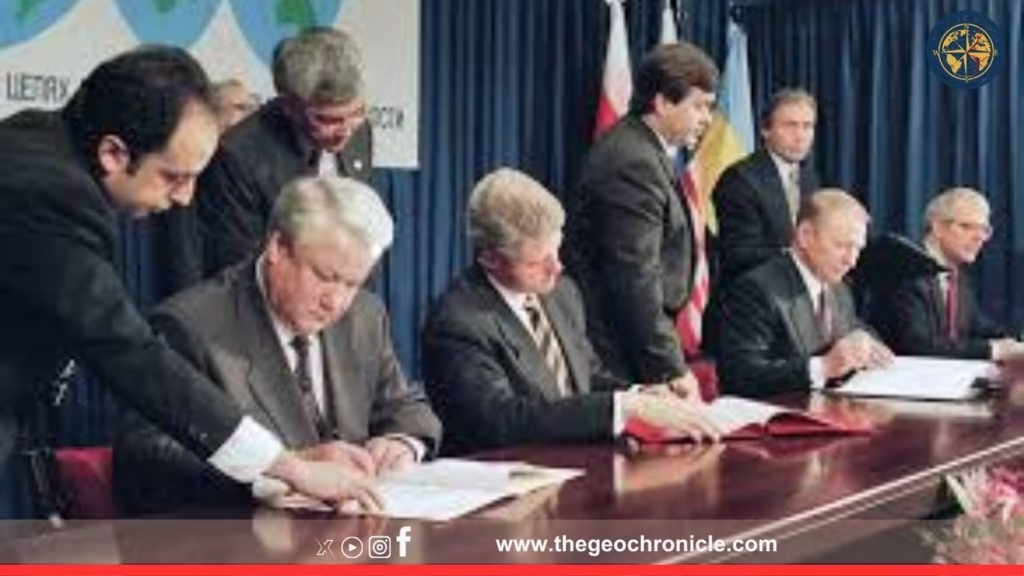
After years of complex negotiations, Ukraine agreed to relinquish its nuclear arsenal. On December 5, 1994, the Budapest Memorandum on Security Assurances was signed by Ukraine, Russia, the United States, and the United Kingdom. The memorandum was not a legally binding treaty but a political agreement that provided assurances to Ukraine in exchange for its denuclearization.
The key provisions included:
- Respect for Ukraine’s independence, sovereignty, and existing borders.
- Refraining from the threat or use of force against Ukraine.
- Avoiding economic coercion to influence Ukraine’s policies.
- Commitment to seek UN Security Council action if Ukraine became a victim of aggression.
France and China also extended similar assurances, though they did not sign the memorandum.
Ukraine’s Strategic Calculus
Ukraine’s decision to disarm was driven by several factors:
- Economic Incentives: Ukraine was in dire need of financial aid and integration into Western institutions. The U.S. offered assistance through programs like the Cooperative Threat Reduction (CTR), which helped dismantle nuclear infrastructure.
- Security Assurances: Although not legally binding, the Budapest Memorandum was seen as a strong political commitment by major powers to uphold Ukraine’s sovereignty.
- Desire for Peaceful Integration: Ukraine aspired to join the European community and NATO. Retaining nuclear weapons would have isolated it diplomatically.
- Technical Limitations: Ukraine lacked the full operational control over the nuclear arsenal and faced logistical challenges in maintaining it.
By 1996, Ukraine had transferred all nuclear warheads to Russia for dismantling and joined the NPT as a non-nuclear state.

Russia’s Strategic Shift and the Breach of Trust
The Annexation of Crimea (2014)
In February 2014, following the Euromaidan protests and the ousting of pro-Russian President Viktor Yanukovych, Russia annexed Crimea. This move was a blatant violation of the Budapest Memorandum. Russian troops occupied the peninsula, and a controversial referendum was held under military occupation, leading to Crimea’s incorporation into the Russian Federation.
Russia justified its actions by claiming it was protecting ethnic Russians and responding to a Western-backed coup in Kyiv. However, the international community widely condemned the annexation as illegal.
The Invasion of Ukraine (2022)
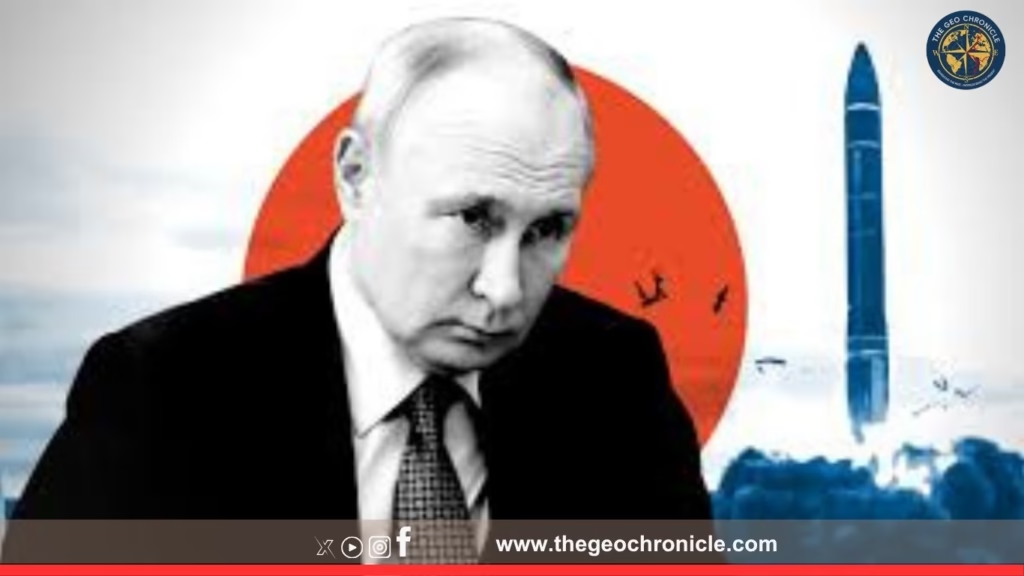
On February 24, 2022, Russia launched a full-scale invasion of Ukraine. This marked a catastrophic escalation of hostilities and a complete repudiation of the Budapest Memorandum. Russian President Vladimir Putin cited NATO expansion and alleged threats to Russian security as justification.
The invasion shattered the post-Cold War security architecture and raised existential questions about the value of diplomatic assurances. Ukraine, having surrendered its nuclear deterrent, found itself vulnerable to aggression from the very country that had pledged to protect its sovereignty.

Why Did Russia Break the Agreement?
Geopolitical Ambitions
Russia’s actions are rooted in a broader strategy to reassert influence over former Soviet territories. Ukraine’s pivot toward the West—through aspirations to join NATO and the European Union—was perceived by Moscow as a threat to its sphere of influence.
Strategic Calculations
Russia likely assessed that the political costs of violating the Budapest Memorandum were manageable. The memorandum lacked enforcement mechanisms, and Western powers were reluctant to engage in direct military confrontation with Russia.
Domestic Politics and Nationalism
Putin’s regime has increasingly relied on nationalist rhetoric and historical revisionism. The annexation of Crimea and the invasion of Ukraine were framed as efforts to restore Russian greatness and protect Russian-speaking populations.
Weakness of Security Assurances
The Budapest Memorandum’s ambiguity and lack of legal enforceability made it vulnerable. Unlike NATO’s Article 5, which mandates collective defense, the memorandum offered only political assurances.
Consequences and Global Implications
Erosion of Trust in Non-Proliferation
Russia’s breach of the Budapest Memorandum has undermined the credibility of security assurances. Countries like North Korea and Iran may cite Ukraine’s experience as justification for retaining or developing nuclear weapons.
Shift in Global Alliances
Ukraine has received substantial military and financial support from the West, but the lack of direct intervention has exposed the limitations of international guarantees. This has accelerated Ukraine’s integration with NATO and the EU.
Humanitarian Crisis
The war has resulted in tens of thousands of deaths, millions of refugees, and widespread destruction. It has also triggered global economic disruptions, including energy shortages and inflation.
Legal and Moral Reckoning
International bodies have condemned Russia’s actions, and war crimes investigations are underway. The breach of the Budapest Memorandum is seen as a violation of international law and a betrayal of diplomatic norms.

Conclusion: A Cautionary Tale
Ukraine’s decision to surrender its nuclear arsenal was hailed as a triumph of diplomacy and non-proliferation. The Budapest Memorandum was supposed to be a model for peaceful disarmament. Instead, it has become a cautionary tale of broken promises and geopolitical betrayal.
Russia’s invasion of Ukraine has not only devastated a sovereign nation but also shaken the foundations of international security. It underscores the need for enforceable treaties, robust deterrence, and a rethinking of how the global community responds to aggression.
As the war continues, Ukraine’s resilience and the world’s response will shape the future of diplomacy, deterrence, and the rules-based international order.
Disclaimer
This article is intended for informational and educational purposes only. The views expressed herein are based on historical records, expert analysis, and publicly available sources. It does not constitute legal, political, or strategic advice. Readers are encouraged to consult official documents and verified sources for deeper understanding. The author and publisher disclaim any liability for decisions made based on this content.

















Leave a Reply