


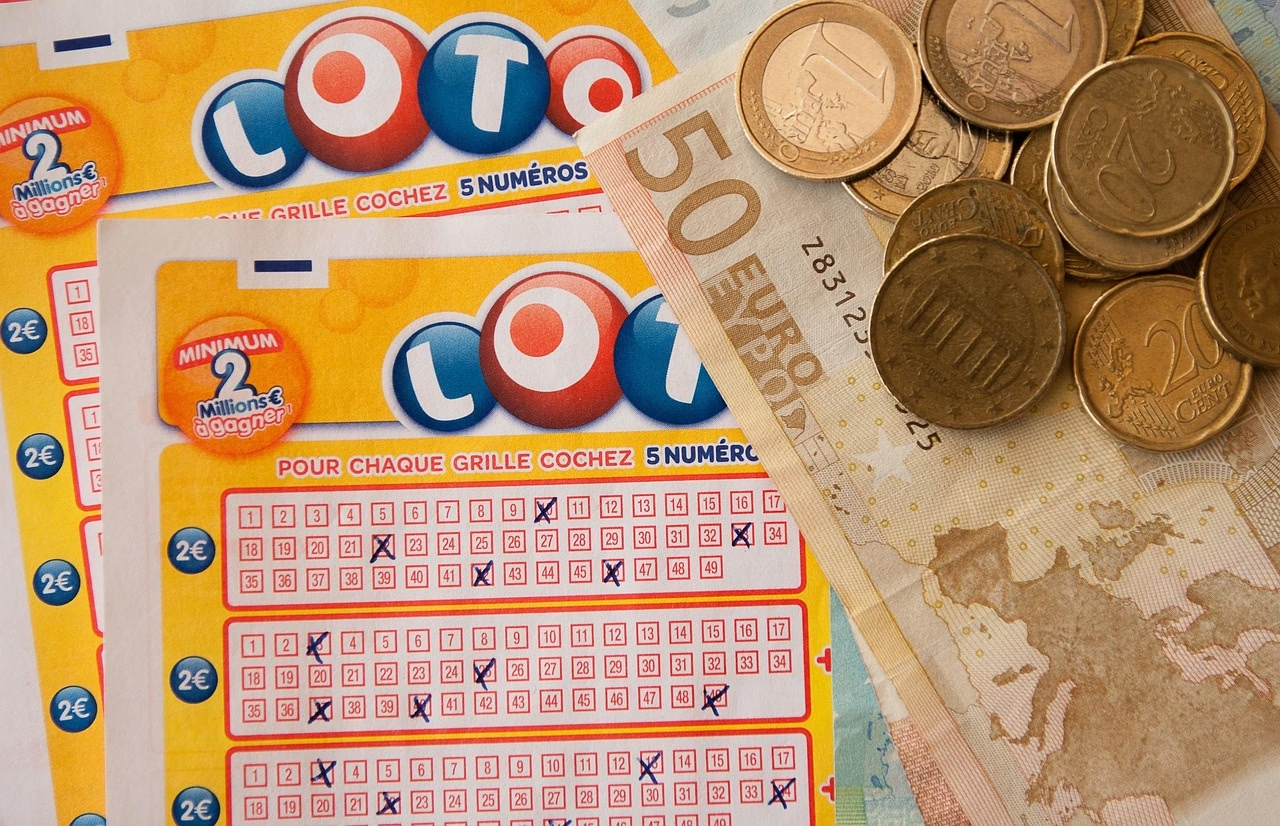
On Monday night, lottery officials drew the winning numbers—17, 32, 48, 60, and 64, with a red Powerball of 10—for a surging multi-million dollar jackpot at the Multi-State Lottery Association headquarters in Tallahassee, Florida, sparking nationwide anticipation as millions of players rushed to check their tickets.
The Mechanics of the Multi-State Giant
Powerball operates across 45 states, the District of Columbia, Puerto Rico, and the U.S. Virgin Islands. Players select five white balls and one red Powerball, chasing odds of 1 in 292.2 million to secure the grand prize. When no ticket matches all six numbers, the jackpot rolls over to the next drawing, fueling exponential ticket sales and public interest across the country.
The lottery has become a cultural phenomenon since its inception in 1992, gradually expanding its matrix to make jackpots harder to win but significantly larger. This strategic shift has successfully produced historic jackpots, including the record-shattering $2.04 billion prize won in California in November 2022. Monday’s drawing represents the latest chapter in this ongoing cycle of high-stakes entertainment.
Economic Frenzy and Retailer Windfalls
The surge in jackpot sizes creates a measurable economic ripple effect, particularly for small businesses. Gas stations, convenience stores, and dedicated lottery retailers report significant foot traffic increases during high-jackpot runs. Many store owners note that customers purchasing lottery tickets often buy additional items like snacks, beverages, and gasoline, boosting overall daily sales.
In many states, retailers also receive a direct financial incentive for selling winning tickets. Commissions can range from a few thousand dollars to up to $100,000 for selling a jackpot-winning ticket, providing a substantial windfall for local business owners. This structure ensures that the economic benefits of the lottery extend beyond the individual winners to the communities where the tickets are sold.
Statistical Realities and Expert Financial Advice
Financial experts urge caution and strategic planning for potential winners navigating the sudden influx of wealth. “The odds are astronomically low, but the psychological appeal of a life-changing win remains incredibly powerful,” says Dr. Jane Arnett, a behavioral economist specializing in consumer habits. Arnett notes that “lottery fever” often transcends socioeconomic boundaries, drawing in occasional players who normally abstain from gambling when the jackpot reaches headline-grabbing figures.
For those holding a winning ticket, wealth managers recommend immediate steps to protect their newfound fortune. Experts advise signing the back of the ticket immediately, securing it in a safe deposit box, and assembling a team of financial advisors, tax attorneys, and CPA specialists before claiming the prize. Winners must also choose between a 30-year annuity or a reduced one-time lump-sum cash payment, a decision with massive tax implications that requires careful deliberation.
State Revenue and Public Funding
While players dream of personal wealth, state governments view the lottery as a critical tool for public funding. A significant portion of every Powerball ticket sale goes directly toward state budgets, often earmarked for specific public services. Depending on the jurisdiction, these funds support K-12 education, higher education scholarships, environmental conservation efforts, and senior citizen programs.
According to the North American Association of State and Provincial Lotteries, billions of dollars are generated annually for these public causes. Critics, however, argue that lottery sales disproportionately affect lower-income communities, raising ongoing ethical debates about state-sponsored gambling. Despite these discussions, the revenue remains a vital component of many state budgets, reducing the need for alternative tax increases.
Looking Ahead to the Next Drawing
If no ticket matched all six numbers in Monday’s drawing, the jackpot will climb even higher for the upcoming Wednesday night drawing. This continuous rollover cycle keeps the public engaged and ensures that state education funds continue to see a steady influx of revenue. Players are advised to keep their tickets secure and monitor official lottery channels as the next drawing approaches, ready to test their luck once again.



















Leave a Reply