


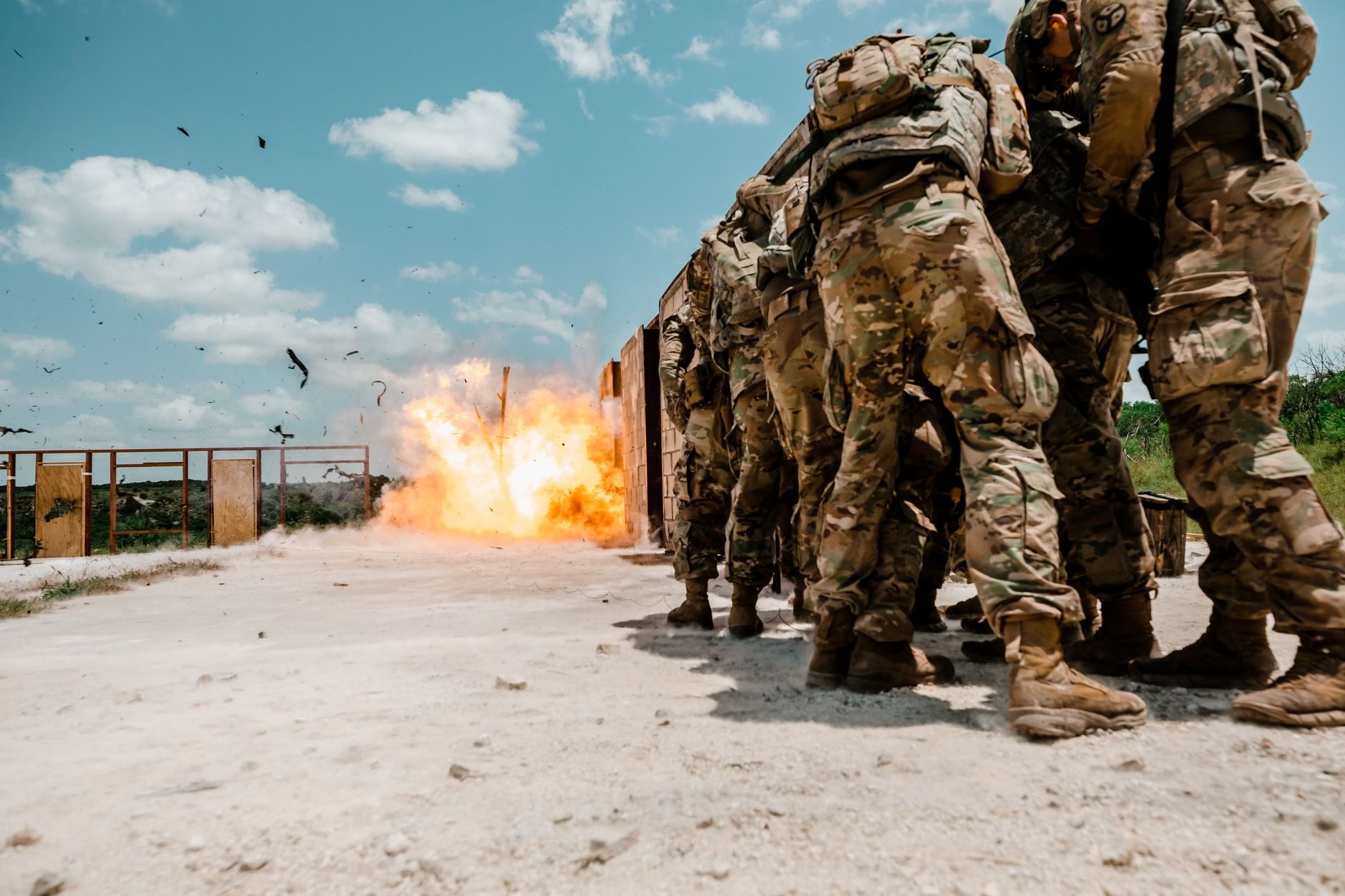
The religious leader responsible for Catholic pastoral care within the United States armed forces has expressed strong opposition regarding the potential involvement of Catholic service members in a high-profile execution. Specifically, the archbishop overseeing these military services has condemned both the proposed livestreaming of the event and the prospect of Catholic soldiers serving on the firing squad.
Understanding the Controversy
The situation centers on the planned execution of Nidal Hasan. Discussions and proposals surrounding the event have included the idea of broadcasting the execution via a livestream. This possibility has drawn sharp criticism from various religious and ethical perspectives, with the military archbishop taking a leading role in voicing concerns.
The core of the archbishop’s message focuses on the moral and spiritual implications for Catholic service members. According to the guidance provided by the archdiocese, participating in an execution squad directly conflicts with Catholic moral teaching regarding the sanctity of human life. Consequently, the directive explicitly instructs Catholic soldiers that they should not take part in such duties.
Church Teachings on Capital Punishment
The stance taken by the military archdiocese aligns with broader shifts within Catholic doctrine regarding capital punishment. In recent years, church leadership has emphasized a firm stance against the death penalty, classifying it as inadmissible in modern society due to the availability of alternative means to protect citizens effectively.
For service members operating within the unique environment of the U.S. military, navigating personal faith alongside official military orders can present complex challenges. Military chaplains and archdiocesan leaders frequently provide guidance to help personnel reconcile their constitutional and professional duties with their religious convictions.
Objections to Public Broadcasting
Beyond the composition of the firing squad, the archbishop strongly condemned the idea of broadcasting the execution to the public. Critics of the proposed livestream argue that publicizing such an event diminishes human dignity and turns a solemn legal and moral matter into public spectacle.
While military authorities must manage legal mandates and logistical requirements for carrying out judicial sentences, religious leaders continue to advocate for ethical boundaries. The outcry highlights the ongoing tension between state-sanctioned capital punishment and religious doctrines that strictly protect human life from conception to natural death.
Broader Implications for Service Members
Military regulations typically account for conscientious objectors and specific religious accommodations, though navigating these pathways can be intricate. The archbishop’s directive serves as a formal reminder to Catholic personnel regarding their spiritual obligations when faced with assignments that intersect with capital punishment.
As discussions surrounding the execution and its potential broadcast continue, the position of the archdiocese remains clear. The emphasis is firmly placed on upholding church doctrine, protecting the consciences of faithful service members, and questioning the ethical propriety of publicizing state executions.




















Leave a Reply