


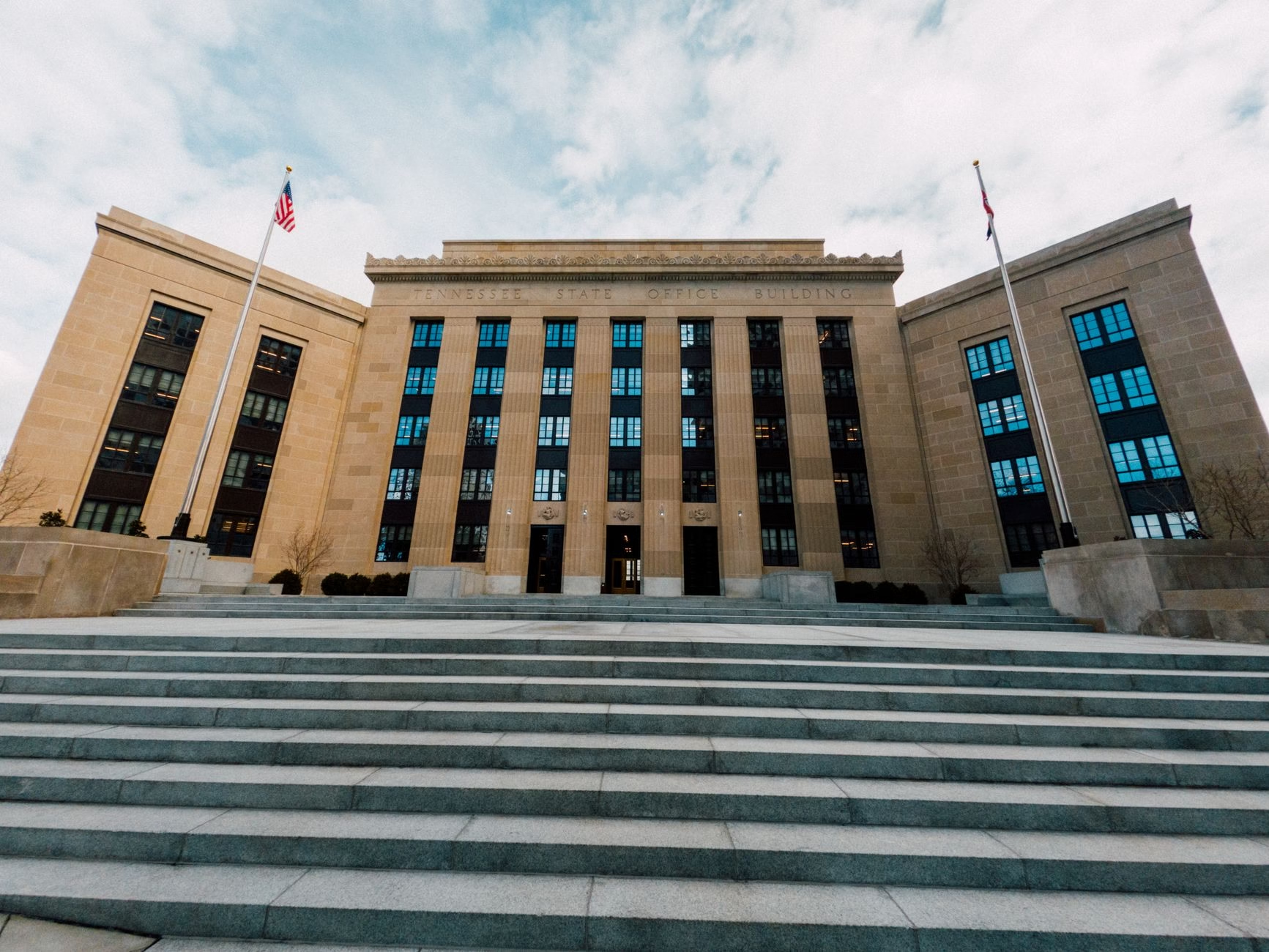
An extensive internal investigation into the Federal Reserve has concluded that the central bank committed widespread mismanagement regarding a multi-billion-dollar building renovation initiative. However, the federal watchdog explicitly stated that no criminal violations were uncovered during the probe, contradicting earlier allegations brought forward by prosecutors from a previous presidential administration.
The inquiry centered on a massive financial undertaking valued at 2.4 billion dollars aimed at modernizing central bank facilities. As costs mounted and timelines stretched, scrutiny intensified over how the institution handled public funds and oversight duties. The resulting report sheds light on systemic administrative failures while officially clearing leadership of criminal culpability.
Background of the Multi-Billion-Dollar Project
The undertaking began as an ambitious effort to upgrade aging infrastructure and improve operational efficiency across key institutional facilities. Over the course of planning and execution, the scope expanded significantly, leading to escalating expenses that ultimately reached the 2.4 billion dollar threshold. Large-scale public sector construction projects frequently encounter logistical hurdles, yet the scale of cost overruns in this instance attracted intense external review.
Financial transparency and fiscal responsibility are paramount for central banking institutions. Consequently, the exponential growth of the budget triggered inquiries into whether funds were being allocated appropriately or if administrative negligence had compromised the integrity of the undertaking.
Allegations of Criminal Activity Addressed
Previously, prosecutors operating under the Trump administration raised serious legal concerns, suggesting that the severe financial discrepancies might amount to criminal offenses. These allegations prompted independent investigators to examine every facet of the procurement process, contract awards, and supervisory controls.
The internal watchdog conducted a comprehensive review of records, communications, and financial transactions associated with the construction work. Ultimately, investigators found no evidence of fraudulent intent, corruption, or deliberate legal violations. While the findings dismissed the prospect of criminal indictments, they did not absolve the central bank of operational failures.
Widespread Mismanagement Identified
Although cleared of criminal wrongdoing, the Federal Reserve faced heavy criticism regarding administrative oversight. The investigation detailed numerous instances of poor planning, inadequate monitoring of contractors, and a failure to establish rigorous budgetary controls from the outset.
Critics argue that institutional leadership should have recognized the warning signs much earlier in the construction cycle. The lack of effective supervision allowed minor financial adjustments to snowball into major budgetary anomalies, undermining public trust in the institution’s internal governance.
Implications for Future Public Sector Infrastructure
The conclusion of this high-profile investigation highlights broader challenges associated with managing massive government and quasi-governmental infrastructure projects. Ensuring that public and institutional funds are spent efficiently requires stringent checks and balances that extend far beyond simply avoiding unlawful behavior.
As the central bank moves forward, the insights gained from this inquiry are expected to influence how future modernization efforts are planned and executed. Strengthening administrative oversight will be crucial to preventing similar fiscal discrepancies and maintaining credibility moving forward.























Leave a Reply