
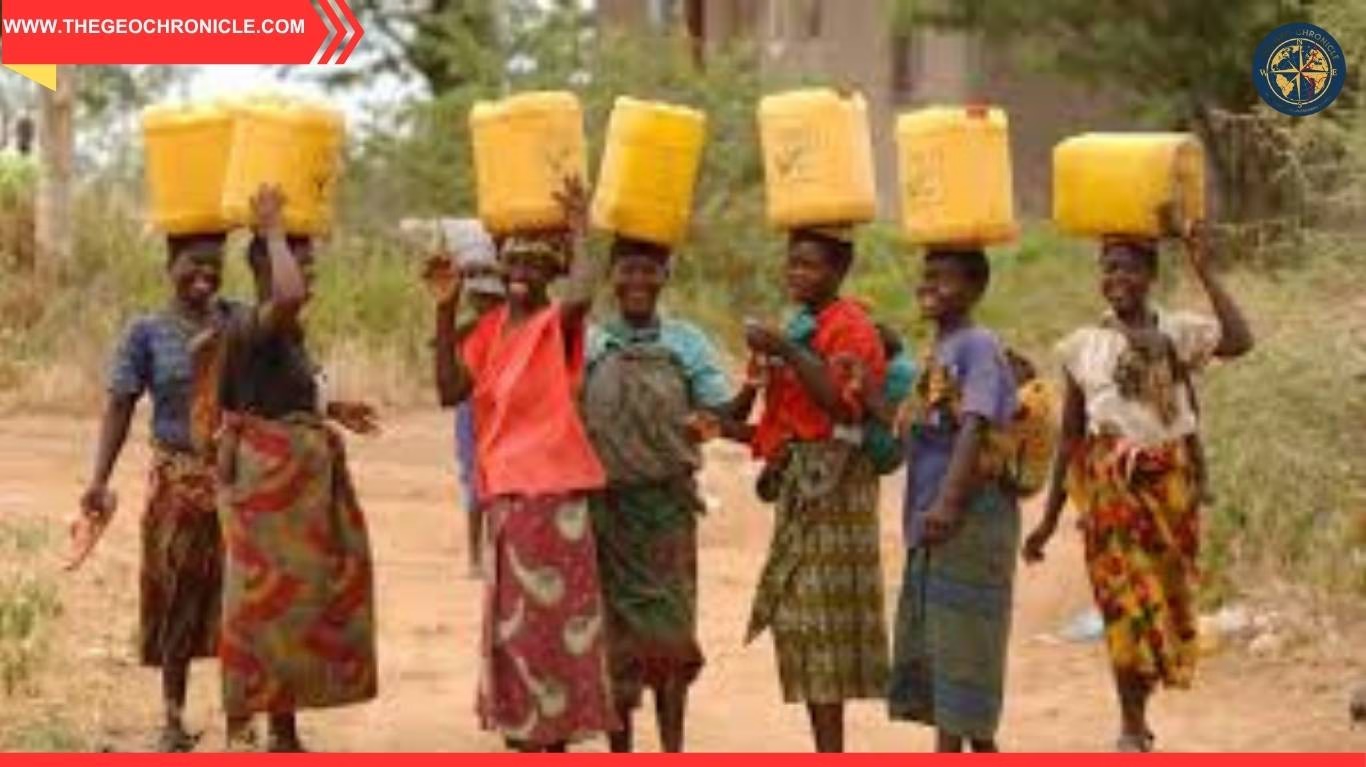
Extreme poverty remains one of the most pressing challenges of our time. Despite global economic growth and technological advancement, billions of people still live on less than $3 per day. The image titled “Extreme Poverty by Country” offers a stark visual representation of this crisis, highlighting the disproportionate burden borne by Sub-Saharan Africa and other developing regions.
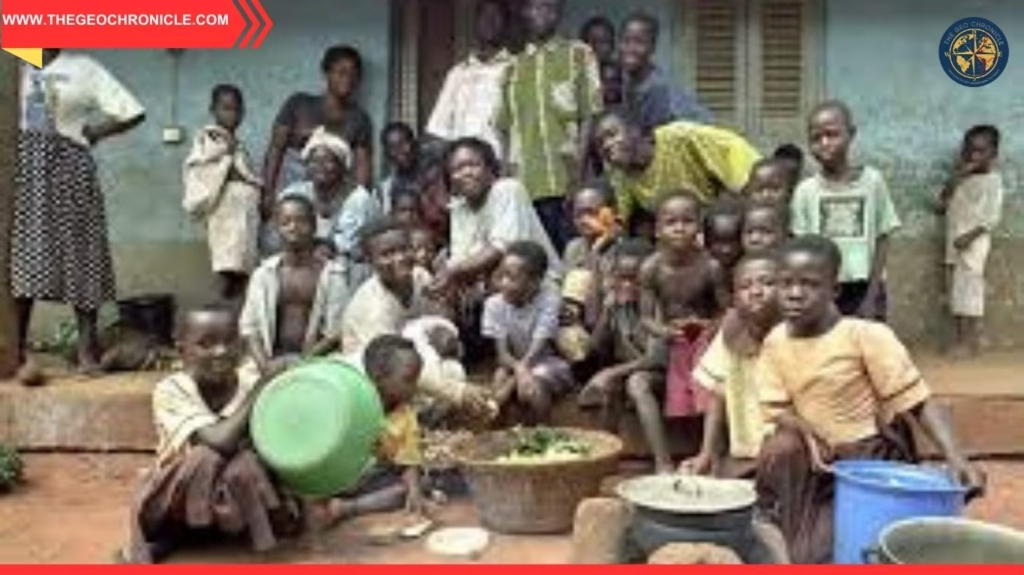
📊 Understanding the Chart: Key Highlights
The chart presents the percentage of population living under $3 per day across various countries, color-coded by region:
- Africa dominates the chart, with countries like the Democratic Republic of Congo (DRC), Mozambique, and Malawi showing extreme poverty rates above 70%.
- Asia and Latin America show lower but still significant levels.
- Europe and Oceania are minimally represented, indicating relatively lower poverty rates.
Top 5 Countries by Extreme Poverty Rate
| Country | Region | % Living Under $3/Day |
|---|---|---|
| Democratic Republic of Congo (DRC) | Africa | 85.3% |
| Mozambique | Africa | 79.1% |
| Malawi | Africa | 74.2% |
| Burundi | Africa | 71.7% |
| Zambia | Africa | 71.6% |
Lowest Rates in the Chart
| Country | Region | % Living Under $3/Day |
|---|---|---|
| Equatorial Guinea | Africa | 8.0% |
| Gabon | Africa | 10.2% |
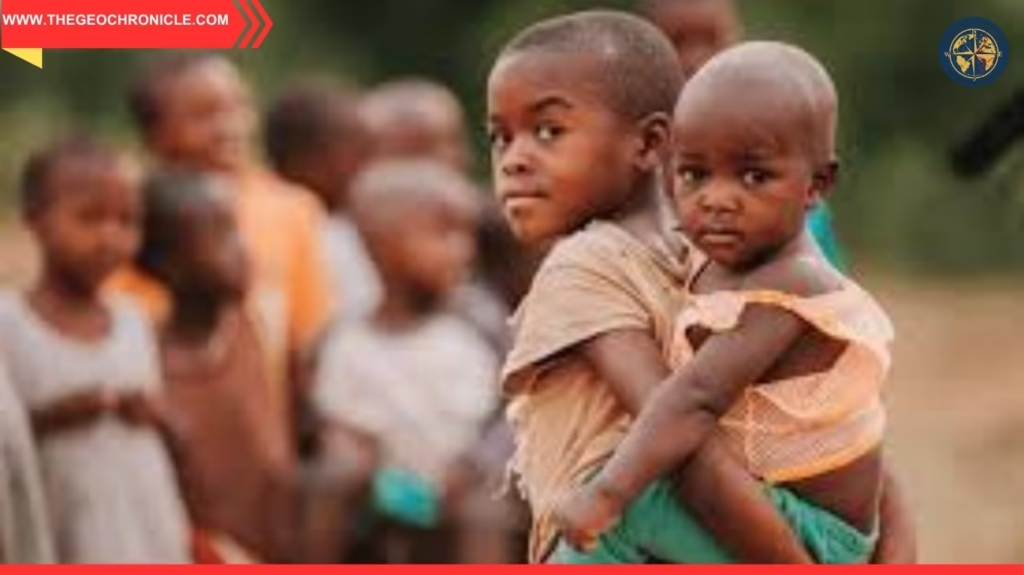
🌐 Regional Breakdown: Poverty by Continent
🖤 Sub-Saharan Africa: The Epicenter of Extreme Poverty
The chart reveals that Sub-Saharan Africa accounts for 64% of the global total of people living in extreme poverty—approximately 559 million individuals. This region faces systemic challenges:
- Conflict and instability: Countries like DRC and Burundi suffer from prolonged conflict.
- Weak infrastructure: Limited access to electricity, clean water, and education.
- Agricultural dependency: Vulnerability to climate change and market fluctuations.
🌏 Asia: Pockets of Poverty Amidst Growth
While Asia has seen rapid economic development, countries like Afghanistan, Bangladesh, and Myanmar still report significant poverty levels. Key issues include:
- Rural-urban divide
- Gender inequality
- Limited healthcare access
🌎 Latin America: Uneven Progress
Latin America shows mixed results. Countries like Honduras and Guatemala have higher poverty rates, while Chile and Uruguay fare better. Challenges include:
- Corruption and governance issues
- Income inequality
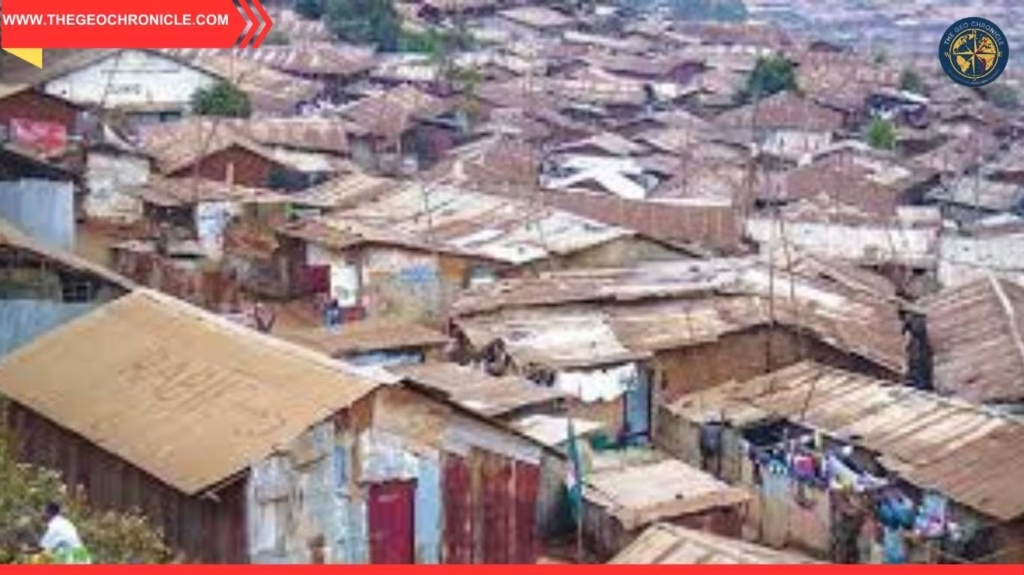
- Urban slums and informal economies
📈 Comparative Analysis by Region and Country
Below is a pivot-style table summarizing the data from the chart. This format allows for quick comparison across regions.
| Region | Country | % Under $3/Day |
|---|---|---|
| Africa | DRC | 85.3% |
| Africa | Mozambique | 79.1% |
| Africa | Malawi | 74.2% |
| Africa | Burundi | 71.7% |
| Africa | Zambia | 71.6% |
| Africa | Equatorial Guinea | 8.0% |
| Africa | Gabon | 10.2% |
| Asia | Afghanistan | ~50% (est.) |
| Asia | Bangladesh | ~40% (est.) |
| Asia | Myanmar | ~35% (est.) |
| LATAM | Honduras | ~30% (est.) |
| LATAM | Guatemala | ~28% (est.) |
| LATAM | Chile | ~10% (est.) |
| Middle East | Yemen | ~45% (est.) |
| Oceania | Papua New Guinea | ~25% (est.) |
| Europe | Moldova | ~10% (est.) |
Note: Estimated values are based on regional trends and may vary.
🔍 Root Causes of Extreme Poverty
1. Historical Exploitation
Colonial legacies have left many African nations with weak institutions and extractive economies.
2. Political Instability
Civil wars, coups, and authoritarian regimes disrupt development and displace populations.
3. Climate Vulnerability
Droughts, floods, and desertification disproportionately affect poor communities reliant on agriculture.
4. Health Crises
Diseases like malaria, HIV/AIDS, and now COVID-19 exacerbate poverty by reducing productivity and increasing healthcare costs.
5. Education Gaps
Low literacy rates and lack of vocational training hinder upward mobility.
🧭 Policy Recommendations
✅ Invest in Human Capital
- Expand access to primary education and healthcare.
- Promote gender equality in education and employment.
✅ Strengthen Governance
- Support anti-corruption measures and transparent institutions.
- Encourage community-led development.
✅ Build Resilient Infrastructure
- Improve transportation, electricity, and internet access.
- Develop climate-resilient agriculture.
✅ Promote Economic Diversification
- Reduce reliance on raw materials.
- Support SMEs, tech startups, and green industries.
📣 Global Responsibility and SDGs
The United Nations Sustainable Development Goal 1 (SDG 1) aims to eradicate extreme poverty by 2030. Achieving this requires:
- International aid and debt relief
- Fair trade policies
- Private sector engagement
🧠 Editorial Insight: Why This Data Matters
For journalists, policymakers, and educators, this chart is more than just a visual—it’s a call to action. It underscores the urgency of targeted interventions and the need for data-driven storytelling. By integrating such infographics into news coverage, we can:
- Raise awareness
- Influence policy
- Mobilize resources
As a senior editor, Prasenjit, you might consider pairing this article with:
- Interactive maps
- Infographic galleries
- Expert interviews
- Localized case studies
📌 Conclusion
Extreme poverty is not just a statistic—it’s a lived reality for billions. The chart “Extreme Poverty by Country” offers a sobering reminder of global inequality and the work that remains. Through informed journalism, strategic policymaking, and global solidarity, we can move closer to a world where no one lives on less than $3 a day.
📌 Disclaimer
This article is based on publicly available data visualized in the chart titled “Extreme Poverty by Country.” Figures may vary depending on the source and year of publication. The analysis is intended for informational and editorial purposes only.








Leave a Reply